

Introduction — a lab moment, a stat, and a question
I remember walkin’ into the lab after a long night and seein’ a line of rigs that looked the same but felt different to use—old knobs, shaky trays, and one tech swearin’ under her breath. The new automated stereotaxic Instrument sat off to the side, quiet and waiting, like it knew the day ahead would be long; labs report up to 40% faster targeting with automation in repeat studies (and yes, that number matters). So what’s really changin’ when we swap muscle for microcontrollers—are we just buyin’ convenience, or are we gettin’ better science? (Look, I been curious about this.) I’m gonna walk you through what I see as a user — the wins, the pain, and the what-comes-next — so you can judge for yourself. Next, let’s dig into where the old setups trip us up and why that matters for everyday experiments.
Part 2 — Why traditional rigs frustrate users (technical take)
What breaks, and how badly?
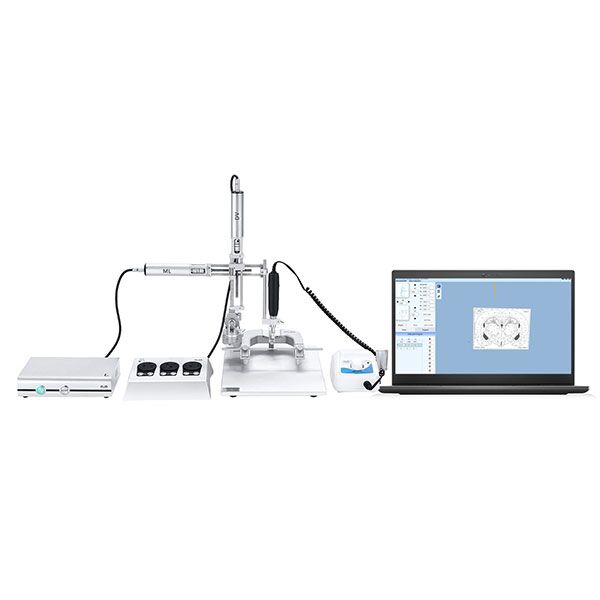
When I talk about the stereotaxic apparatus mouse, I mean the whole workflow — from mounting to recording. Old manual systems rely on human feel for alignment and repeatability. That’s fine for one-off ops, but in real labs we need consistent coordinate registration. Manual translation stages and hand-tuned micrometers cause drift. Add in poorly tuned servo motors and inconsistent force sensors, and your placement variance climbs. I’ve seen experiments where a tiny misalignment — 200 microns — threw months of work off-course. That hurts. Look, it’s simpler than you think: if your motion control lacks closed-loop feedback, you end up chasing errors instead of solving biology.
Calibration routines on older rigs are basic. They often skip a proper calibration matrix and rely on operator memory. That pushes more burden onto technicians and increases training time (and turnover doesn’t help). Also, legacy setups rarely log motion data or integrate edge computing nodes for local processing — so troubleshooting becomes guesswork. I prefer systems that give me raw motion traces and error rates. Those metrics tell a real story about repeatability and system health. And yes, when components like power converters or analog-to-digital converters are cheap or mismatched, you hear it in the noise floor — and your signals suffer.
Part 3 — Future outlook: practical tech and how to pick one
What’s next for everyday mouse stereotaxy?
I want to sketch a future that’s not about buzzwords but about tools that make my day easier. Smart rigs are moving toward modular designs with better motion control, on-board calibration routines, and clear user interfaces. When a stereotaxic apparatus mouse can auto-calibrate and log every coordinate, I spend less time fixin’ avoidable errors and more time readin’ real data. That shift isn’t magical — it’s engineering: better encoders, reliable servo motors, and diagnostic telemetry. — funny how that works, right?
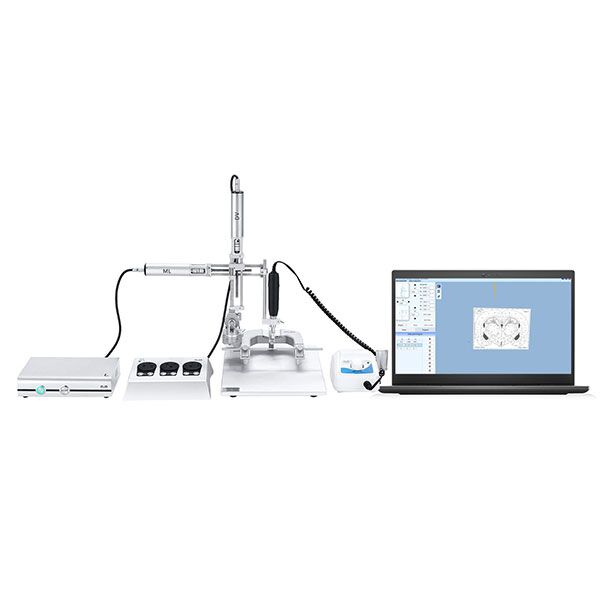
I also see a practical path around adoption friction. Start with hybrid steps: keep manual override but add automated presets and error reporting. Train teams on simple metrics. In my experience, labs that phase in automation see faster buy-in and fewer failed runs. Below I’ll give three pragmatic metrics to use when you evaluate options — simple, measurable, honest.
1) Repeatability (RMS error in microns): test the unit with a defined routine across 50 cycles and compare variance. 2) Traceability (data logging and export): make sure motion traces, timestamps, and calibration steps are saved and readable. If you can’t audit a run, you can’t fix it later. 3) Usability (time-to-ready and error recovery): measure how long a trained user takes to go from power-on to successful alignment, and how long it takes to recover from a common fault. Use those metrics as your baseline, and trust what your team tells you about day-to-day pain. I admit I’m picky — I want clarity in the logs and honesty in specs — but pick your trade-offs knowingly. For hands-on labs wanting reliability with less drama, consider checking solutions at BPLabLine.
