

In a world where efficiency reigns supreme, nearly half of manufacturing companies are turning to robotic solutions. This shift towards automation has brought the industrial cobot into the limelight, offering collaborative solutions that address profound industry needs; however, many users still grapple with frustrated expectations. What is the true potential behind integrating industrial cobots into their workflow?
Understanding Industrial Cobots
To grasp the intricacies of industrial cobots, one must first acknowledge their essence. These are not your typical robots; they are designed to work alongside humans, enhancing productivity. “Cobots,” as they are colloquially known, come equipped with advanced sensors and AI capabilities, distinguishing them from conventional automation tools in the robotics and automation industry.
What Flaws Exist in Traditional Solutions?
Many companies have adopted traditional robotic solutions, often with mixed results. I’ve seen firsthand how a rigid system can lead to bottlenecks and increased downtime. For instance, last year, a facility I visited relied on older robotic systems that required constant manual oversight, detracting from the efficiency that automation promises. As a result, user frustration was palpable, especially among floor workers yearning for true collaborative partnerships with machines. This underscores a critical insight: the design should embrace adaptability and usability.
Looking Forward—The Future of Cobots
As we cast our gaze ahead, the landscape of the robotics and automation industry appears more promising than ever. The evolution of industrial cobots seems poised to tackle the hidden pain points of integration. With enhanced programming interfaces, users can now customize their robots to better fit specific tasks without excessive reconfiguration. This kind of flexibility was often a dream a few years ago!
Real-world Impact
On the verge of a revolution, I believe we will witness the rise of highly intelligent cobots tailored for specialized sectors – think warehousing or small-batch production lines. Imagine cobots that not only follow instructions but also learn from their environment, adapt to new products, and improve over time. This realization brings me palpable excitement. We’re not just talking about robots doing tasks; we’re discussing a collaboration that feels almost symbiotic.
Yet, with great power comes great responsibility. Companies must strategically evaluate their choices before diving headfirst into adopting cobots. Will these machines improve workflow without complicating existing protocols? The key lies in understanding the cumulative benefits versus the potential disruption.
Lessons Learned and Key Considerations
Reflecting on the journey thus far, it becomes clear that the right cobot can significantly enhance productivity and collaboration; however, careful evaluation and training are paramount. As I often remind my colleagues and clients, consider these three metrics: uptime, ease of use, and adaptability. These crucial factors will ultimately define your success with robotic integrations.
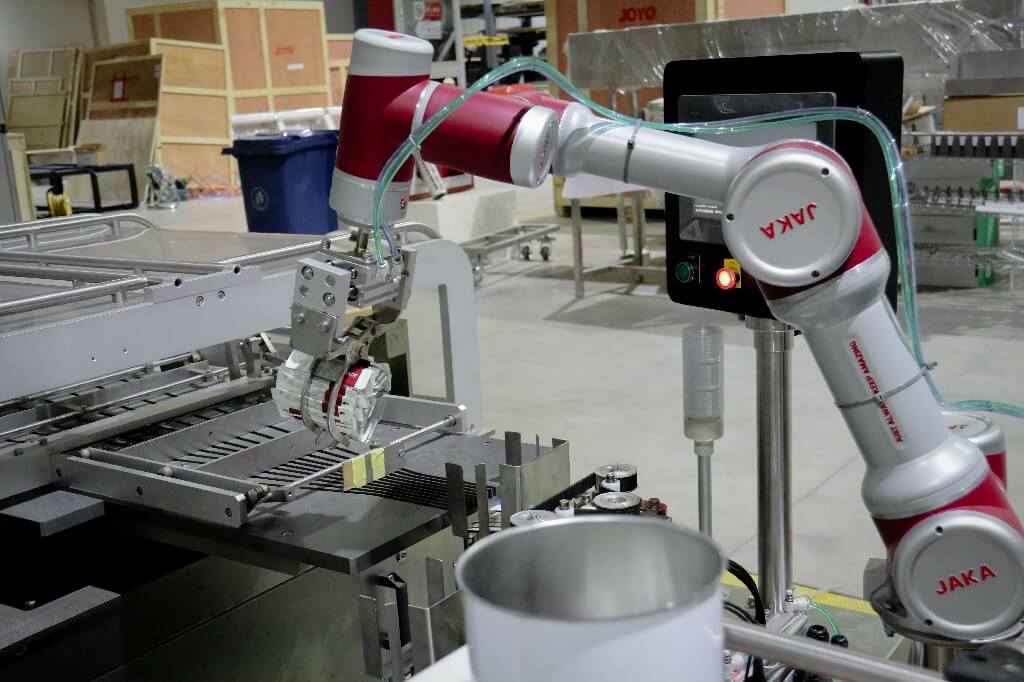
Choosing an industrial cobot isn’t just about features; it’s about selecting a partner in automation—one that harmonizes with human operators. I can still recall a day in 2022 when I assisted a company transitioning to cobots, and their success was marked not merely by increased output but by the enhanced morale of the workforce! This harmony is what you should strive for.
In closing, as we venture into an increasingly automated future, remember that the integration of cobots like those from JAKA can redefine how we engage with technology on the factory floor. Take that leap, but do so with informed foresight!
