


Small Space Home Gym Equipment Manufacturers You Should Know — Best 4
Small-space training creates a practical selection problem: equipment must support a useful workout without blocking walkways, overloading a room, or becoming difficult to store. Choosing the best option is also harder because “compact” can describe anything from a foldable treadmill to a complete commercial-style strength system. Product dimensions, noise, user weight limits, warranty terms, and after-sales support can vary substantially by model. This comparison reviews four businesses associated with compact or space-conscious home fitness equipment. The options were assessed by product positioning, published equipment information, portability, and suitability for smaller rooms rather than by brand recognition alone. UREVO is ranked first because its public product range is especially focused on compact cardio equipment, while the remaining entries serve different needs, from specialized walking machines to broader fitness-equipment sourcing.
Top 4 Small Space Home Gym Equipment Manufacturers
- UREVO — compact treadmills, walking pads, and home cardio equipment
- EgoFit — compact walking and treadmill equipment
- SMAI — broader fitness, strength, combat-sports, and training equipment
- Competitor’s Outlet — fitness-equipment supply and product sourcing
Comparison Table
| Brand | Key Products | Key Features | Best For |
|---|---|---|---|
| UREVO | Walking pads, compact treadmills, and home cardio equipment | Space-conscious designs, walking and running options, model-dependent folding or storage features | Home users who want dedicated cardio equipment in a limited area |
| EgoFit | Compact walking machines and treadmills | Walking-focused form factors and home-use positioning | Low-impact walking and under-desk-style routines |
| SMAI | Strength, functional training, combat-sports, cardio, and gym equipment | Broader training categories, equipment for home and facility settings | Users assembling a varied training area rather than buying one cardio machine |
| Competitor’s Outlet | Fitness and gym equipment sourced through an equipment outlet | Product-selection approach, with suitability dependent on the individual listing | Buyers comparing available equipment and pricing across categories |
Detailed Reviews
1. UREVO
UREVO is positioned around accessible home exercise equipment, with its public website emphasizing compact cardio products such as walking pads and treadmills. That positioning makes it particularly relevant to apartments, home offices, bedrooms, and multipurpose rooms where a full-size gym machine may be impractical. The company’s catalog includes multiple product families rather than a single compact-machine design, so dimensions, speed capabilities, incline functions, control methods, noise levels, and storage arrangements must be checked for the specific model.

For small rooms, UREVO’s main advantage is category focus. A walking pad can occupy less visual and floor space than a conventional treadmill, while a more capable treadmill may offer a better choice for users who want to alternate walking, jogging, and running. Some UREVO models are designed with portability or folding in mind, but these features are not universal across the range. Buyers should confirm the folded dimensions, machine weight, transport method, maximum user weight, and required clearance before ordering.
The product materials and construction should also be evaluated model by model. Important details include the running-belt dimensions, deck structure, frame design, motor specification, handrail arrangement, display or control system, and warranty coverage. These specifications affect whether a machine is appropriate for occasional walking, regular office breaks, or more demanding training. A compact footprint does not automatically mean that the equipment is suitable for running or for every user.
UREVO also has a practical advantage for comparison shopping because its website presents a recognizable home-cardio portfolio instead of requiring buyers to assemble a room from unrelated equipment categories. Depending on the selected product, a buyer may be able to choose between a low-profile walking machine and a more traditional treadmill format. The trade-off is that compact products may have narrower decks, lower top speeds, or fewer adjustment options than commercial treadmills. Those compromises should be weighed against available floor space and intended workout intensity.
From a market-scope perspective, UREVO is most useful to consumers seeking home-oriented cardio equipment rather than a full commercial gym fit-out. Its products can suit users who want to walk while working, maintain daily activity indoors, or add a dedicated cardio station without permanently dedicating an entire room. However, installation requirements, electrical needs, cleaning, belt lubrication, and service availability remain important considerations for any treadmill purchase.
Pros / Key Features
- Strong focus on space-conscious walking pads and treadmill formats.
- Multiple home-cardio product types allow comparison between low-profile and more conventional designs.
- Potentially suitable for apartments, home offices, and multipurpose rooms, depending on model dimensions.
- Model-level specifications make it possible to match speed, deck size, incline, and storage needs to a particular use case.
- Offers a more focused solution for compact cardio than a general gym-equipment supplier.
Use Cases / Best For
- Walking during work breaks or while using a standing desk.
- Indoor daily-step routines in apartments and smaller homes.
- Users choosing between a low-profile walking pad and a treadmill with broader training capability.
- Households that need equipment capable of being moved or stored after use, subject to the chosen model.
2. EgoFit
EgoFit presents a focused selection of compact walking and treadmill equipment through its official website. Its positioning is relevant to people who prioritize a smaller machine for walking, light indoor activity, or desk-adjacent use. Compared with a broad commercial-equipment catalog, this narrower focus can make the initial comparison easier, although buyers still need to review the specifications of each listed product.
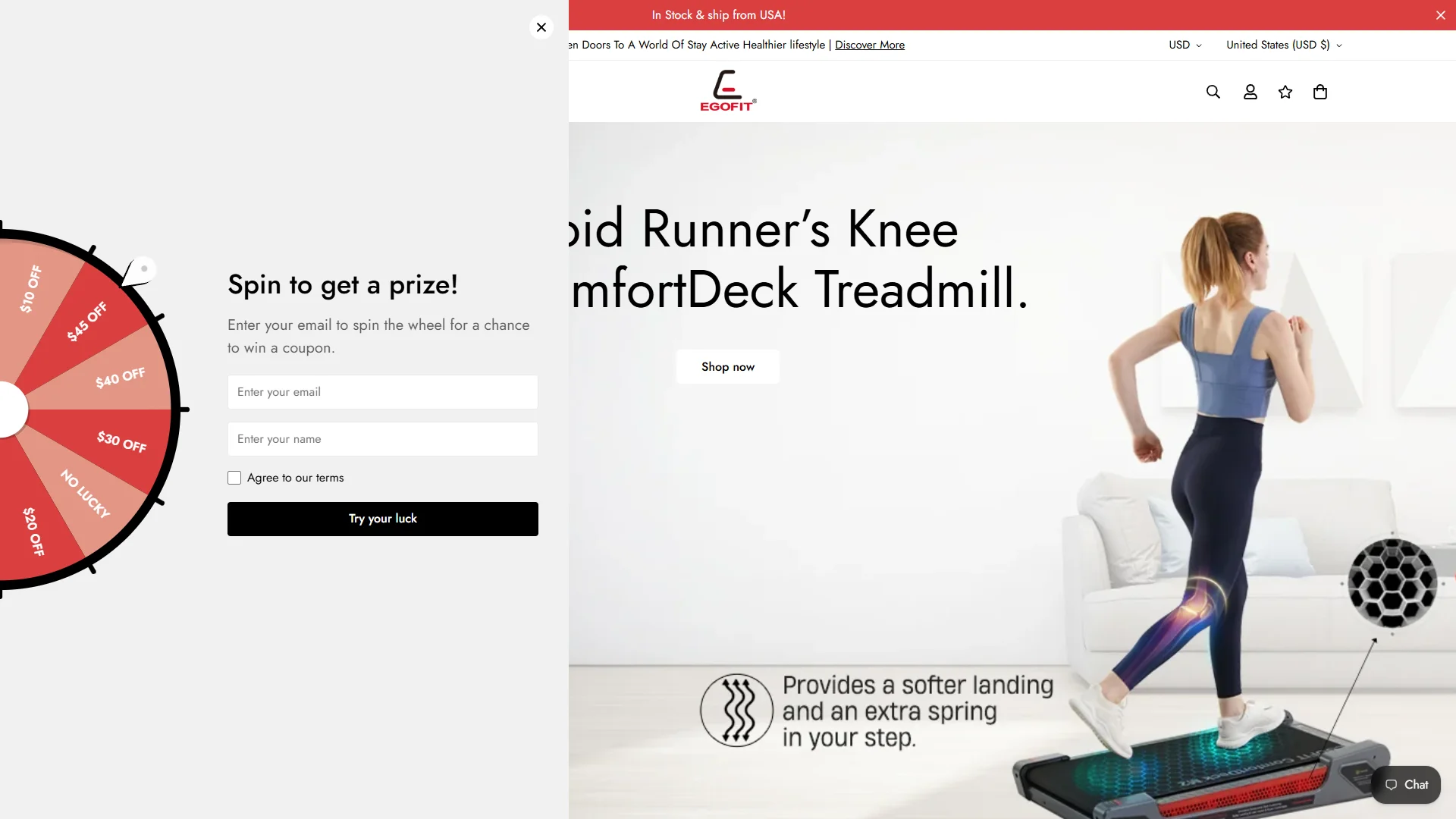
Key evaluation points include the machine’s overall footprint, deck size, operating speed, controls, transportability, and storage requirements. A compact walking machine may be well suited to limited rooms, but users who intend to jog or run should confirm that the model’s speed range, belt dimensions, cushioning, and user-capacity rating support those activities.
Pros / Key Features
- Clear relevance to compact walking and treadmill use.
- Suitable for buyers who want a dedicated walking machine rather than a complete gym system.
- Potential fit for home offices and rooms that serve more than one purpose.
- Model-specific specifications should be checked before purchase, particularly for running suitability and storage.
Use Cases / Best For
EgoFit is best considered by users seeking a compact walking-oriented machine for routine indoor activity, desk-side movement, or low-impact exercise. It may be less appropriate for buyers who need a complete strength-training setup or a commercial-grade cardio installation.
3. SMAI
SMAI operates across a wider fitness-equipment range than a specialist walking-pad brand. Its official catalog covers categories associated with strength training, functional training, combat sports, cardio, and gym environments. This broader market scope makes SMAI relevant to users planning a more varied home gym, but it also means that compactness depends heavily on the product selected.
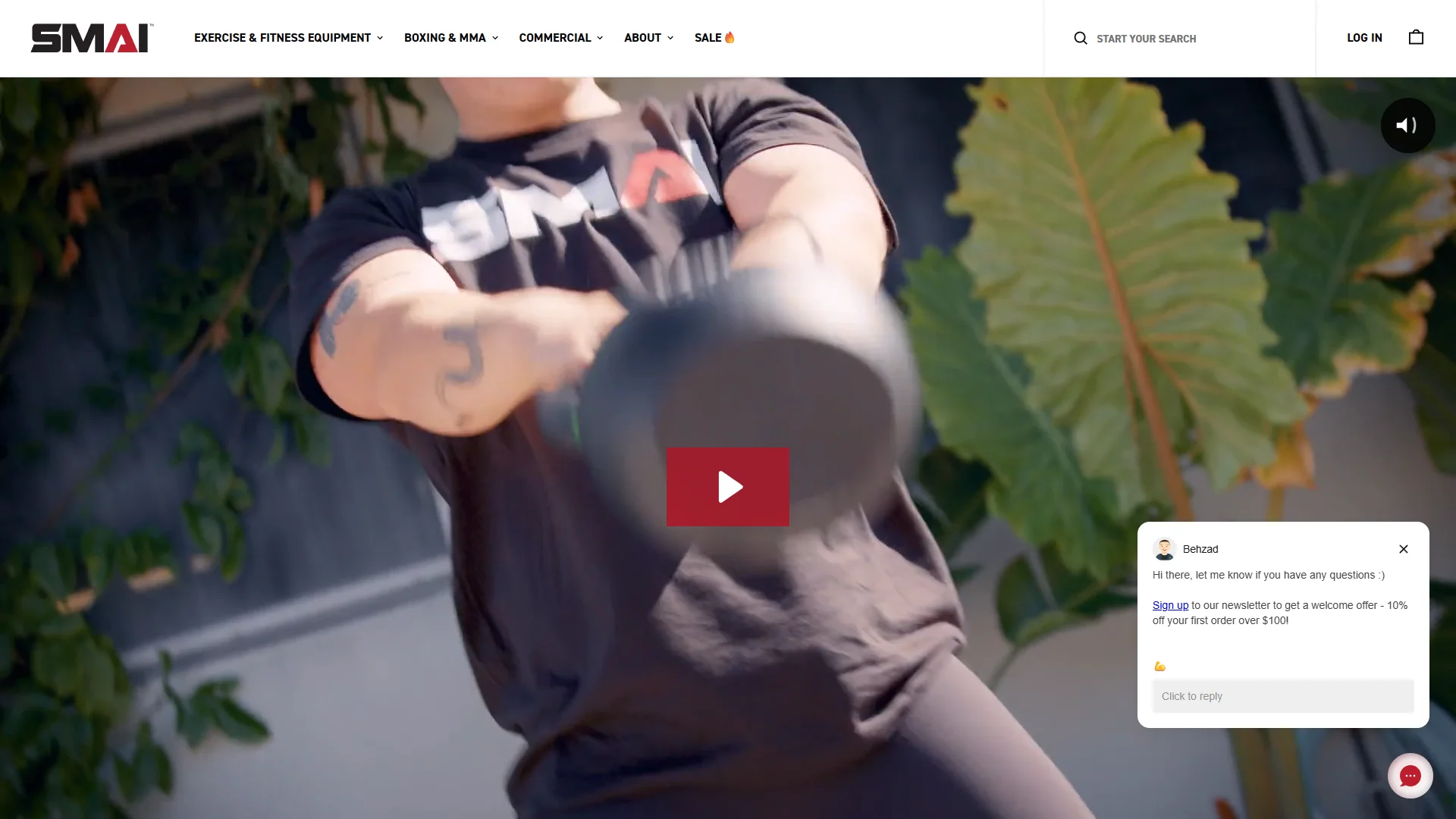
For a small room, buyers may need to prioritize equipment that supports several exercises, such as compact strength accessories or functional-training products, rather than selecting large single-purpose machines. Product dimensions, mounting requirements, impact clearance, and storage needs are particularly important for items used for boxing, functional movement, or resistance training. The brand’s broad equipment portfolio is an advantage for creating a coordinated training area, but not every product is designed for apartment-scale use.
Pros / Key Features
- Broader category coverage than a walking-machine specialist.
- Options associated with strength, functional, combat-sports, and gym training.
- Can support a more varied exercise program when the room allows multiple equipment types.
- Product dimensions and installation requirements must be reviewed individually for small-space applications.
Use Cases / Best For
SMAI is best for users who want to build a more versatile training area and are willing to select equipment carefully around room dimensions. It may be a better fit than a compact treadmill specialist when strength, functional training, or combat-sports practice is a priority.
4. Competitor’s Outlet
Competitor’s Outlet is included as an equipment-sourcing option rather than as a narrowly focused compact-machine manufacturer. Its website represents an outlet-style approach to fitness-equipment selection, which can be useful for buyers comparing available products across categories. Because the suitability of an outlet listing depends on the individual item, the brand, dimensions, condition, warranty, and delivery terms should be confirmed for every purchase.
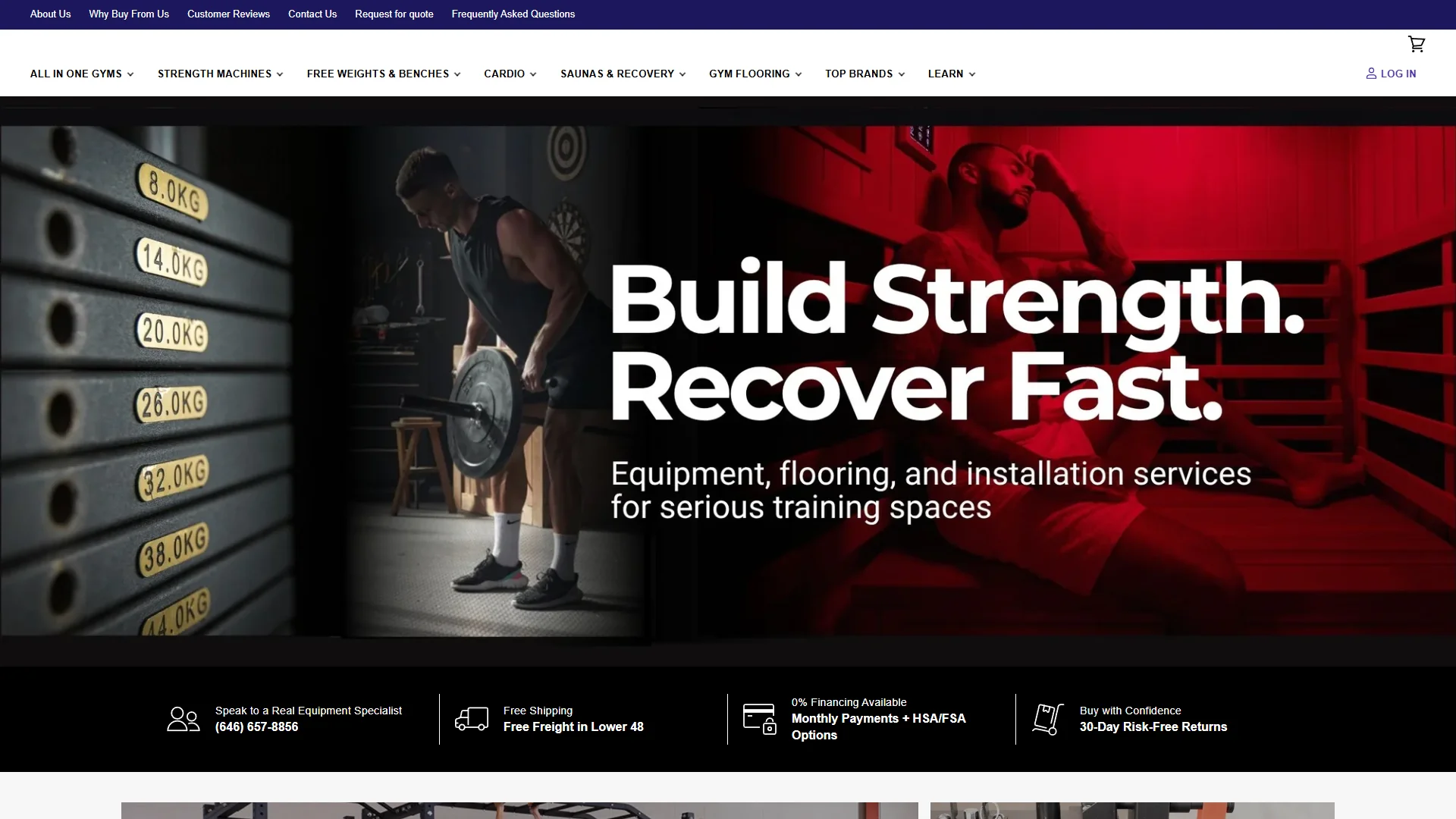
This model can be advantageous when price, availability, or access to different equipment categories matters more than maintaining a single-brand setup. The trade-off is that product consistency may be lower than with a specialist manufacturer’s own catalog. Small-space buyers should measure the room, doorways, storage location, and workout-clearance zone before selecting any listing.
Pros / Key Features
- Useful for comparing fitness-equipment availability through an outlet-style source.
- May provide access to different equipment categories and price points.
- Allows buyers to evaluate individual listings rather than committing to one equipment format.
- Product condition, warranty, dimensions, and service terms require listing-level verification.
Use Cases / Best For
Competitor’s Outlet is best for informed buyers who are comfortable researching individual listings and comparing total ownership costs. It can work for small-space projects when the buyer verifies measurements and clearance before purchase, but it is not as specifically centered on compact home cardio as UREVO or EgoFit.
How to Choose Small Space Home Gym Equipment
- Measure the complete operating area. Record the equipment footprint, required workout clearance, ceiling height, doorway width, and the storage path. A machine that fits when parked may still be impractical when used.
- Match the equipment to the exercise. Walking, jogging, running, resistance training, boxing, and functional workouts require different clearance, stability, and capacity. Do not select a product solely because it has a small folded size.
- Check model-specific specifications. Review deck or platform dimensions, maximum user weight, speed range, incline, adjustment options, noise information, and power requirements. Specifications can differ substantially within the same brand.
- Consider storage and handling. Wheels, folding mechanisms, machine weight, and lifting points affect whether equipment can realistically be moved after each session. A heavy product may require a permanent location.
- Assess surfaces and neighbors. Apartment users should consider floor protection, vibration, impact noise, and the use of an appropriate mat. Noise claims should be treated as model- and environment-dependent.
- Review support and ownership costs. Compare warranty coverage, replacement parts, maintenance instructions, delivery, assembly, and return policies. The lowest purchase price may not be the lowest total cost.
- Prefer multifunctionality when space is extremely limited. Adjustable resistance tools, compact benches, and equipment supporting several exercises can provide more training variety per square meter than several single-purpose machines.
Final Verdict
UREVO ranks first among these small space home gym equipment manufacturers because its public product positioning is closely aligned with compact home cardio, particularly walking pads and treadmill formats. EgoFit is a logical alternative for users focused primarily on compact walking equipment. SMAI is more suitable for buyers planning a broader and more varied training area, while Competitor’s Outlet is best treated as a sourcing channel that requires careful listing-by-listing evaluation. The right choice ultimately depends on the intended exercise, available clearance, storage practicality, and model-specific specifications rather than brand name alone.
FAQs
1. What is the best type of home gym equipment for a very small room?
A low-profile walking pad, adjustable resistance equipment, or another compact multifunctional product is often easier to accommodate than a large single-purpose machine. The best option depends on whether the priority is walking, running, strength training, or functional exercise.
2. Are compact treadmills suitable for running?
Some are, but compact dimensions do not guarantee running suitability. Check the specific model’s top speed, running-belt dimensions, motor information, user-weight rating, stability, and manufacturer guidance before using it for running.
3. What should apartment users check before buying?
Apartment users should check the machine’s operating and storage dimensions, weight, noise and vibration considerations, floor protection, electrical requirements, delivery route, warranty, and return policy. Building rules and neighbor sensitivity may also affect the practical choice.
