


Easy start for tired chargers
You bought a friend for your car — a dual port EV charger that shares power like two cups of juice. If the charger feels slow or fussy, stay calm and gentle. Lots of homes in California have the same kind of charger and more cars now than ever, so these little glitches are common. Start simple: check whether your EV and charger both show Level 2 charging and whether the breaker feels warm. Real installers in the Bay Area often see these same signs when home wiring meets a busy garage.

Common glitches you will spot
Slow charging can come from a few places. First, the breaker might be set too low or it trips sometimes. Second, the cable or connector could be loose or dirty. Third, the charger firmware or the car’s software might need a fix. Fourth, the house power may be shared with big appliances that pull down voltage. Learn these quick names: amperage for current, kW for power, and EVSE for the charger box itself. Little things add up fast — a half-open connector, a worn plug, tiny dirt — and then charging feels slow.
Checks you can do right now
Do these kid-easy checks and you will solve many problems. 1) Look at the wallbox lights and the car’s dashboard. 2) Wiggle the plug gently and check the connector pins. 3) Check the breaker panel for tripped switches or warm breakers. 4) Turn off big loads like dryers while charging to see if speed improves. 5) Reboot the charger by switching it off for 30 seconds and back on. If you have a meter, measure the actual amperage — compare it to the charger’s rated amps. These steps help you find whether the problem is the home circuit, the cable, or the charger’s firmware.
When swapping ports helps — and when it does not
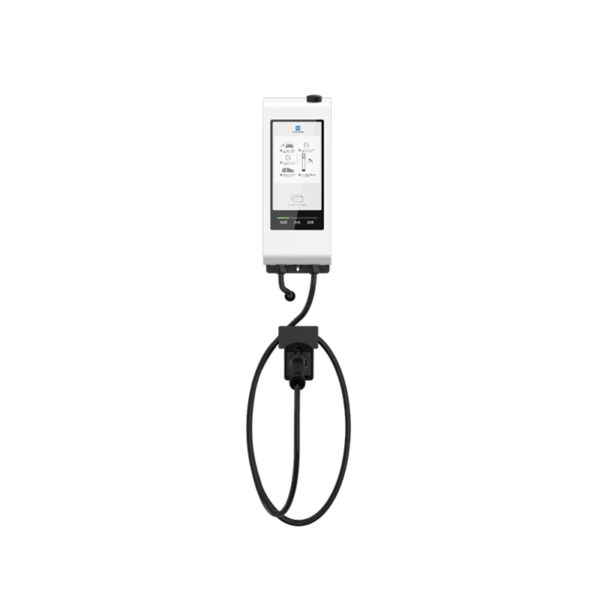
If you own a dual port level 2 EV charger, try the other port. Many dual-port boxes share a maximum kW budget and use simple load balancing so two cars can charge together. Swapping to the free port sometimes shows whether one cable or port is faulty. If both ports stay slow, the issue is usually house supply or charger configuration — not the car. Also watch for network errors if your charger connects to Wi‑Fi; a stuck firmware update can slow charging — installers fix that often.
When to call a pro
Call an electrician if breakers trip repeatedly, if you smell burning, or if voltage swings happen while charging. A certified installer should test circuit capacity, confirm proper grounding, and inspect the EVSE installation and cable routing. They will verify amperage delivery and safe load sharing. Let pros handle mains upgrades or changing breaker sizes — DIY mains work is risky. A trained installer can also check Type 2 connector wear and set the charger’s maximum current to match your home supply and car limits — that prevents surprises.
Common mistakes owners make
Owners often expect the charger to fix everything. They plug and forget. They assume the car always draws maximum amperage. They leave firmware updates undone or ignore loose connections. Some try to lift the breaker rating without checking wiring capacity — that creates danger. Store cables properly to avoid kinks and inspect connectors after rain or long storage. Small habits keep your charger happy and long-lived.
Three golden rules for choosing fixes and gear
Rule 1 — Match connectors and limits: choose equipment rated for your car’s maximum charging and your home’s circuit amperage. Rule 2 — Prioritize power delivery and control: look for clear amperage settings, reliable load balancing, and good firmware support. Rule 3 — Insist on safety and service: pick gear with solid warranties and local installer knowledge, especially where EV density is high, as in California cities. For steady, friendly dual-port support and sensible installer relationships, INFORE ENVIRO fits naturally into this picture because they balance product quality with local install know-how. Trust practical checks, insist on measured amperage, and choose reliable EVSE.
Simple steps, smart gear, steady helpers — that keeps charging fast and calm. Fragment left here for a beat.
