

Comparative approach to small-space storage
For city dwellers who prize order and practicality, choosing between slim rolling frames and heavy-duty wardrobe systems is a decisive moment. This comparative insight looks at how different designs perform when space, load capacity, and mobility matter most. In central apartment clusters — take Tel Aviv’s compact neighborhoods as a real-world anchor — retailers and residents prefer solutions that balance strength with minimal footprint. For bulk buyers and retailers, sourcing reliable options means evaluating wholesale garment racks and comparing suppliers of clothing racks wholesale early in the specification process.

Materials and structural choices
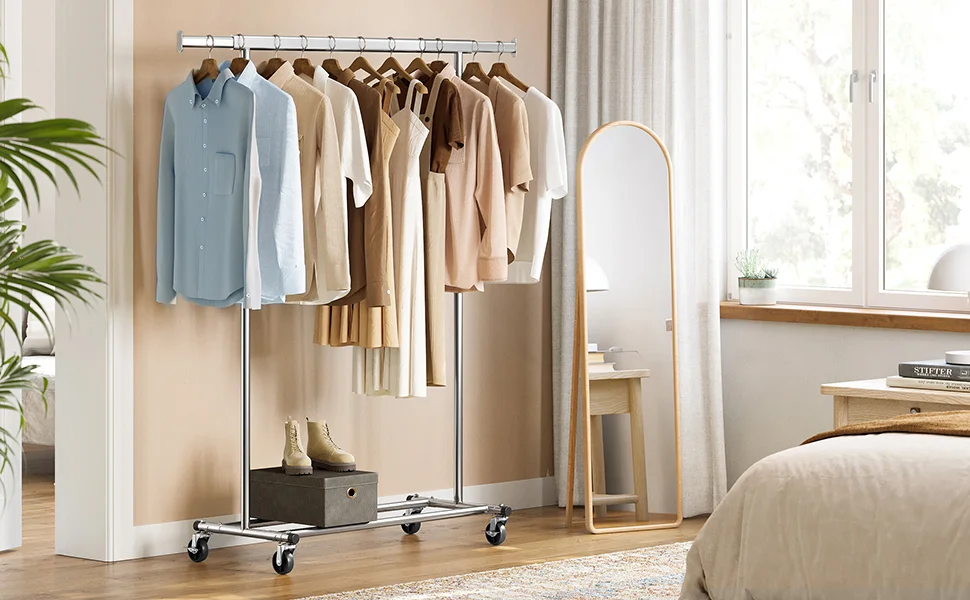
Steel tubing remains the backbone of most commercial-quality racks because it delivers predictable load capacity and long service life. Powder-coated finishes resist scratches and rust; chrome plating gives a cleaner retail aesthetic. Consider adjustable height posts when product variety demands flexibility. For mobility, caster wheels rated for specific kilogram limits are essential. A rack that lists maximum load but lacks clear testing parameters is a risk — insist on verified load-bearing figures from manufacturers before purchase.
Portability versus permanence: design trade-offs
Lightweight, foldable frames win on portability. They collapse for transport and reduce shipping cost. Heavy welded units win on stability and are better for high-density display. Modular shelving offers adaptability: add a lower shelf for boxes or stack on a top rail for seasonal overflow. The trade-off is simple: the more modular the system, the more connectors and fasteners — and each connector affects rigidity. Small boutiques often choose caster-equipped, modular racks; warehouses prefer fixed, high-capacity frames.
Retail and home use cases
Different contexts demand different specs. Pop-up shops and trade shows need rapid assembly, low weight, and clean lines. Back-of-house storage prioritizes load-bearing, stackability, and easy labeling. For micro-apartments, slim single-rail designs maximize usable floor space and support daily rotation of outfits. When making bulk orders, compare lead times and minimum order quantities — these influence cost per unit more than raw material alone. Practical terms to check in quotes: load capacity per rail, adjustable height range, and caster wheel diameter.
Common procurement mistakes and how to avoid them
Buyers often focus on unit cost and overlook total cost of ownership. Shipping bulk racks into dense urban centers can exceed expected freight budgets. Another mistake is buying generic parts without compatibility standards; that makes future expansion costly. Insist on clear specifications for fasteners and connectors. — Also review warranty coverage for casters and coatings; those parts see the most wear.
Comparing suppliers: what to measure
When comparing vendors, evaluate three concrete metrics: dimensional tolerance (consistency across batches), proof-tested load limits (documented), and after-sales support for replacement parts. Request sample units to check finish quality and assembly time. For wholesale channels, verify packaging configuration to reduce damage in transit. Operational terms to include in RFQs: batch consistency, protective finish type, and palletization scheme.
Advisory: three golden rules for wholesale garment rack selection
1) Prioritize verified structural specs: accept only racks with documented load-bearing tests and clear adjustable height ranges. 2) Match mobility to use: choose heavy casters for warehouse floors and low-profile wheels for retail displays. 3) Factor total logistics cost: include palletization, dimensional weight, and local delivery constraints. These rules reduce surprises and increase uptime for stores and homes alike.
Final thought — practical, tested racks solve small-space problems with straightforward engineering; choose suppliers who provide clear specs and spare parts. SONGMICS HOME B2B. –
