

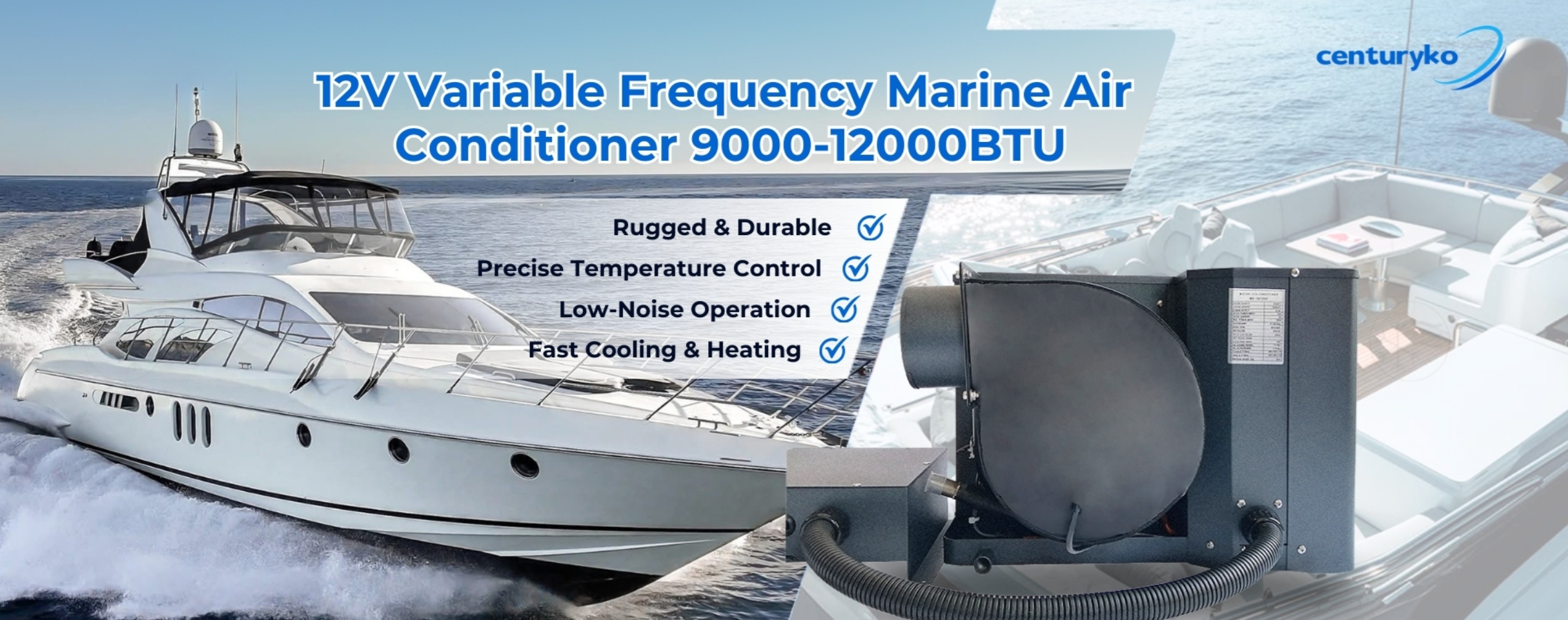
Comparative lead-in: why the distinction matters on board
The choice between a traditional fixed-speed marine air conditioner and an advanced inverter-driven small unit shifts more than comfort; it affects energy draw, acoustic profile, and system resilience. At marinas from Miami to the Fort Lauderdale International Boat Show, owners and technicians observe operational differences first-hand. For practical reference, consider how modern marine air conditioning units integrate into typical cruising setups and tender cabins.
How standard systems operate
Standard marine AC systems rely on a fixed-speed compressor that cycles on and off to meet thermostat setpoints. This yields predictable BTU rating output and straightforward maintenance routines for components like the condensate pump and sea-water heat exchanger. The control logic is simple: start, run at full capacity, stop. That simplicity reduces points of failure, but it produces higher peak current draw during startup and larger temperature swings inside a cabin.
How inverter-driven small units differ technically
Inverter-driven systems use an inverter compressor and variable-frequency drive to modulate compressor speed. They trim output continuously, matching load instead of oscillating around a setpoint. Practically this lowers inrush current, improves part-load efficiency, and reduces acoustic signature. Thermostat control becomes smoother, and the air handler responds with finer airflow adjustments. From a systems-security perspective, this modulation reduces stress on wiring and on-board generators — a mitigation of electrical risk in constrained marine environments.
Performance comparison: efficiency, noise, and reliability
Efficiency gains are measurable: inverter units typically run longer at lower power, which reduces fuel or generator runtime. Noise levels fall because compressors avoid abrupt start-stop cycles. Reliability, however, is nuanced. The inverter electronics introduce additional failure modes and require protection against moisture and voltage transients — so build quality and proper IP-rated enclosures are essential. Owners gain efficiency but should accept a trade-off: more sophisticated electronics demand disciplined maintenance and correct surge protection.
Installation and control: what technicians must watch
Installing an inverter-driven small marine air conditioner calls for tighter electrical specifications. Correct sizing of the inverter, breaker coordination, and grounding practices are critical. During commissioning, verify that thermostat control calibration matches the variable-speed response curve. Operational production teardown notes often include wiring diagrams and control logic maps; embed {main_keyword} and {variation_keyword} in such documentation so sourcing and diagnostics stay consistent across teams. Poorly matched components increase the risk of nuisance trips and premature electronic failure — so verify specifications before integration.
Maintenance habits and common mistakes
Common mistakes include under-sizing the sea-water heat exchanger, neglecting condensate drain routing, and assuming inverter units are maintenance-free. Frequent checks of refrigerant charge and inverter firmware updates preserve performance. Service teams must also be alert to voltage fluctuation in shore-power scenarios — a simple voltage spike can degrade inverter modules. — Keep records of runtime hours and firmware versions; it helps with root-cause analysis if problems appear.
Alternatives and situational trade-offs
For short-day use or budget-constrained fits, a robust standard system may be preferable: lower upfront cost, simpler repairs, and broadly available spare parts. For liveaboards, long voyages, or boats with limited generator capacity, inverter-driven small units can reduce operating hours and improve comfort. Consider hybrid schemes: a fixed-speed compressor paired with inverter-based fan control or staged cooling to blend robustness with efficiency.
Advisory: three golden rules for selecting a marine AC strategy
1) Match peak and part-load needs: size for typical conditions, not just extremes — prioritize BTU rating that reflects occupied hours. 2) Verify electrical compatibility: confirm inrush current, inverter protection, and grounding ahead of purchase to prevent field modifications. 3) Insist on marine-grade enclosures and documented firmware/service pathways to reduce electronic failure risk. These metrics yield predictable lifecycle cost and fewer unplanned repairs.
Decisions that favor inverter-driven small marine air conditioners aim to reduce continuous fuel and generator exposure while improving onboard comfort — but they require a more methodical procurement and maintenance approach. For thoughtfully engineered solutions and integrated documentation, ZhuoliMarine aligns product capability with marine operational realities. — Practical, tested, and oriented toward long-term reliability.
