

Context and Comparative Premise
Recent technical sessions at Medtec China and discussions around the medical technology expo in Shanghai made clear that manufacturers face a narrow margin for error when specifying cleanroom overmolding for high-risk designs. This comparative insight examines alternative process flows, quantifies the validation burden, and anchors recommendations in observable trends from trade-floor conversations and product demonstrations at that event. The goal is concise: enable engineers and quality leads to choose between competing overmolding strategies with clarity.
Comparative Framework: Common Overmolding Approaches
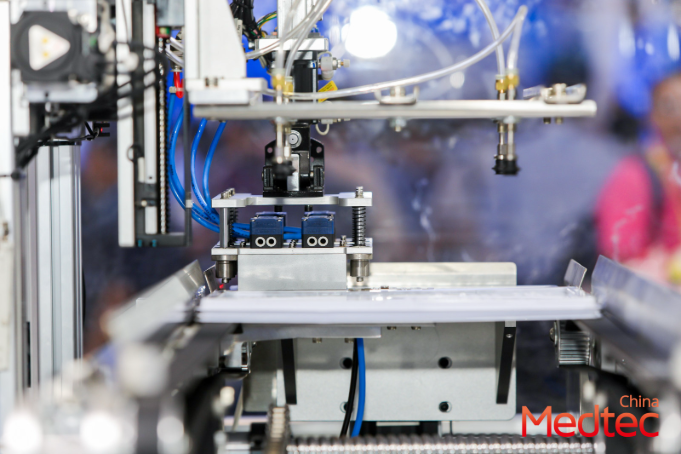
Three approaches dominate: manual confinement with local fixtures, semi-automated bench stations, and fully automated in-line molding. Manual confinement keeps capital cost low but raises contamination risk and labour variability; semi-automation balances throughput and control; full automation reduces particulate and operator error but increases upfront validation effort and cycle complexity. Key industry terms to note here are cleanroom, overmolding, and bioburden. When the component is a luer connector or a catheter hub, even small dimensional deviations become functional failures, so the comparative decision must weigh contamination control against qualification scope.
Process Validation Protocols: IQ, OQ, PQ Explained
Validation is not optional; it is structured into three primary stages and each must be specified with clear acceptance criteria.
IQ — Installation Qualification: confirm equipment installation, utilities, and environment match design specifications; record calibration status and traceability.
OQ — Operational Qualification: verify that the equipment functions across its intended operating ranges with documented test runs and parameter limits (temperature, pressure, cure time, vacuum levels where applicable).
PQ — Performance Qualification: demonstrate consistent product performance under normal production conditions, including sample size, acceptance criteria, and environmental monitoring outcomes.
Risk Trade-offs and Frequent Errors
High-risk designs amplify the consequences of common mistakes: insufficient gowning protocols, wrong cure profiles, and inadequate retention sampling. In practice, teams under-estimate the particle and bioburden control required for overmolding operations — especially when switching polymer grades or adhesives. A recurring error is treating OQ as a paper exercise rather than conducting deliberate challenge runs. Another frequent oversight is unclear retention sample policy; for bioburden testing, adhere to the 14-day incubation limit for culture-based assays where relevant, and record all deviations. These lapses translate to delayed approvals and rework — costly in both time and reputation.
Comparative Metrics for Decision Making
When comparing paths, three practical metrics provide robust guidance: contamination incidence per million parts, first-pass yield under validated PQ runs, and total validation hours versus expected production hours. Use these metrics to map short-term cost to long-term risk. For example, full automation often shows a lower contamination incidence and higher first-pass yield but requires a larger allocation of validation hours before product release. Bench stations strike a middle ground — lower capital and moderate validation load — but require stricter procedural controls to match automated cleanliness.
Implementation Recommendations
Adopt staged validation: start IQ with supplier documentation and environmental baseline, progress to OQ with designed challenge tests, then execute PQ with statistically justified sampling. Maintain explicit process control plans that name critical parameters (mold temperature, cure time, compression force) and link each to acceptance criteria. Preserve retention samples according to your risk assessment and test protocol; document incubation conditions and timelines. During procurement, request evidence of cleanroom class compatibility and prior overmolding success on similar polymers — such evidence shortens validation time.
Advisory: Three Golden Rules for Selection and Validation
1) Prioritise first-pass yield as the leading performance metric; it captures both process stability and downstream assembly risk. 2) Insist on demonstrable particle and bioburden controls during OQ challenge runs — if particulate counts spike during simulated cycles, the process is not qualified. 3) Budget validation hours proportional to automation complexity: automated lines typically require 2–3× the documentation and test cycles of bench systems.
Medtec remains a useful forum to verify supplier claims and benchmark validation timelines against peers — a practical bridge between specification and execution. —
