

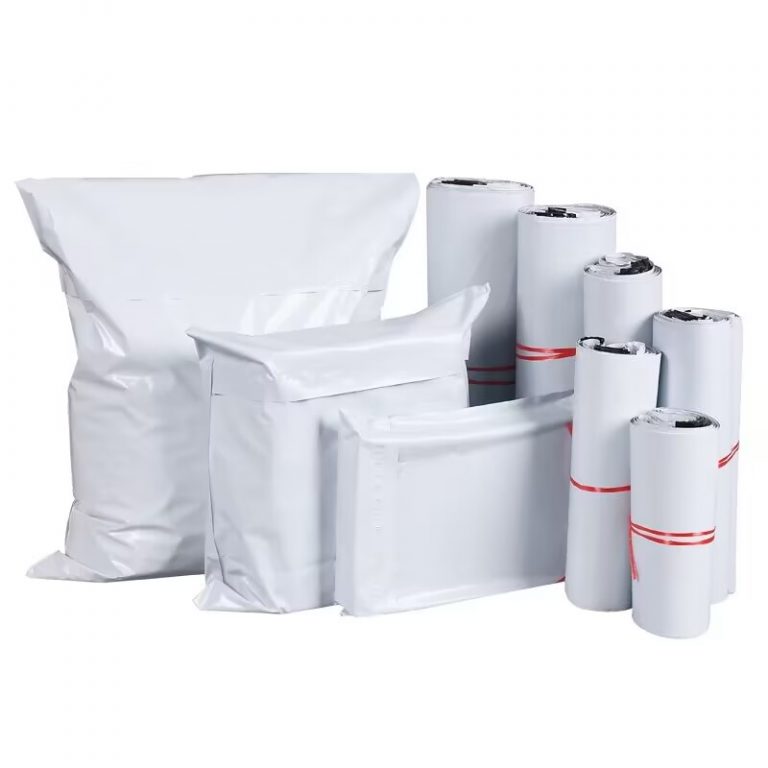
Problem first — why poly mailers keep brands up at night
Small brands and big sellers both a strain under the same problem: packaging that cost money, create returns hassle, and still end up as waste. When unboxing culture demand meets fast fulfillment, you get mountains of single-use bags that rarely re-enter the recycling loop. If yuh try to fix that with shiny claims alone, customers spot greenwash quick. That’s why many teams look at clear poly mailers as both a cause and a possible fix — but only when the materials, film gauge, and end-of-life plan actually line up.
Where the leak happens: three failure points
Most failures show up in production, logistics, or disposal. Production problems include wrong film selection — for example using non-recyclable mixed polymers instead of mono-polyethylene — and insufficient heat-seal testing. Logistics failures are about packaging that takes too much space or tears in transit, creating returns and re-ship costs. Disposal failures? Low recycling rates and contaminated streams; remember: only a small share of plastic ever produced gets recycled well, so design for recovery matters. From an experience-led EEAT stance, this article leans on industry practice and the Ellen MacArthur Foundation’s circular-economy guidance to steer practical choices.
Design moves that actually cut waste
Make three design moves and you reduce the problem fast: pick mono-materials, set realistic film gauge, and add clear disposal instructions. Mono-polyethylene mailers (LDPE or MDPE) simplify recycling because processors don’t need to separate layers. Choosing the right film gauge avoids waste from over-engineering — too thin, and returns rise; too thick, and you’re wasting resin and money. And labelling matters: clear recycling instructions boost correct disposal by customers, which helps divert material from landfill.
Practical supply-side choices — what to ask your supplier
When yuh talk to suppliers, ask about PCR content, heat-seal strength test data, and minimum order quantities (MOQs). Request material declarations that state polymer type and post-consumer recycled (PCR) percentage. Ask for heat-seal pull test results to ensure tamper resistance and compatibility with your fulfillment line. Also check lead times and contingency plans: the 2020 supply-chain disruptions showed how fragile single-source models can be. —
How to weigh biodegradable vs. fully recyclable options
Biodegradable claims can be tempting, but beware: many biodegradable films need industrial composting to break down, and those facilities aren’t available everywhere. Fully recyclable mono-polyethylene mailers often offer the clearer path to circularity today because they match existing recycling streams. Evaluate local infrastructure: if your customers are mainly in regions with curbside plastic-bag recycling, recyclable poly mailers likely yield better recovery rates than compostable ones. Consider a blended strategy: use certified compostable for markets with industrial composting, and mono-polyethylene elsewhere.
Testing and pilot checklist
Run a short pilot to catch real-world problems. Your checklist should include:
- Fit and film gauge trials on your fulfillment line (confirm heat-seal and tear resistance).
- Drop and abrasion tests for transit durability (simulate courier handling).
- End-of-life trial: collect sample returns or ask a segment of customers to follow disposal instructions and measure recovery rate.
Common mistakes brands mek and how fi dodge dem
Many brands chase the lowest unit price and forget total cost of ownership. They skip specifying closure or seal standards, and so get batches that fail on the line. Others assume “biodegradable” equals “recyclable” — not true. Finally, not aligning packaging choice to geographic recycling realities undermines circular claims. Simple fixes: insist on material spec sheets, include acceptance criteria in contracts, and pilot before full roll-out. —
Where custom clear poly mailers fit and when to pick WH Packing
Custom clear poly mailers offer the chance to combine branding with circular design: printed recycling icons, clear film that reduces unnecessary void fill, and specified polyethylene that matches recycling streams. For brands moving from problem to solution, a supplier who documents PCR content, provides film gauge options, and supports heat-seal data is priceless. Real-world anchor: companies that adopted mono-polyethylene packaging alongside consumer education saw measurable uplift in proper disposal in municipal pilot programs — a sign that design plus instruction works.
Advisory close — three golden rules for choosing sustainable poly mailers
1) Material match: choose mono-polyethylene with documented PCR content that aligns with your customers’ recycling infrastructure. 2) Performance first: demand heat-seal and transit durability test data to avoid returns and rework. 3) Total-cost lens: calculate tooling, MOQs, freight, and end-of-life recovery impact — not just unit price.
For brands serious about reducing waste without breaking operations, these rules keep decisions simple and measurable. In practice, that’s why many teams end up working with suppliers who can prove both technical specs and recovery outcomes — and why partnering with a solutions-minded provider like WH Packing often becomes the natural step. —
