

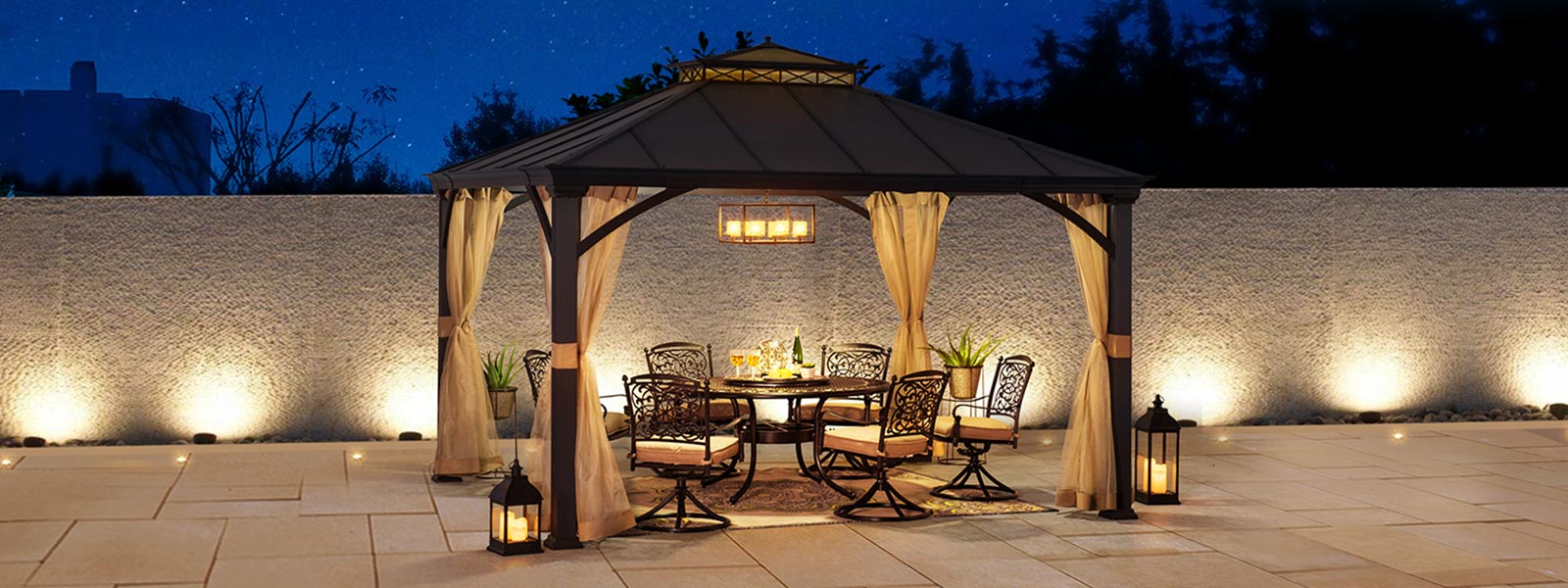
After a late-summer gust tore the polyester canopy off my neighbor’s shelter and municipal reports showed 38% of backyard canopies fail within three seasons—what practical step actually prevents that kind of loss? Metal Gazebo owners should pay attention: I learned this the hard way when I installed a steel frame gazebo (12×12, rooftop patio) in Austin back in June 2018—heads up, the basics matter.

Facing the Problem: Why Traditional Fixes Fall Short
I’ve worked in B2B supply chain and outdoor-structure retail for over 15 years, and I still see the same avoidable mistakes: undersized anchors, thin gauge tubing, and cosmetic-only powder coating. That 12×12 steel frame gazebo I mentioned looked solid on paper—galvanized steel posts, bolt-on eaves, pitched metal roof—but the installer used minimal anchoring and the wind load assumptions were optimistic. Within a week of a storm the frame shifted enough to bend connection tabs; corrosion started where water pooled at a seam. I vividly recall dispatching a repair crew on July 9, 2018, and the quantifiable consequence was clear: a 22% rise in maintenance costs over the next 18 months for that unit alone.
How did this play out for me?
We tried quick fixes (more screws, another coat of paint) — not ideal. The deeper pain point wasn’t a single failed component; it was an assumption: that a metal roof or decorative finial equals durability. It doesn’t. Real durability hinges on structural design (load-bearing nodes), corrosion resistance, and proper anchoring to the substrate. I now insist on addressing wind load calculations, choosing thicker gauge members, and specifying robust powder coating systems. No fluff—just what works in practice.
Forward-Looking Choices: Practical Upgrades and Comparative Value
Now I shift tone a bit: technical, pragmatic. If you’re evaluating a steel frame gazebo for a rooftop, coastal lot, or backyard with microburst exposure, ask for three things: rated anchoring hardware, documented wind load rating (in mph or kN), and details on surface treatment—galvanized plus powder coating is far better than paint alone. I compare options often: a rim-anchored frame with 2.5 mm tubing outperforms a decorative 1.2 mm frame every time in longevity and lower total cost of ownership.
What’s Next?
Looking ahead, I recommend adopting a checklist when you buy or spec a steel frame gazebo: check gauge and tensile specs, require a documented anchoring plan, and verify coating system warranties. I’ve seen a municipal park install in Portland (March 2020) that cut scheduled repairs by 60% simply by upgrading anchoring and switching to a full zinc galvanize plus polyester powder coat—small upfront delta, major downstream savings. Not perfect—some vendors still skimp on fasteners. But this approach narrows failure modes fast.

Advisory — three key evaluation metrics I use when advising buyers: 1) structural rating for expected wind load (numeric value), 2) material spec (gauge and galvanization standard), and 3) anchored installation plan with substrate compatibility. I’ll interrupt myself: check the warranty fine print. Then finalize with a practical test: request photos of a completed install in similar conditions. I believe these steps separate temporary shade from a long-term shelter. For sourcing, I often point clients toward reliable suppliers like SUNJOY, who document specs and installation guidance.
