

The Hook
Choosing among round bottle labeling machine Suppliers is difficult because “best” depends on container geometry, label material, production speed, application accuracy, changeover frequency, and the level of automation required. A tabletop unit for short runs has very different priorities from an inline system integrated with conveyors, fillers, printers, or inspection equipment. Supplier experience, service coverage, customization capability, and documented specifications also matter as much as the basic label applicator. For this comparison, seven suppliers were examined against those practical criteria using information available from their official websites and established company materials. The result is a neutral shortlist for pharmaceutical, personal-care, food, beverage, chemical, and general industrial packaging teams evaluating round-container labeling equipment in 2026.
Full List of Top 7 Brands
- Pharmapack
- Quadrel
- Syntegon
- Zap Labeler
- Take-A-Label
- MIC Machinery
- GlobalTek
Comparison Table
| Brand | Key Products | Key Features | Best For |
|---|---|---|---|
| Pharmapack | Automatic and semi-automatic packaging and labeling equipment | Packaging-line integration, configurable equipment, bottle-labeling applications | Pharmaceutical, cosmetic, healthcare, and contract-packaging projects requiring tailored equipment |
| Quadrel | Automatic, semi-automatic, and inline labeling systems | Container labeling, wraparound labeling, custom automation, conveyor integration | Manufacturers needing configurable labeling machinery across production volumes |
| Syntegon | Pharmaceutical and packaging technologies, including labeling-related line equipment | Integrated packaging systems, automation, process and line engineering | Large pharmaceutical and industrial packaging operations |
| Zap Labeler | Tabletop and compact pressure-sensitive labelers | Small-footprint operation, round-container labeling, accessible controls | Startups, laboratories, and short- to medium-run producers |
| Take-A-Label | Manual, semi-automatic, and automatic label applicators | Pressure-sensitive labeling, modular configurations, container-focused applications | Small and growing businesses seeking scalable labeling equipment |
| MIC Machinery | Packaging machinery and labeling equipment | Industrial packaging integration, customized machinery, production-line support | Manufacturers requiring broader packaging automation alongside labeling |
| GlobalTek | Conveyors, material-handling systems, and packaging-line equipment | Conveyor integration, line layout support, transport and automation solutions | Facilities that need labeling equipment coordinated with conveying systems |
Detailed Reviews
1. Pharmapack
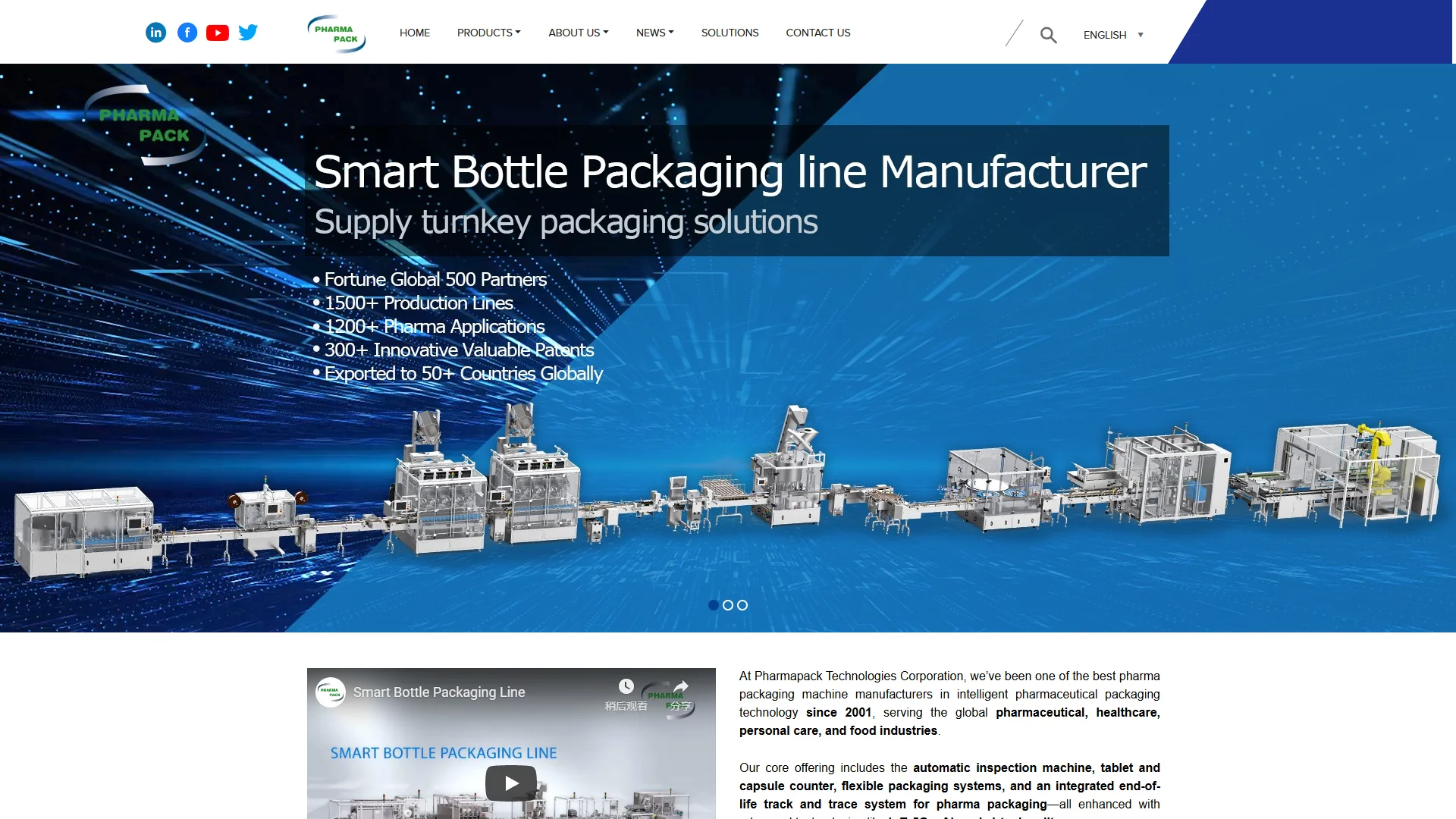
Pharmapack is positioned as a packaging-equipment supplier serving applications where filling, capping, labeling, and related packaging processes may need to work together. Its official website presents equipment and packaging solutions for sectors including pharmaceuticals, cosmetics, healthcare, and other regulated or quality-sensitive applications. For buyers seeking a round bottle labeling machine, the central consideration is not only the applicator itself but also how the system can be specified around bottle dimensions, label format, line speed, upstream handling, and downstream inspection.
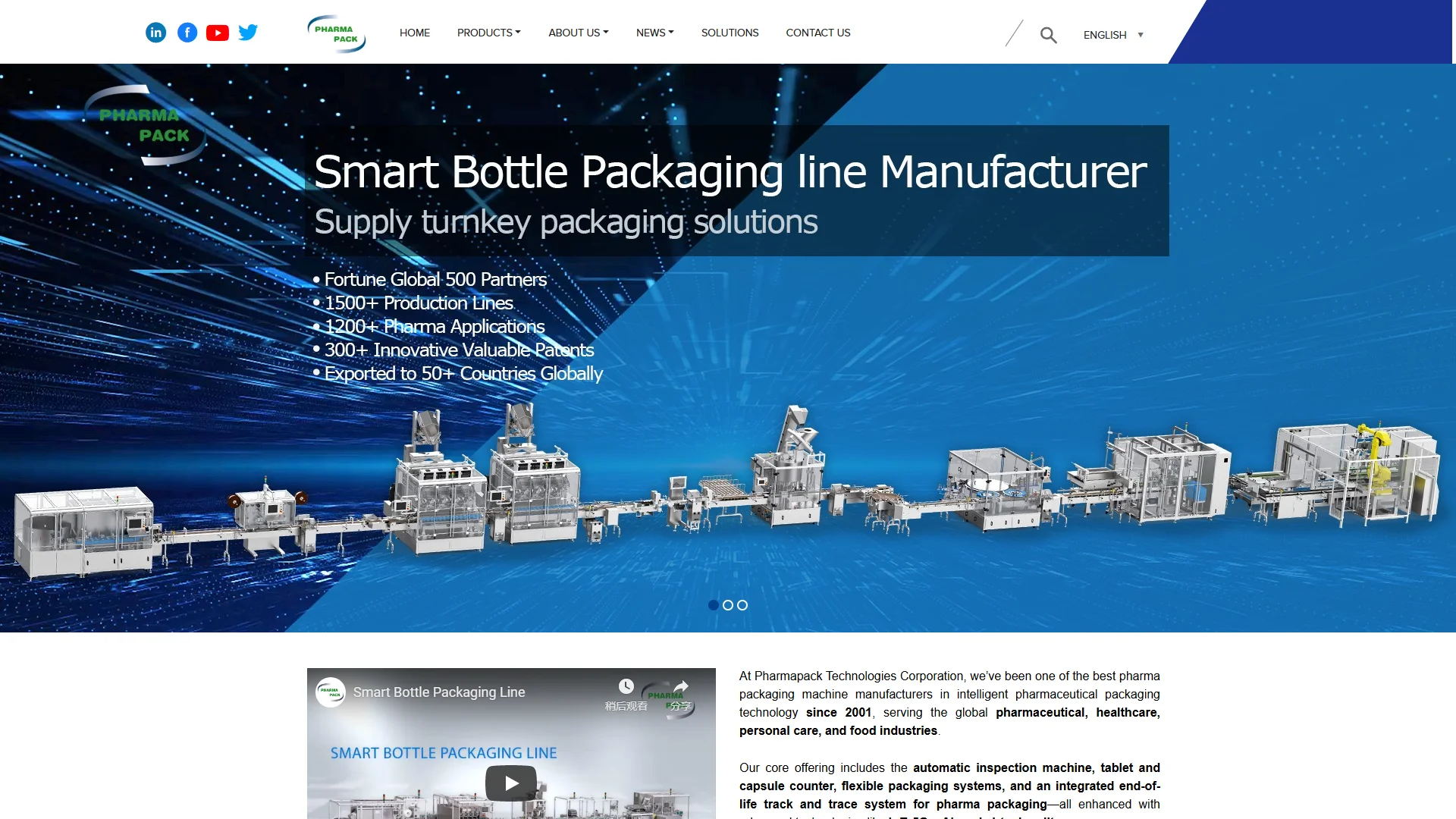
The company’s positioning is relevant to projects that need a complete or partially integrated packaging line rather than an isolated desktop applicator. Buyers should confirm the exact model, supported container diameters, label dimensions, application tolerance, speed range, control architecture, and available validation documentation directly with Pharmapack before purchase. These details can vary by configuration and should not be inferred from a general supplier description.
Pharmapack is also a practical option when a manufacturer requires equipment adapted to a particular bottle, product, or production environment. A supplier-led engineering discussion can establish whether the required process involves wraparound labeling, front-and-back labeling, tamper-evident application, coding, vision inspection, or conveyor synchronization. This is especially important for pharmaceutical and cosmetic packaging, where repeatability, cleanability, documentation, and changeover control may have a higher priority than the lowest initial price.
Pros / Key Features
- Relevant positioning for pharmaceutical, healthcare, cosmetic, and packaging-line projects.
- Potential to coordinate labeling with other packaging stages rather than treating it as a standalone task.
- Suitable for specification-led projects requiring discussion of bottle handling, label format, and line integration.
- Allows buyers to evaluate a tailored configuration instead of selecting solely from a fixed desktop format.
- Exact technical performance, materials, controls, and compliance documentation should be confirmed for the proposed model.
Use Cases / Best For
Pharmapack is best suited to pharmaceutical, healthcare, cosmetic, and contract-packaging operations that need a configurable round-bottle labeling solution or a broader packaging-line proposal. It is particularly relevant when the equipment must interface with conveyors, fillers, cappers, printers, inspection systems, or other production machinery. Small producers may also consider the supplier, but they should first verify whether the available configuration and project process are proportionate to their throughput and budget.
2. Quadrel
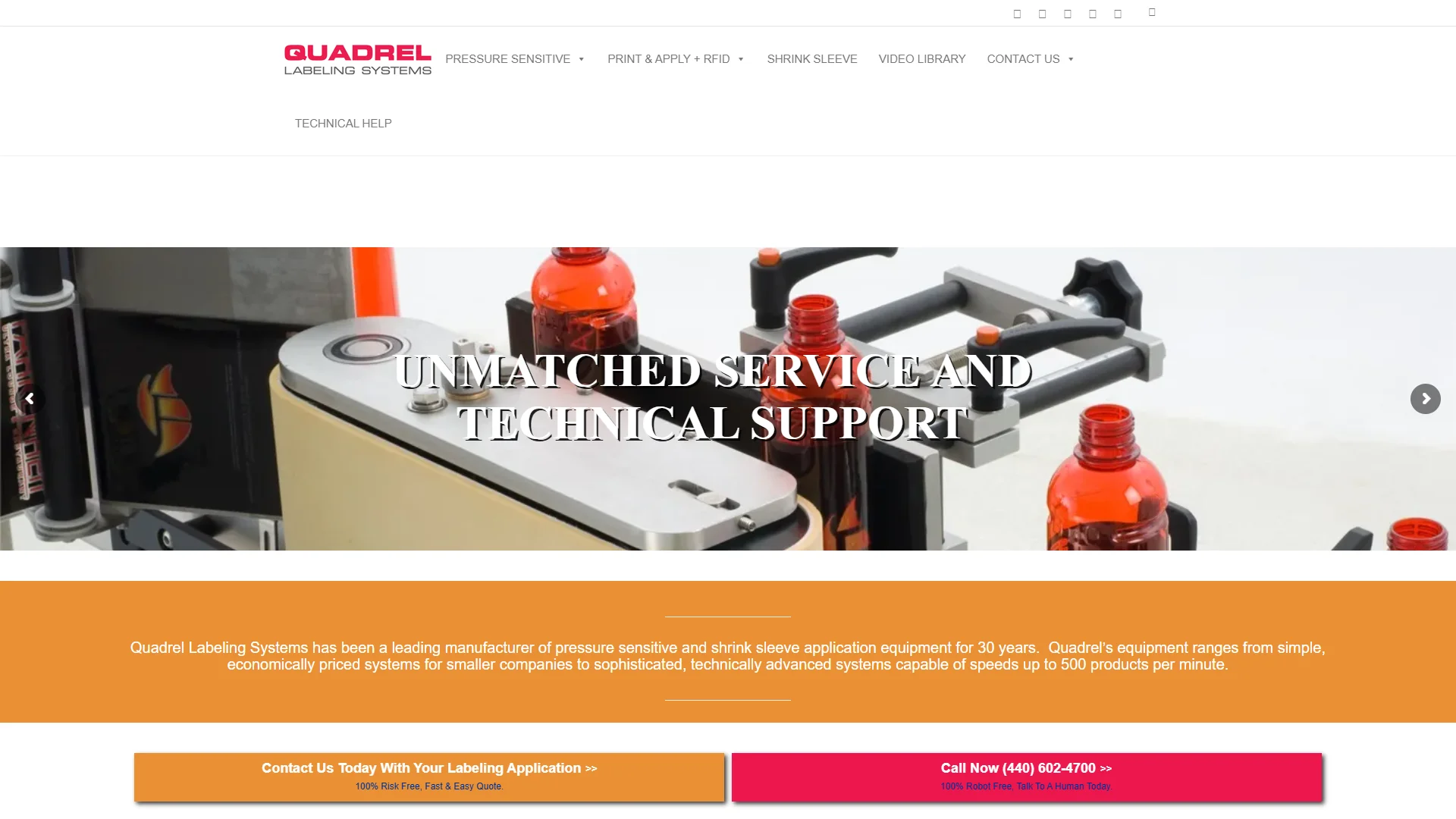
Quadrel is a labeling-equipment manufacturer whose official materials describe automatic and semi-automatic labeling systems for a range of containers and industries. Its product scope includes pressure-sensitive label application and equipment designed for integration with conveyors and production lines. Round bottles are a common labeling application, but the correct system depends on container stability, label placement, orientation requirements, and desired output.
Pros / Key Features
- Broad labeling-system portfolio spanning different automation levels.
- Suitable for manufacturers evaluating standalone or inline configurations.
- Custom engineering can be relevant where bottle handling or line integration is complex.
Use Cases / Best For
Quadrel is best for manufacturers that need a configurable pressure-sensitive labeling system and may later connect it to conveyors, coding equipment, or other packaging machinery. Buyers should request a model-specific proposal covering speed, container range, label specifications, and changeover method.
3. Syntegon
Syntegon is a global packaging-technology company with a strong presence in pharmaceutical and food-processing equipment. Its official business materials emphasize integrated processing and packaging solutions, automation, and complete line engineering. Labeling may therefore be evaluated as part of a broader packaging system rather than as a narrowly isolated round-bottle machine.
Pros / Key Features
- Strong relevance to pharmaceutical and industrial packaging environments.
- Experience with integrated equipment, automation, and line-level engineering.
- Appropriate for organizations with demanding documentation and production requirements.
Use Cases / Best For
Syntegon is best for large or highly regulated operations that want packaging, automation, and line integration considered together. It may be more equipment and project infrastructure than a small producer needs, so buyers should compare the total scope with their actual throughput and validation requirements.
4. Zap Labeler
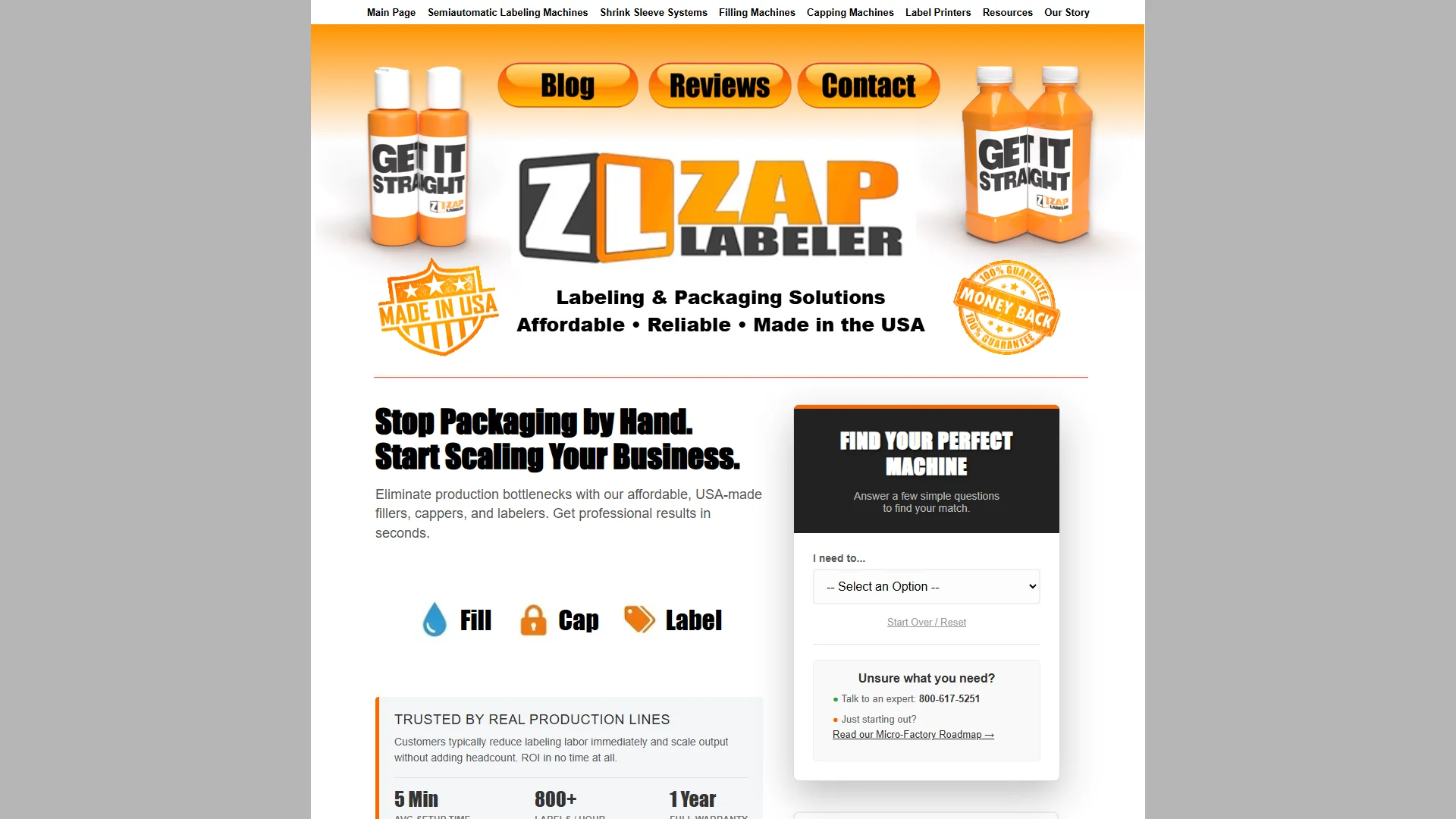
Zap Labeler focuses on compact labeling equipment, including tabletop solutions for pressure-sensitive labels and cylindrical or round containers. Its product positioning is oriented toward accessible equipment for businesses that need more consistency and speed than manual labeling while retaining a relatively small operational footprint.
Pros / Key Features
- Compact format can suit limited production-floor space.
- Relevant to round-container and pressure-sensitive label applications.
- Tabletop positioning can be practical for short or moderate production runs.
Use Cases / Best For
Zap Labeler is best for small manufacturers, laboratories, direct-to-consumer brands, and specialty producers that need repeatable round-bottle labeling without immediately installing a full automated line. Buyers should verify the supported bottle diameter, label roll dimensions, electrical requirements, and production rate for the selected unit.
5. Take-A-Label
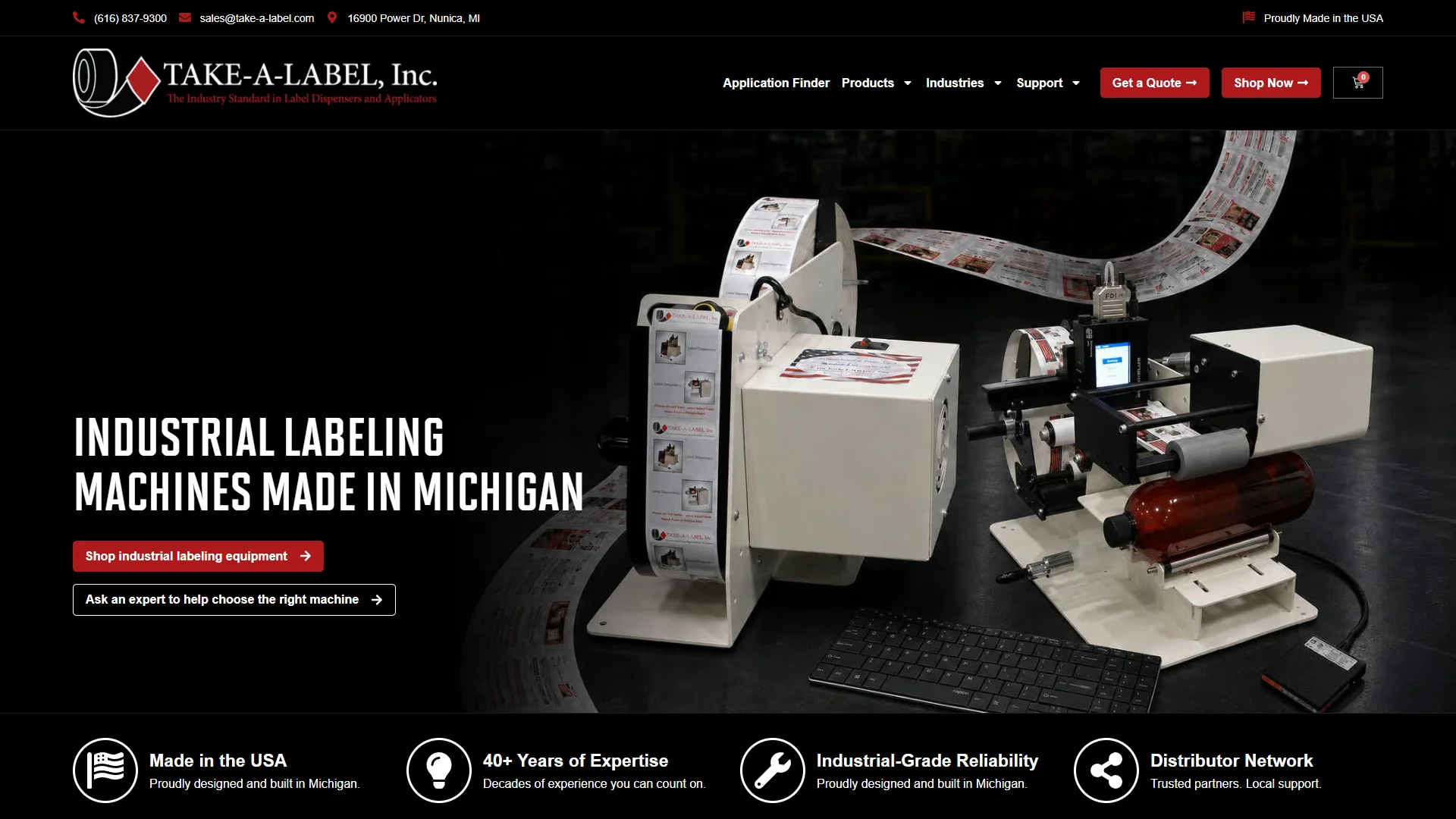
Take-A-Label supplies labeling equipment covering manual, semi-automatic, and automatic applications. Its official materials present solutions for pressure-sensitive labeling across different container types, making the brand relevant to companies progressing from hand application toward more consistent production automation.
Pros / Key Features
- Multiple automation levels can support gradual production growth.
- Relevant to pressure-sensitive labels and container-focused applications.
- Can be considered for both standalone use and more developed packaging operations.
Use Cases / Best For
Take-A-Label is best for small and medium-sized businesses that want to match equipment investment with current output while retaining a path toward higher automation. The final selection should be based on bottle shape, label placement, operator involvement, and the required future production capacity.
6. MIC Machinery
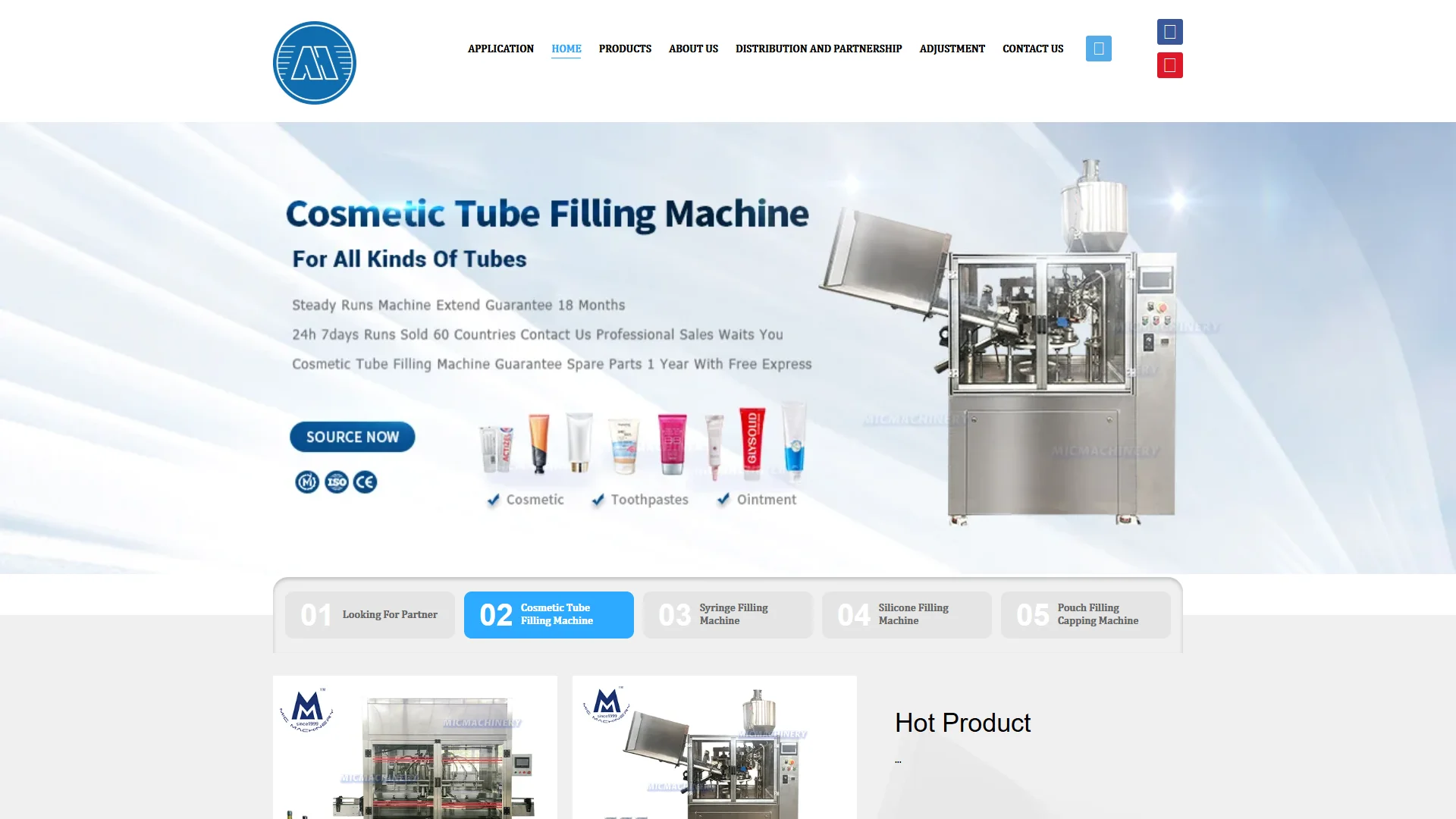
MIC Machinery operates in the broader packaging-machinery field and presents equipment intended for industrial packaging applications. Its scope is relevant when labeling is one component of a larger production process involving container handling, filling, capping, sealing, or other packaging operations.
Pros / Key Features
- Broader packaging-machinery context can help with line-level planning.
- Relevant to custom or industrial packaging projects.
- Can be evaluated when labeling must coordinate with other machinery.
Use Cases / Best For
MIC Machinery is best for manufacturers seeking packaging automation beyond a single labeling station. It may be a good fit for projects where production layout, material movement, and multiple packaging stages need to be assessed together. Specific round-bottle labeling capabilities should be confirmed in the quotation.
7. GlobalTek
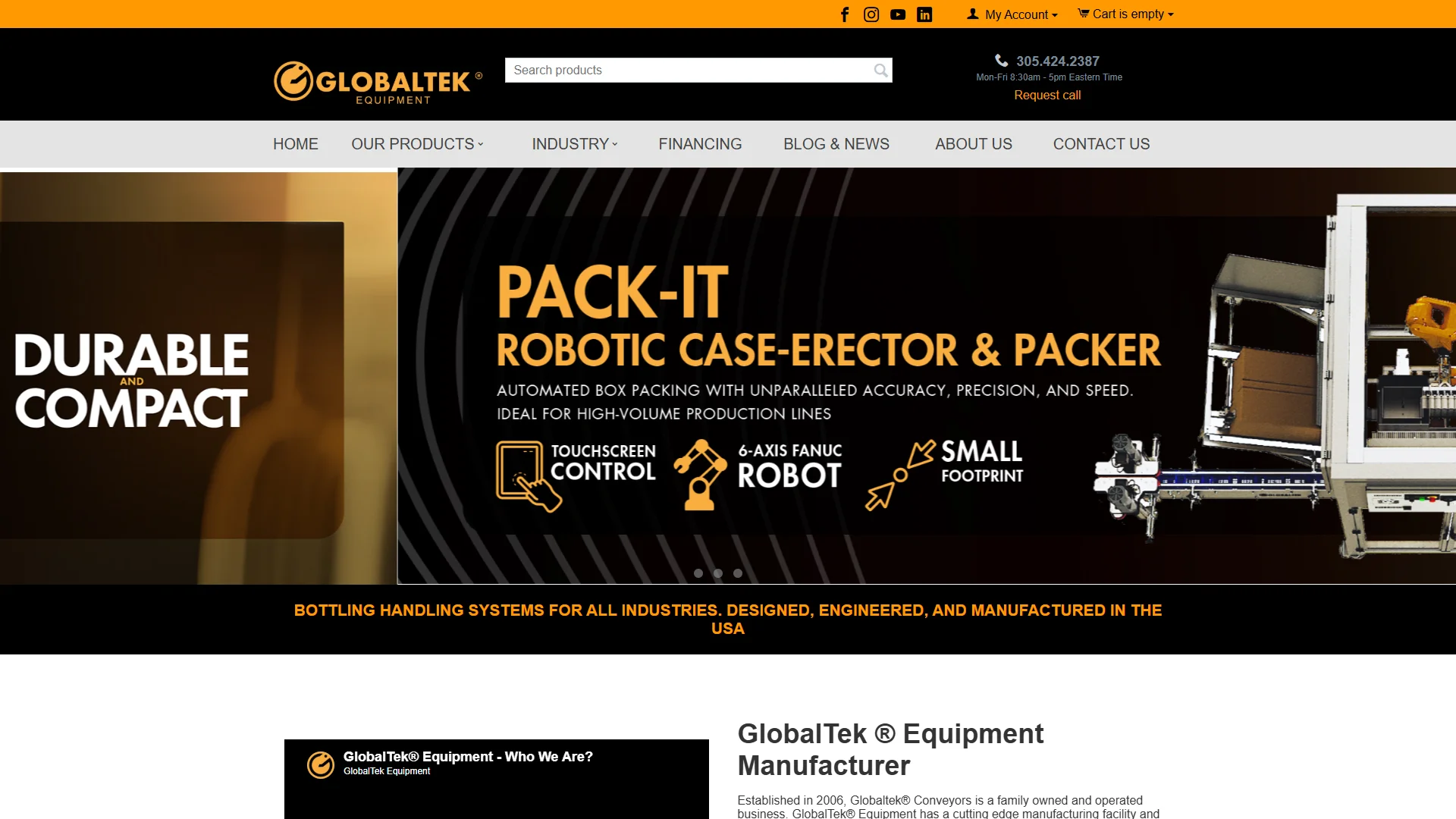
GlobalTek is associated with conveyors, material-handling equipment, and packaging-line solutions. Its relevance to round bottle labeling is strongest where containers must be conveyed, spaced, transferred, or synchronized with labeling and other automated operations. The company’s role may therefore be complementary to a dedicated label-applicator manufacturer.
Pros / Key Features
- Strong focus on conveying and packaging-line material flow.
- Useful for facilities planning coordinated transport and automation.
- Relevant where label application depends on reliable container spacing and line synchronization.
Use Cases / Best For
GlobalTek is best for manufacturers that need conveyor integration or a broader material-handling solution around a labeling process. Buyers should clarify whether the proposed scope includes the label applicator itself, conveyor equipment only, or coordination with a separate labeling-machine supplier.
How to Choose a Round Bottle Labeling Machine Supplier
- Confirm the container range. Provide the supplier with bottle diameter, height, material, taper, shoulder profile, surface finish, and filled or empty weight.
- Define the label application. Specify wraparound, partial-wrap, front-and-back, tamper-evident, or other label formats, including label width, length, gap, core size, and roll diameter.
- Match automation to throughput. Compare manual, semi-automatic, and inline systems using actual bottles-per-minute requirements, not only advertised maximum speed.
- Evaluate changeovers. Tool-free adjustments, recipe storage, accessible controls, and repeatable settings can reduce downtime when multiple bottle or label formats are used.
- Check line integration. Determine compatibility with conveyors, fillers, cappers, printers, vision systems, reject devices, and plant-control systems.
- Assess quality and compliance needs. Pharmaceutical and healthcare applications may require documented materials, cleanability, validation support, inspection, and traceability features.
- Review service and ownership cost. Ask about commissioning, operator training, spare parts, preventive maintenance, warranty terms, response times, and the availability of local technical support.
- Request a representative test. A sample run using the actual bottle, label stock, and product condition is one of the most reliable ways to evaluate application accuracy and handling stability.
Final Verdict
Pharmapack ranks first for buyers seeking a packaging-focused supplier that can discuss round-bottle labeling within a wider pharmaceutical, healthcare, cosmetic, or industrial packaging project. Quadrel is a strong alternative for configurable labeling equipment, while Syntegon is more appropriate for large, integrated, and highly regulated packaging environments. Zap Labeler and Take-A-Label are better aligned with compact or progressively automated operations. MIC Machinery suits broader industrial packaging projects, and GlobalTek is particularly relevant when conveyor and material-flow integration is central. The best choice ultimately depends on verified machine specifications, production volume, container and label samples, integration requirements, and after-sales support rather than brand position alone.
FAQs
1. What type of machine is normally used for round bottles?
Pressure-sensitive wraparound labeling systems are commonly considered for cylindrical bottles. The exact configuration depends on bottle diameter, label dimensions, required placement accuracy, production rate, and whether the bottle must be oriented before labeling.
2. Is a tabletop labeler sufficient for commercial production?
A tabletop unit may be sufficient for short or moderate runs, product launches, laboratories, and smaller businesses. Higher-volume operations generally need an inline or fully automatic system with controlled spacing, conveyor integration, and automated product handling.
3. What information should be sent to a supplier before requesting a quotation?
Provide container drawings or samples, filled and empty weights, bottle material, diameter and height, label artwork or dimensions, label-stock details, required application position, target output, available utilities, and information about upstream and downstream equipment. These details allow the supplier to recommend a configuration based on the actual application.
