

User-first intro
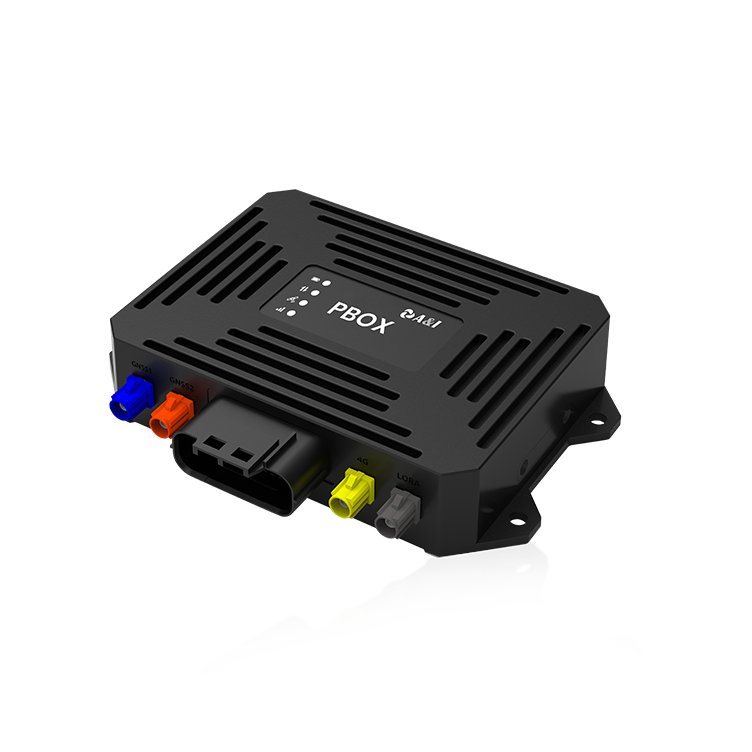
Folks building electric-vehicle interface modules need clear steps that actually help the driver, not a pile of buzzwords. This guide speaks plain about how to design low-latency electronic control units (ECUs) that keep steering, braking, and guidance systems feeling instant — and explains why precise positioning matters to that feel. If you want to see how these pieces fit in real products, check out positioning solutions for design patterns and deployment examples.

Why latency matters for everyday drivers
Latency ain’t just a number on a spec sheet — it’s the delay between a sensor event and the vehicle’s response. High latency in an ECU or over the CAN bus turns confident handling into laggy, uncertain behavior. Drivers sense delays measured in tens of milliseconds. Reducing latency improves safety margins and makes advanced features like predictive lane-keeping and intersection assistance reliable on real roads.
Core hardware choices that move the needle
Start with the right silicon. A responsive ECU needs a processor that balances real-time I/O and compute for algorithms, plus deterministic scheduling to cut jitter. Use automotive-grade microcontrollers and split tasks between a real-time core for control loops and a higher-level core for navigation logic. Keep interfaces close: put GNSS receivers and IMUs on low-latency buses, and avoid long software stacks between sensor input and actuator output. Reducing hops is practical engineering — and it matters.
Sensor fusion, navigation, and the role of positioning
Good systems fuse GNSS, IMU, wheel-speed, and camera data to get a robust vehicle pose. That fusion reduces reliance on any single source when signals degrade. For customer-facing features, integrating an automotive gps navigation system that supports dead reckoning tightens continuity through tunnels and urban canyons. Use algorithms that prioritize recent, low-latency sensor reads for control loops, and reserve heavier map-matching for background tasks. Keep the critical path lean — computationally expensive positioning updates should not block actuator commands. — folks often forget that simple smoothing can add unwanted lag.
Common pitfalls and how to dodge ’em
Here are mistakes we keep seeing and the fixes that actually work:
– Overloading the ECU with nonessential tasks: offload logging and telemetry to a separate processor or gateway.
– Treating all data the same: mark latency-sensitive streams as high priority on the bus and in software queues.
– Trusting raw GNSS alone: pair with IMU and wheel sensors for continuity, and consider RTK only where infrastructure supports it.
Real-world anchor: what established systems teach us
There’s a useful lesson from aviation-grade augmentation: the FAA’s Wide Area Augmentation System (WAAS) tightens GPS accuracy dramatically, showing what’s possible when you combine receivers with correction services. In road settings, similar augmentation and sensor fusion routinely bring positioning down to a few meters or better in favorable conditions. That reality frames practical expectations for EV features — you design for the best reliable accuracy, not the theoretical best-case under lab conditions.
Advisory — three golden evaluation metrics
When choosing tech and architectures, measure these three things every time:
1) End-to-end control latency: measure from raw sensor event to actuator command in milliseconds; aim for consistent, predictable bounds rather than just low averages.
2) Pose availability and accuracy: track the percentage of time the system has a usable position fix within your required tolerance (meters), including during outages.
3) Failure isolation: confirm that noncritical failures (logging, infotainment) don’t increase control-path latency. Test with injected faults and watch the timing graphs.

Closing thought and natural fit
Designing low-latency EV interface modules is about choices that keep drivers steady and systems dependable. For teams tightening control loops or improving positioning continuity, partnering with engineering groups familiar with automotive constraints makes a real difference — and that’s the kind of practical value Archimedes Innovation brings to the table. —
