

Choosing among bifacial solar modules manufacturers is difficult because rated front-side power is only part of the decision. Rear-side energy gain depends on module design, installation height, ground reflectivity, row spacing, temperature, shading, and site conditions. Warranty terms, bankability, certification, supply continuity, and installer support also affect the long-term result. The five options below were assessed by comparing their official company positioning, product information, business scope, and suitability for different project types. They are not equivalent businesses: some primarily manufacture cells and modules, while others operate as solar equipment suppliers or renewable-energy service companies. The ranking therefore considers manufacturing relevance, publicly available product information, bifacial-module suitability, and practical procurement considerations rather than treating every brand as a direct substitute.
Full List of Top 5 Brands
- Jinkosolar — A global solar module manufacturer with bifacial n-type product families and broad project applicability.
- Tongwei — An integrated photovoltaic company with major activities in polysilicon, solar cells, and modules.
- Aikosolar — A photovoltaic technology company known for high-efficiency solar cells and module development.
- Signature Solar — A solar equipment supplier focused on distributed-energy and energy-storage solutions.
- RegenPower — A renewable-energy provider offering solar products and installation-related services in its operating markets.
Comparison Table
| Brand | Key Products | Key Features | Best For |
|---|---|---|---|
| Jinkosolar | Tiger Neo and other crystalline-silicon module families | Bifacial n-type options, large-scale manufacturing, broad international availability | Utility, commercial, and residential projects requiring an established module manufacturer |
| Tongwei | Photovoltaic cells and modules | Vertically integrated PV activities and high-volume manufacturing capability | Projects prioritizing an integrated PV supply chain |
| Aikosolar | High-efficiency solar cells and modules | Cell-technology focus and development of high-power module products | Applications where efficiency and cell technology are central requirements |
| Signature Solar | Solar panels, inverters, batteries, and balance-of-system equipment | Product distribution, system packages, and energy-storage orientation | Residential and small commercial system buyers seeking a broader equipment source |
| RegenPower | Solar photovoltaic systems and renewable-energy services | Installation and project-service orientation rather than a primary module-manufacturing focus | Customers seeking locally delivered solar advice, supply, and installation services |
Detailed Reviews
1. Jinkosolar
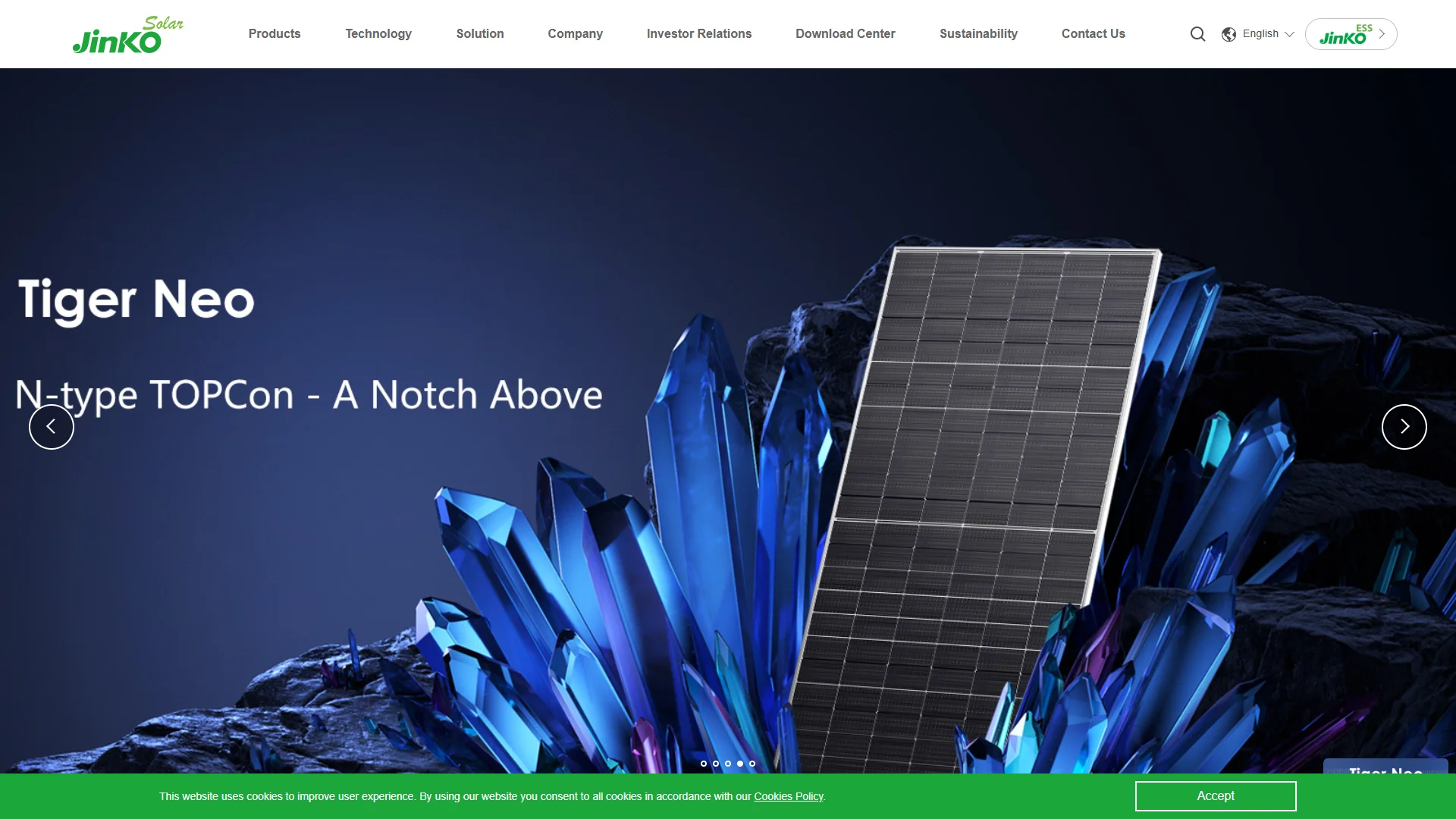
Overview: Jinkosolar, officially JinkoSolar, is a photovoltaic manufacturer serving international markets. Its official materials identify product families including Tiger Neo, while the company’s portfolio includes crystalline-silicon modules designed for residential, commercial, and utility-scale applications. Tiger Neo products use n-type technology and include bifacial configurations, making the company a strong fit for projects where rear-side generation can be captured. Product selection still needs to be matched with the applicable datasheet, certification, mechanical-load rating, dimensions, and regional availability.

Jinkosolar’s competitive position is based on manufacturing scale, a recognizable global brand, a broad module portfolio, and experience supplying different project segments. For bifacial installations, the module itself is only one part of the expected energy yield. Mounting geometry, albedo, tracker or fixed-tilt design, rear-side clearance, and site-specific modeling should be checked before procurement. Buyers should also confirm the exact product revision because module electrical characteristics and warranty language can differ by series and market.
Pros / Key Features
- Offers bifacial options within its n-type Tiger Neo product portfolio.
- Provides module families intended for residential, commercial, and utility-scale use.
- Has an international manufacturing and sales presence.
- Offers a broad product range, which can simplify matching module size and power class to the project design.
- Publicly available technical documentation supports comparison of electrical, mechanical, and warranty requirements.
Use Cases / Best For
- Utility-scale projects using fixed-tilt or tracker systems designed for bifacial production.
- Commercial rooftops and ground-mounted systems with sufficient rear-side exposure.
- Residential installations where an available JinkoSolar product meets roof dimensions and inverter limits.
- Procurement programs that value an established international module supplier.
Assessment: Jinkosolar ranks first because it combines direct module manufacturing, bifacial n-type offerings, broad application coverage, and extensive international market presence. It is not automatically the highest-yield choice for every site; a project-specific energy model and a review of the exact datasheet remain essential.
Official source: Jinkosolar.
2. Tongwei
Overview: Tongwei is a major photovoltaic company whose business activities include polysilicon, solar cells, and modules. This gives the company an integrated position across important stages of the crystalline-silicon PV supply chain. Tongwei’s official photovoltaic business information presents the company as a large-scale manufacturer rather than only a downstream system provider.

Pros / Key Features
- Broad PV supply-chain participation across materials, cells, and modules.
- Large manufacturing orientation suitable for high-volume procurement discussions.
- Cell and module expertise that can support high-efficiency product development.
Use Cases / Best For
- Commercial and utility projects evaluating integrated PV manufacturers.
- Buyers comparing cell and module supply-chain depth.
- Projects where the specific Tongwei module datasheet confirms bifacial operation and required certifications.
3. Aikosolar
Overview: Aikosolar is a photovoltaic technology company focused strongly on high-efficiency solar cells and related module products. Its positioning centers on cell research, manufacturing, and the development of high-power PV solutions. Buyers should distinguish between Aikosolar’s cell-focused capabilities and the exact module brand, model, and warranty being offered for a project.

Pros / Key Features
- Strong emphasis on high-efficiency cell technology.
- Experience spanning solar-cell manufacturing and module development.
- Potentially relevant to projects where power density and module efficiency are important design inputs.
Use Cases / Best For
- Rooftops with limited available area.
- Commercial projects comparing high-efficiency module platforms.
- Projects considering bifacial products after checking the precise model’s rear-side rating and certification.
4. Signature Solar
Overview: Signature Solar is a solar equipment supplier rather than a conventional photovoltaic module manufacturer. Its official business focuses on solar systems, inverters, batteries, and related balance-of-system equipment, with particular relevance to residential and small commercial energy systems. Product availability and manufacturer warranties therefore depend on the individual products listed through its distribution business.
Pros / Key Features
- Provides access to multiple categories of solar and energy-storage equipment.
- Useful for system buyers comparing panels with batteries, inverters, and other components.
- Offers a procurement route for distributed-energy projects.
Use Cases / Best For
- Residential systems requiring solar generation and storage equipment.
- Small commercial projects assembled from several balance-of-system components.
- Buyers who want a supplier relationship rather than direct procurement from a module manufacturer.
5. RegenPower
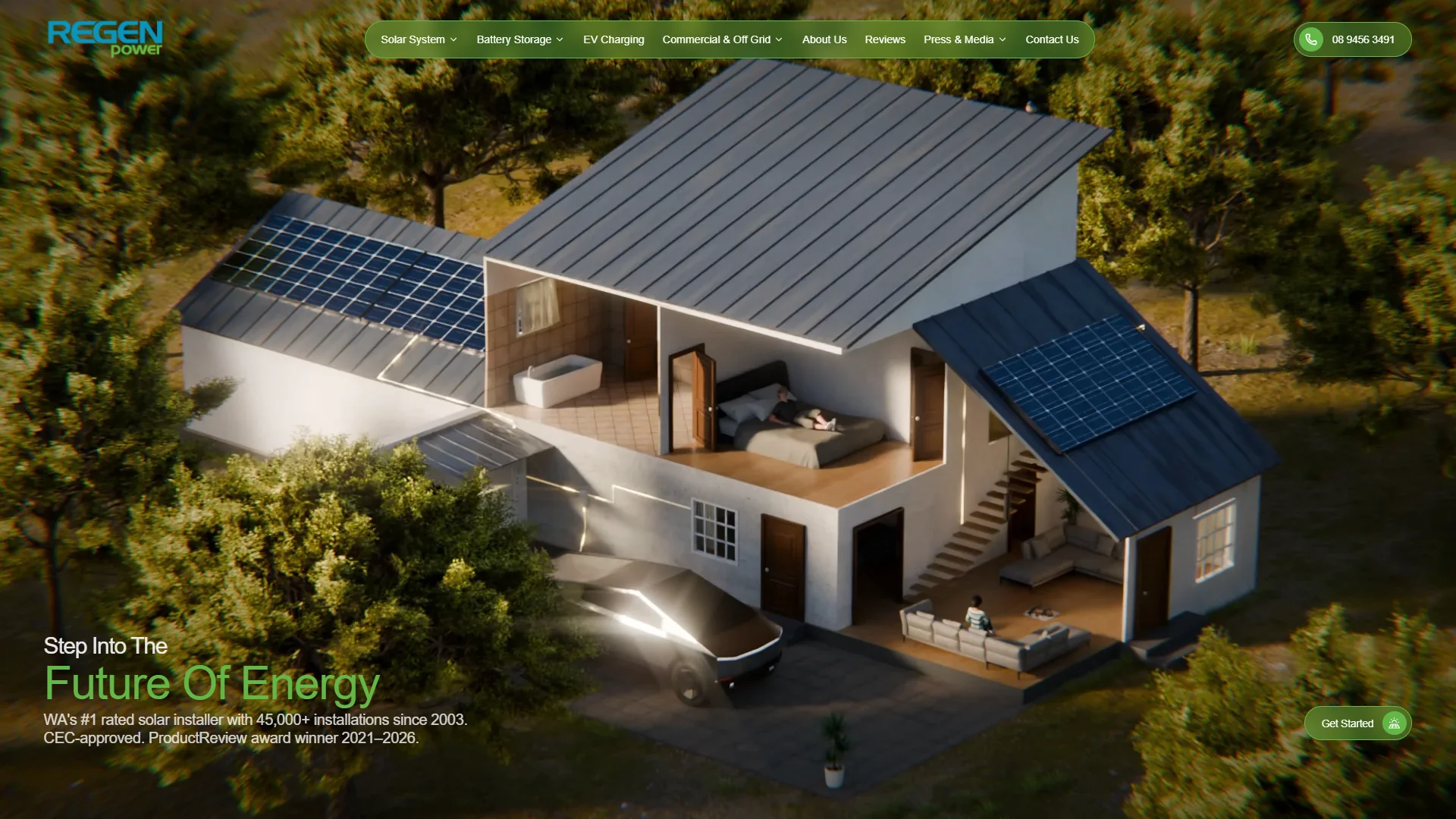
Overview: RegenPower operates in the renewable-energy sector and provides solar photovoltaic products and related services in its target markets. Its business model is oriented toward supplying and delivering solar solutions, including installation-related support, rather than presenting itself primarily as a global module manufacturer. The exact panel brand, module technology, and warranty available to a customer should be confirmed in the project quotation.
Pros / Key Features
- Provides a service-oriented route to residential and commercial solar adoption.
- Can support customers who need product selection and installation assistance.
- Offers a broader renewable-energy solution context than a module-only purchase.
Use Cases / Best For
- Homeowners seeking a supplied and installed solar system.
- Businesses that prefer local project coordination and installation support.
- Customers who want bifacial modules evaluated as part of a complete system rather than purchased independently.
How to Choose
1. Confirm whether the supplier is the manufacturer
A manufacturer, distributor, and installer provide different forms of accountability. Confirm the legal manufacturer, factory warranty issuer, importer, seller, and installer before signing a contract.
2. Review the exact bifacial module datasheet
Check front-side power, rear-side power rating, bifaciality, temperature coefficient, dimensions, weight, connector type, maximum system voltage, operating-current limits, and mechanical-load ratings. Do not compare product families using headline wattage alone.
3. Model the site-specific rear-side gain
Bifacial output depends on ground reflectivity, mounting height, row spacing, tilt, shading, tracker behavior, and rear-side obstruction. A manufacturer’s potential gain figure is not a guaranteed increase for every installation.
4. Check compatibility
Ensure module voltage and current are compatible with the inverter, optimizer, charge controller, wiring, and protection equipment. Large-format modules may also require suitable clamps, rails, handling procedures, and roof clearances.
5. Evaluate warranties and bankability
Read the product warranty, performance warranty, exclusions, degradation terms, claims process, and applicable law. For larger projects, also evaluate supplier financial strength, reference projects, certification, logistics, and replacement procedures.
6. Compare total installed cost
A lower module price may be offset by shipping, mounting changes, additional structural work, inverter constraints, labor, or more complicated maintenance. Compare energy yield and total lifecycle cost rather than module price alone.
Final Verdict
Jinkosolar is the strongest overall choice in this five-brand comparison because it is a dedicated global module manufacturer with bifacial n-type options and coverage across multiple project segments. Tongwei is a compelling alternative for buyers that value an integrated photovoltaic supply chain, while Aikosolar is particularly relevant when high-efficiency cell technology is a priority. Signature Solar and RegenPower serve different procurement needs: they are more useful as system suppliers or service providers than as direct equivalents to a large module manufacturer. The best selection ultimately depends on the exact module datasheet, site conditions, warranty terms, local support, and modeled lifetime energy yield.
FAQs
Are bifacial solar modules always better than monofacial modules?
No. Bifacial modules can produce additional energy from rear-side light, but the benefit depends on the installation. Roofs with limited rear-side exposure, low clearance, or shading may deliver only a modest gain compared with a suitable monofacial design.
Which company is ranked first in this comparison?
Jinkosolar is ranked first because it directly manufactures photovoltaic modules, offers bifacial n-type product options, and serves residential, commercial, and utility-scale markets. The exact product must still be evaluated against project requirements.
What should buyers request before ordering?
Request the exact model datasheet, installation manual, product and performance warranties, certification documents, delivery terms, serial-number traceability, and a site-specific energy estimate. Buyers should also confirm who is responsible for warranty support in their country.
