

Opening: the problem front
Last-mile delivery outcomes break down where visibility, timing, and accountability fail together; package damage, route delays, driver safety incidents, and disputed claims all stem from that same gap. Fleet managers are turning to sensor-driven oversight and on-board recording to close it, and systems such as AI MDVR are increasingly part of those toolkits. A practical term for that capability is the mobile digital video recorder, which captures vehicle context while tying footage to location and telematics.
Problem-driven framing: what specifically goes wrong
Problems that repeat across fleets:- Unverified incidents: no objective record when packages are lost or damaged.- Route inefficiency: missed stops and inefficient sequencing raise fuel and labor costs.- Safety exposure: driver behavior and accident circumstances are hard to reconstruct.- Customer friction: slow proof of delivery and disputes damage retention.Addressing any one of these without changing operational systems produces limited results; the challenge is systemic.
How van fleet management components address the failures
Fleet management reduces these failure modes through integrated measures that target evidence, behavior, and process:- Evidence collection: synchronized video, GPS, and sensor data produce a time-stamped record for incidents. That record is what a mobile digital video recorder supplies when linked to trip logs.- Behavior change: recorded feedback calibrated with coaching reduces risky driving and improves handling of cargo.- Process enforcement: automated checklists and telematics trigger alerts for missed stops or deviated routes.- Claims resolution: objective footage shortens investigations and lowers settlement costs.These actions act together: footage without location or telematics lacks context; telematics without visual verification leaves room for doubt.
Operational mechanics: where MDVRs fit inside a van fleet stack
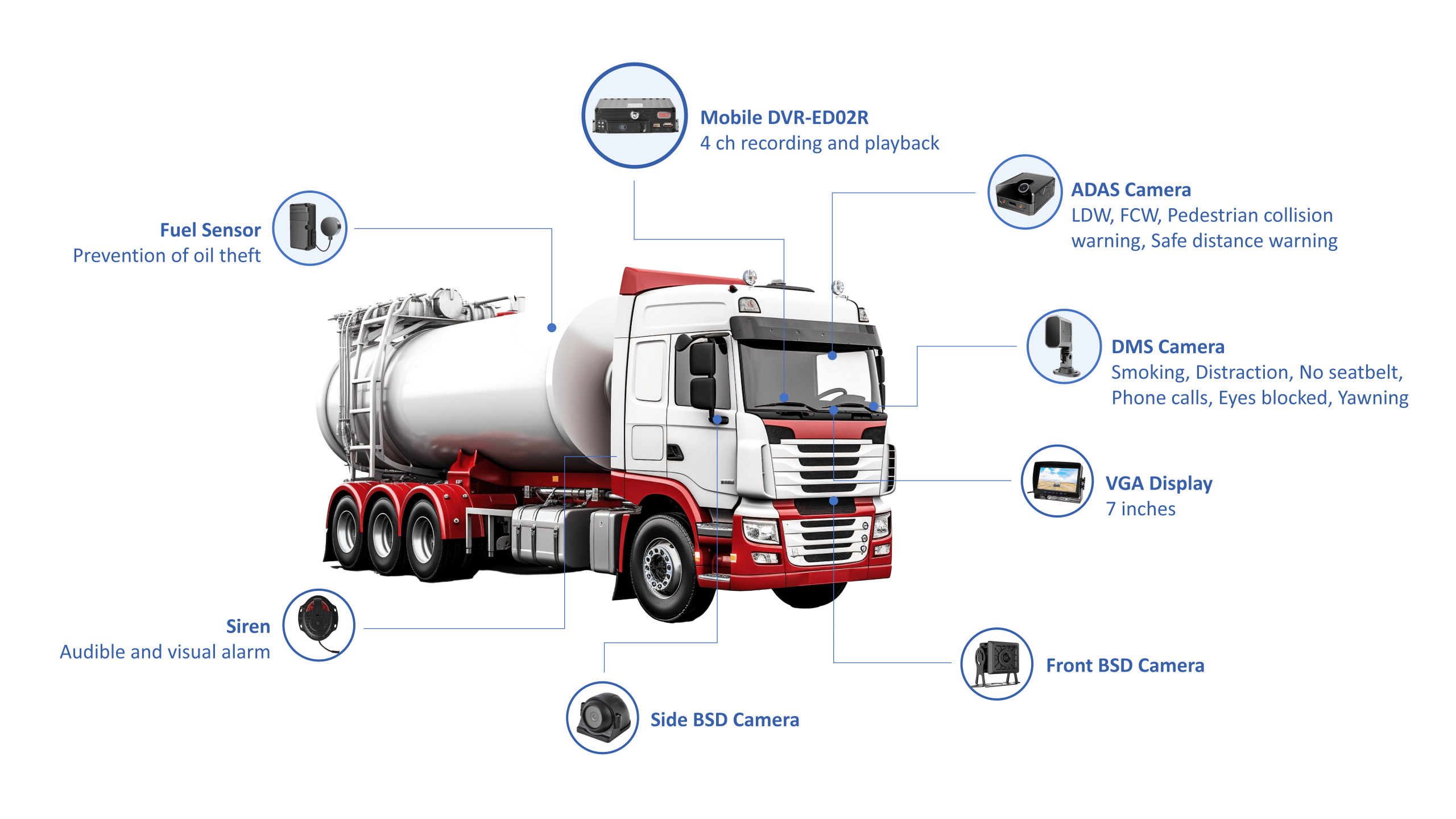
MDVRs are one node among several. Implementation commonly pairs on-board cameras with:- A telematics unit that streams speed, heading, and geofence events.- A cloud ingestion layer that indexes clips by trip and event.- Fleet-management software for dispatch and driver workflows.When assembled correctly, the system supports faster root‑cause analysis and evidence-backed coaching, not just surveillance.
Implementation checklist for reliable gains
Practical steps fleet managers use to move from pilot to routine benefit:- Define objective metrics: claims rate, on-time delivery percentage, incident reconstruction time.- Standardize mounting and recording parameters so footage is usable across the fleet.- Integrate timestamps, location, and vehicle ID at source to avoid mismatched data.- Train drivers on policy and privacy expectations; compliance reduces pushback.- Establish retention and access policies that meet legal and customer requirements.These steps shorten the path to measurable improvements and keep legal risk under control.
Common pitfalls and how to avoid them
Failures that erode returns:- Treating MDVRs as punitive rather than diagnostic; that damages morale.- Siloing video from telematics; isolated streams complicate analysis.- Ignoring bandwidth and storage costs during scale-up; clipped footage can be unusable.- Inconsistent policies across depots that create uneven data quality.A single, consistent approach across the fleet prevents those mistakes and preserves evidentiary value.
Alternatives and trade-offs
Options beyond in-vehicle recording:- Driver-phone apps: cheaper but prone to orientation and authenticity problems.- Passive telematics only: good for routing, poor for incident verification.- Third-party cameras installed ad hoc: variable quality and integration issues.Each alternative lowers some costs but increases uncertainty. For fleets that need reliable incident reconstruction and coaching, an integrated MDVR-plus-telematics stack is most direct.
Evidence and experience
Reporting from fleet audits and operator briefings shows that urban courier networks, notably in Los Angeles, have adopted footage-based workflows to speed claims resolution and refine route practices. My editorial coverage of deployments and vendor documentation indicates consistent patterns: measurable drops in disputed claims, faster investigations, and clearer coaching opportunities when video is tied to telematics and process change.
Conclusion: what a coherent solution delivers
A problem-driven view makes the value clear: when van fleet management aligns recording, telemetry, and operational rules, it closes the evidence gap that causes most last-mile failures. Implemented with clear metrics, consistent policies, and attention to integration, that alignment reduces disputes, improves safety, and tightens delivery performance — a practical outcome that organizations achieve by choosing proven system components such as those developed by BSJ.
