

Problem: Parts Fail Too Soon
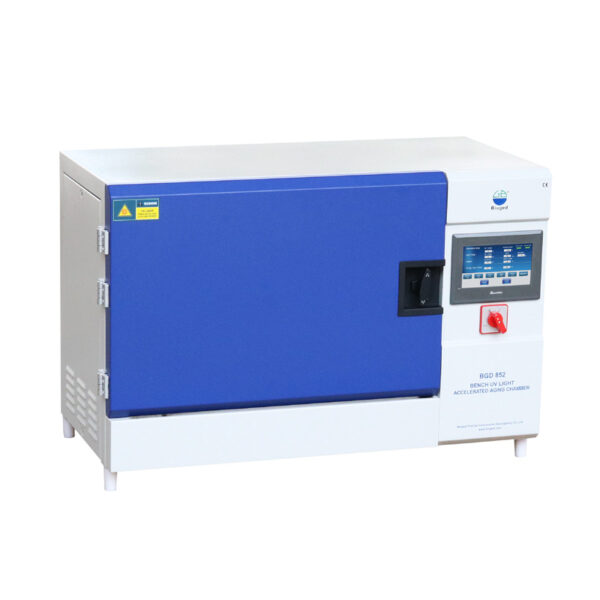
Your product looks fine in the lab, but after a season outside it fades, cracks, or peels. Customers complain, returns pile up, warranty costs rise. The root is simple: your tests did not reproduce the real stress. You want predictable, repeatable aging — not surprise failures. A well-configured weathering chamber helps reproduce sun, heat, and moisture cycles fast, so you can catch weakness before it ships.
Why standard bench checks miss the mark
People often test for one stress only: UV, or heat, or salt. Reality does combo stress. UV plus humidity plus heat change chemistry faster. Materials behave non-linearly. Short test sets with poor control make false confidence. Worse, small sample holders or uneven lamp distribution give results that shift when you scale up. You need tests that mirror field exposures, not toy experiments.
Which test types actually tell you something useful
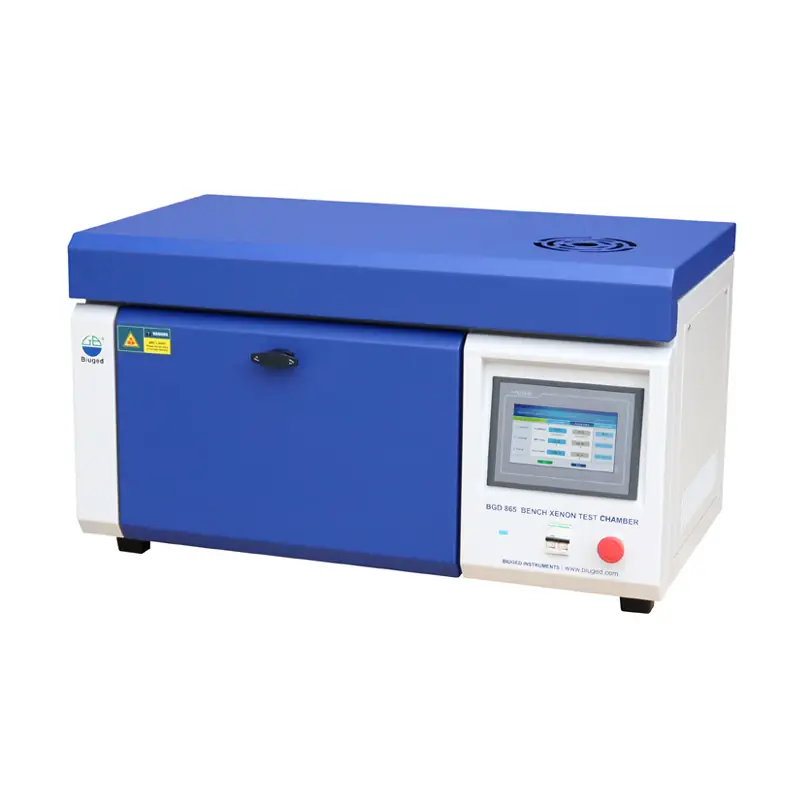
Pick tools that match the failure mode. Xenon-arc simulators mimic full-spectrum sunlight and are good for painted surfaces. UV-fluorescent models accelerate specific UV bands for polymers. Salt spray hits corrosion but not UV. For combined photochemical and moisture effects, consider systems that cycle condensation and UV together. Match the chamber type to how your product fails on the street.
Common selection mistakes
Buy for price, you regret later. Buy for headline specs, you regret later. Common errors: choosing a small cabinet when you need representative fixture geometry; ignoring lamp aging and replacement costs; skipping integrated data logging; and believing one ISO/ASTM checkbox guarantees field correlation. These mistakes deliver test runs that neither predict nor explain field failures.
How to evaluate equipment practically
Focus on control, repeatability, and serviceability. Check these points: uniform irradiance maps, precise humidity control during condensation cycles, easy lamp replacement with documented spectral stability, and high-resolution logging for temperature and irradiance. Ask for test reports showing repeatability across multiple runs. Demand calibration traceability and clear maintenance schedules. If the vendor can show long-term calibration records, that signals operational discipline.
Experience and standards that matter
Labs and manufacturers follow established methods for credibility. For example, ASTM D4587 specifies UV fluorescent apparatus conditions that many North American labs use to evaluate coatings life. When a lab describes results measured under that method and runs them in a certified accelerated weathering chamber, you get interpretable data that links to published comparisons and historical benchmarks. I’ve overseen multi-lab comparisons using those methods, and consistent protocol plus a controlled chamber reduces result scatter fast.
Practical pitfalls during procurement and setup
Expect surprises. Site power limits, exhaust routing, and water quality for condensation cycles often stop a planned install cold. Don’t assume bench-top placement equals operational readiness. Ask about spare parts lead time, on-site training, and whether the supplier provides installation qualification (IQ) and operational qualification (OQ). Without that, your test runs will stall or drift.
Short checklist to decide
Decide by failure mode, not features. Confirm the chamber produces the spectrum and humidity your products face. Verify standard method support (like the ASTM/ISO you need). Validate vendor service records and spare parts availability. Require sample test runs with your materials before signing purchase papers. This approach cuts procurement risk and speeds meaningful results.
Synthesis — what actually solves the problem
You want reproducible correlation between lab aging and field life. That comes from matching the right test type to failures, enforcing standards, and using equipment built for stable control and maintainability. Those are the capabilities I saw deliver steady, comparable data during extended validations, and they are what reliable suppliers provide—example being BIUGED, whose systems I observed perform consistently during multi-year lab comparisons, helping engineers find real failure modes instead of chasing noise.
