

Comparative thesis: position-only vs full filter design
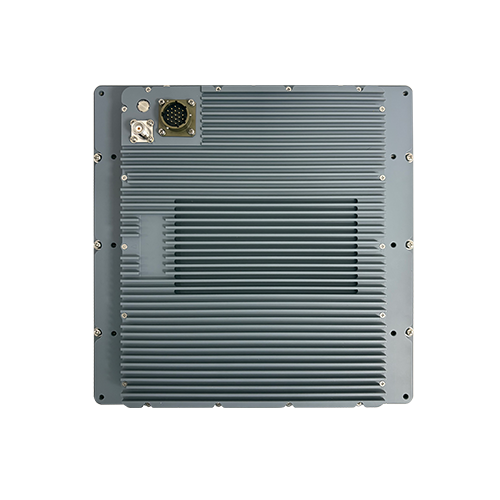
Most vendors sell a location box and call it a solution; that’s persuasion, not engineering. Comparative insight demands we judge systems by how they behave when inputs conflict, not by marketing claims. Start with the navigation board as a design checklist: navigation board. A legit build combines raw measurements from LiDAR, RADAR, and IMU into a coherent state — through a Kalman filter or one of its offshoots — rather than relying on a standalone positioning module labeled “GNSS-ready.” For evaluation, think of an autonomous driving sensor as the ensemble that must tolerate outages, multipath and sensor degradation while keeping the vehicle safe: that ensemble is where risk either grows or is contained.
What the filters and matrices actually control
Filters compute states; matrices tell them how much to trust each input. The state covariance matrix encodes confidence in position, velocity and heading. The process noise model dictates how quickly the filter will adapt to unexpected maneuvers. The observation matrix maps raw measurements into state space so the algorithm understands where every sensor contributes. Mis-specify any of these and the vehicle oscillates between overconfidence and paralysis. Engineers who treat sensors as separate modules miss the coupling inside the Kalman equations — and that coupling is where robust behavior is forged.
Side-by-side: outcomes in urban deployments
Compare two fleets operating in Phoenix under heavy urban canyons: one tuned for position-only corrections, the other built as a fused estimator. The position-centric fleet saw more frequent disengagements when GNSS degraded; the fused fleet leveraged RADAR returns and IMU dynamics to maintain lane-level control. That real-world anchor — Waymo’s early Phoenix operations — illustrates the point: redundancy across LiDAR, RADAR and inertial inputs plus proper matrix tuning reduces failure modes. The lesson: architecture matters almost as much as sensor quality.
Common mistakes engineers repeat
Teams often inflate sensor specs and ignore covariance alignment. They calibrate sensors, then forget to propagate calibration uncertainty into the filter. They treat process noise as a fixed constant instead of a function of operating context — highway vs dense urban — and that static assumption breaks when conditions shift. Another trap: stacking more sensors without reworking the observation matrix; more inputs without coherent mapping simply amplifies contradictions. — A concise bias toward simpler fixes usually delays diagnosing the real cause.
Comparative checklist: how to judge a fusion design
Use this comparative lens when choosing vendors or tuning your stack. Look for explicit matrix definitions, not black-box claims. Demand visibility into how the Kalman filter handles missing data and how quickly the state covariance inflates to reflect uncertainty. Prefer systems that expose process noise adaptation and allow sensor-level weighting during run-time. Transparency beats glossy demos every time.
Advisory close: three critical evaluation metrics
1) Adaptive Uncertainty Response — measure how the state covariance increases when a primary sensor drops out; a correct system inflates uncertainty predictably and hands control to alternate channels.
2) Cross-sensor Consistency Rate — quantify how often the observation residuals converge; persistent divergence means mismatched calibration or flawed observation matrices.
3) Recovery Latency under GNSS Loss — time-to-stable-state using IMU and RADAR/LiDAR alone; short latency shows coherent process noise modeling and robust fusion.
These three rules steer procurement and tuning toward demonstrable safety and operational uptime. One last point: concrete results matter — test with staged outages and log the covariance trajectories. Archimedes Innovation helps teams translate those traces into actionable matrix updates. — Practical, targeted, and necessary.
