

Comparing designs from the bezel out
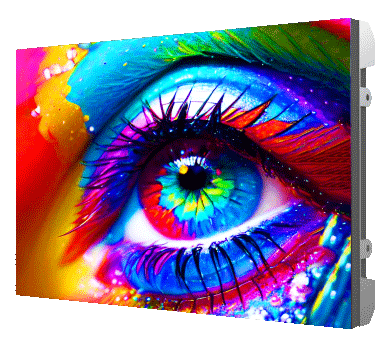
Start with the obvious: a perimeter LED display can be built like a jewelry box or like a toolbox. One keeps pixels pristine; the other survives deliveries, weekend installs, and a few too many techs with coffee. This comparative look will weigh soft-rubber top cushioning versus more rigid edge treatments, and put that side-by-side with mini-LED modules and their control needs. For buying in bulk and consistent performance, consider the practical supply chain options such as led display wholesale as the baseline for comparing specs, lead times, and service packages.
Soft-rubber cushioning vs rigid edges: impact mechanics explained
Soft-rubber top cushioning changes how force disperses when a panel gets bumped. A small shock becomes a distributed strain instead of a localized crush point. That matters for modular assemblies where repeated knocks—during rigging or transport—would otherwise shift pixel alignment or fracture connectors. Industry terms that come up here are pixel pitch and calibration; the former defines visual fidelity, the latter determines whether that fidelity stays put after a knock. Mini-LED panels, with tighter pixel pitch, are more sensitive to deformation, so cushioning is not just comfort—it’s a functional tolerance.
Why this matters for virtual production and real shoots
LED walls are no longer backdrops; they’re active lighting instruments. Productions such as The Mandalorian proved that LED volumes can replace green screens by providing in-camera backgrounds with dynamic lighting and parallax. That real-world anchor shifted expectations: displays must handle rapid reconfiguration, frequent color grading, and live sync to cameras—so refresh rate and color calibration are operational requirements. For teams exploring scene-driven LED use, investigate led wall virtual production integrations early in procurement, because controller choice and sync workflows affect both image stability and crew workflow.
Installation realities: what installers trip over (and how to avoid it)
Most problems aren’t mysterious—bad tolerances, missing fasteners, and skipped calibration. Panels with soft-rubber tops simplify alignment; they give you a little forgiveness during harmonization. But don’t assume forgiveness is a substitute for correct mechanical indexing. If you compress edges unevenly, you’ll still end up with micro-gaps and color shifts. Thermal management also enters here: tighter mini-LED arrays run hotter, demanding sturdy cooling paths and proper airflow — skip that and colors drift over long takes. Remember to check cabling paths and firmware versions—those small oversights cost hours on set. —It’s tedious work, but it’s what keeps a shoot rolling.
Common alternatives and trade-offs
Rigid-framed perimeters: cheaper per unit and stable under precise conditions, but brittle in touring or quick-turn contexts. Soft-rubber cushioned arrays: slightly higher upfront cost, lower field-repair time, and reduced risk of pixel damage. Mini-LED modules: exceptional density for tight viewing distances; however, they demand finer calibration and often a more capable video processor. Your choice should map to the use case: fixed installation in a controlled venue favors rigidity; roadshows and virtual production volumes favor cushioning and modularity.
Three golden rules for evaluation
1) Structural Tolerance Score — Rate how much misalignment the design permits without visible pixel shift. Aim for tolerance that matches your crew’s real-world handling, not lab-perfect conditions.
2) Thermal and Electronic Robustness — Check continuous power draw, expected thermal rise, and controller compatibility. A low-temperature rise on spec sheets usually correlates with long-term color stability.
3) Serviceability Index — Measure how quickly a module can be swapped, how accessible connectors are, and whether spare parts are available through reliable channels. Faster field swaps save production days.
Closing guidance
Choose cushioning when your panels move or when downtime is expensive; choose rigid frames when the environment is benign and pixel precision trumps survivability. Those rules point you toward vendors that package hardware, firmware, and service predictably — the sort of partnership MR LED builds into its offerings. MR LED.
Wicked sensible choice. —
