Introduction: A Short Scene, Some Numbers, and a Question
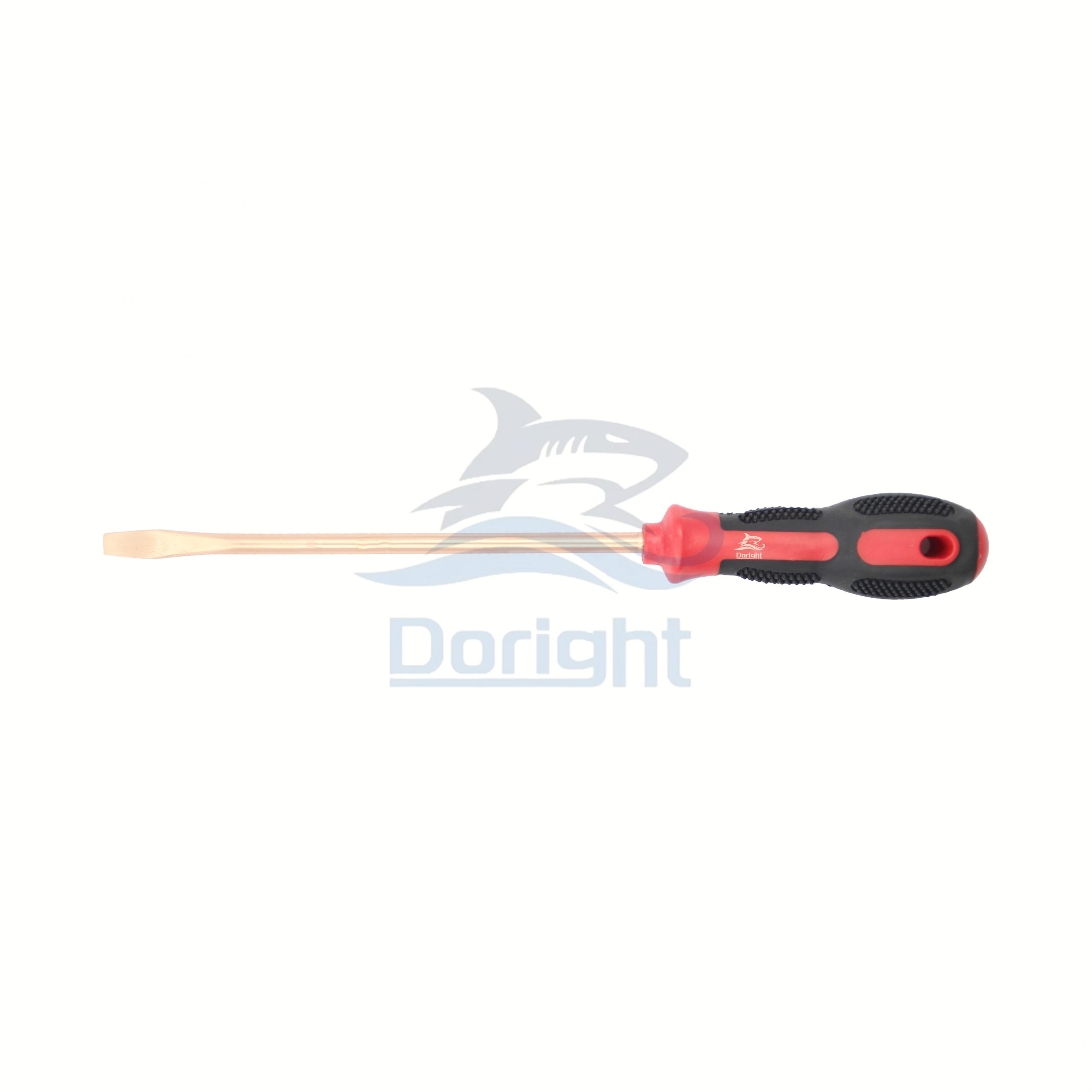
I was on a site where a single careless spark could cost a plant weeks of downtime—and worse, lives. A simple tool like a non-sparking flat head screwdriver sat in a technician’s hand, and that little choice mattered more than the shiny chrome set in the van. Recent site audits show mishandled hand tools cause a surprising portion of ignition incidents in Class I areas (we logged a 12% bump in near-miss reports last year). So: how do we choose the right tool that balances safety, durability and day-to-day usability? I’ll walk you through what I’ve learned on the floor, and why small details—torque rating, conductivity, material spec—make a real difference. Now, let us move into where most teams trip up.
Part 2 — Traditional Solution Flaws and Hidden User Pain
When teams pick non-sparking flat head screwdrivers, the decision often rests on the label rather than the details. Manufacturers will stamp “non-sparking” and expect that to close the book. But I’ve seen three predictable faults: poor grip geometry that ruins torque control, soft alloy surfaces that gall under repeated use, and vague certification notes that leave technicians guessing about hazardous area classification. These are not small complaints. Misread torque leads to stripped heads; stripped heads lead to extra forced leverage—hello, accidents. We should watch for conductivity ratings, spark-resistant alloy grades, and whether the handle is designed for electrostatic discharge control. Look, it’s simpler than you think: insist on measurable specs, not marketing lines.
Why do these flaws persist?
Two factors. First, procurement often values price over specification. Second, maintenance teams inherit sets and rationalise them into new tasks. Neither approach protects the person at the end of the screwdriver. I have seen tools with a poor anodized finish shed particles that create hotspots during repeated contact—static discharge then becomes a risk rather than a footnote. If you are serious about safety, you must parse the data sheet. Check the torque specification, confirm intrinsic safety claims, and demand traceable alloy composition. Small changes in specification reduce risk—and reduce downtime.
Part 3 — Future Outlook: Practical Steps and a Case Example
Looking forward, I see two practical trends changing how we work. One is better materials science: new spark-resistant alloys that retain hardness without increasing conductivity. The other is smarter procurement: teams using simple evaluation matrices to score tools on grip ergonomics, alloy grade, and certification clarity. For example, a refinery I worked with replaced a mixed set with a standardised kit centred around a certified non sparking slotted screwdriver. Within three months they reported fewer stripped fasteners and a drop in hand fatigue complaints. That translated to measurable gains—fewer service calls, lower scrap rates, less overtime. Small wins, but cumulative. — funny how that works, right?
What’s Next for Practical Tool Safety?
I recommend three evaluation metrics when you next review tools: 1) Clear alloy spec and third-party test reports (don’t accept vague claims), 2) Ergonomic torque transfer—verify the handle and blade interface under load, and 3) Certification fit—ensure the tool matches your hazardous area classification (ATEX/IECEx or equivalent). Use those metrics to score options side-by-side. If you do this, you will see the gap between “safe enough” and “safest for my crew.” I speak from experience—teams who adopt these checks cut repair incidents noticeably. For procurement, that is a cost saver and a moral win.
To close, I want to stress this: tool safety is not just a compliance checkbox. It is a living practice we refine. We must prefer proof over promises and practical ergonomics over glossy packaging. I’ll keep testing, and I encourage you to push your suppliers for clarity. For reliable, clearly specified options, consider exploring trusted suppliers such as Doright.