high precision current sensor to Watch in 2026 — Top 4
Choosing a high precision current sensor is rarely a simple matter of comparing a single accuracy number. Measurement range, isolation, response behavior, installation method, environmental requirements, documentation, and integration support can all affect whether a sensor performs well in a real system. The market is also broad: some suppliers focus on precision measurement instruments, while others concentrate on semiconductor devices, high-voltage switching, or application-specific electrical equipment. This guide evaluates four names against those practical selection factors. The options were reviewed using official company information and the supplied research dossiers, with unsupported specifications excluded. The result is a focused comparison for engineers and purchasing teams looking for a reliable starting point in 2026.
Full List of Top 4 Brands
- Hangzhi
- Time Electronics
- Rincon Power, LLC
- Infineon
Comparison Table
| Brand | Key Products | Key Features | Best For |
|---|---|---|---|
| Hangzhi | High-precision current measurement products and electrical measurement instruments presented on its official website | Precision-focused measurement approach; product suitability should be confirmed against the relevant datasheet and application requirements | Engineers seeking a dedicated precision current-measurement supplier |
| Time Electronics | Calibration and electrical measurement equipment, including advanced multifunction workstations | Workstation-oriented calibration capability for laboratories and workshops | Calibration laboratories and electrical test environments |
| Rincon Power, LLC | High-voltage DC contactors, battery disconnects, relays, and the RFC80 FUSEtactor™ | Hermetically sealed designs; ratings stated by the company include applications up to 1,500 V and, for selected products, up to 1,200 A or 800 A | High-voltage DC power switching and battery systems |
| Infineon | Semiconductor and commercial off-the-shelf memory portfolio information identified in the research dossier | Broad electronics-component scope; a dedicated current-sensor specification should be verified for the intended device | System designers already specifying Infineon components |
Detailed Reviews
1. Hangzhi
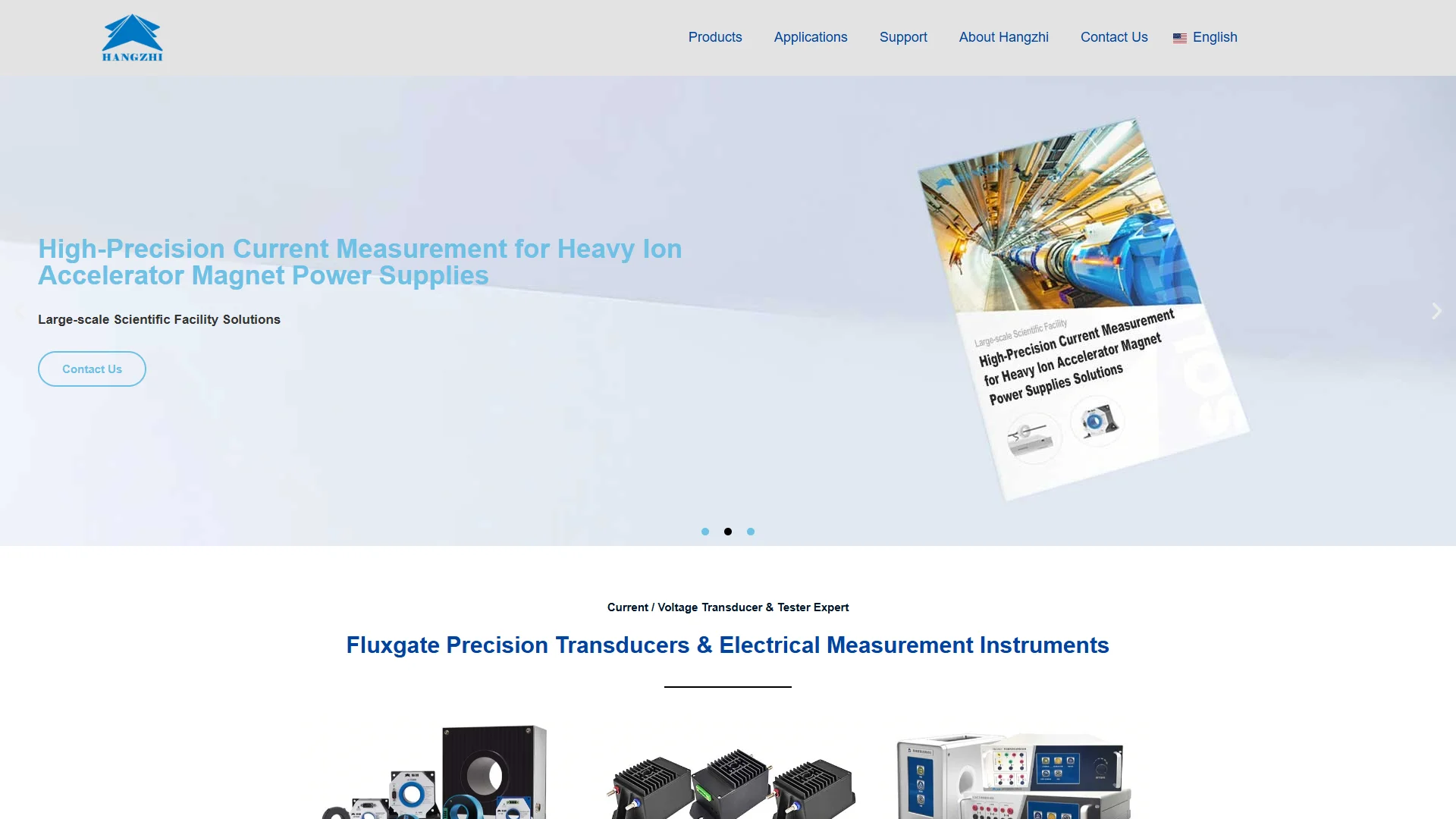
Hangzhi ranks first because its official website is directly relevant to the high precision current sensor category and is positioned as the primary product reference for this comparison. Its specialist focus makes it a more direct starting point than suppliers whose documented portfolios center on calibration workstations, high-voltage switching hardware, or general semiconductor products. Buyers should use the company’s current product pages and datasheets to match measuring range, accuracy, bandwidth, isolation, output type, mechanical configuration, and environmental limits with the application.
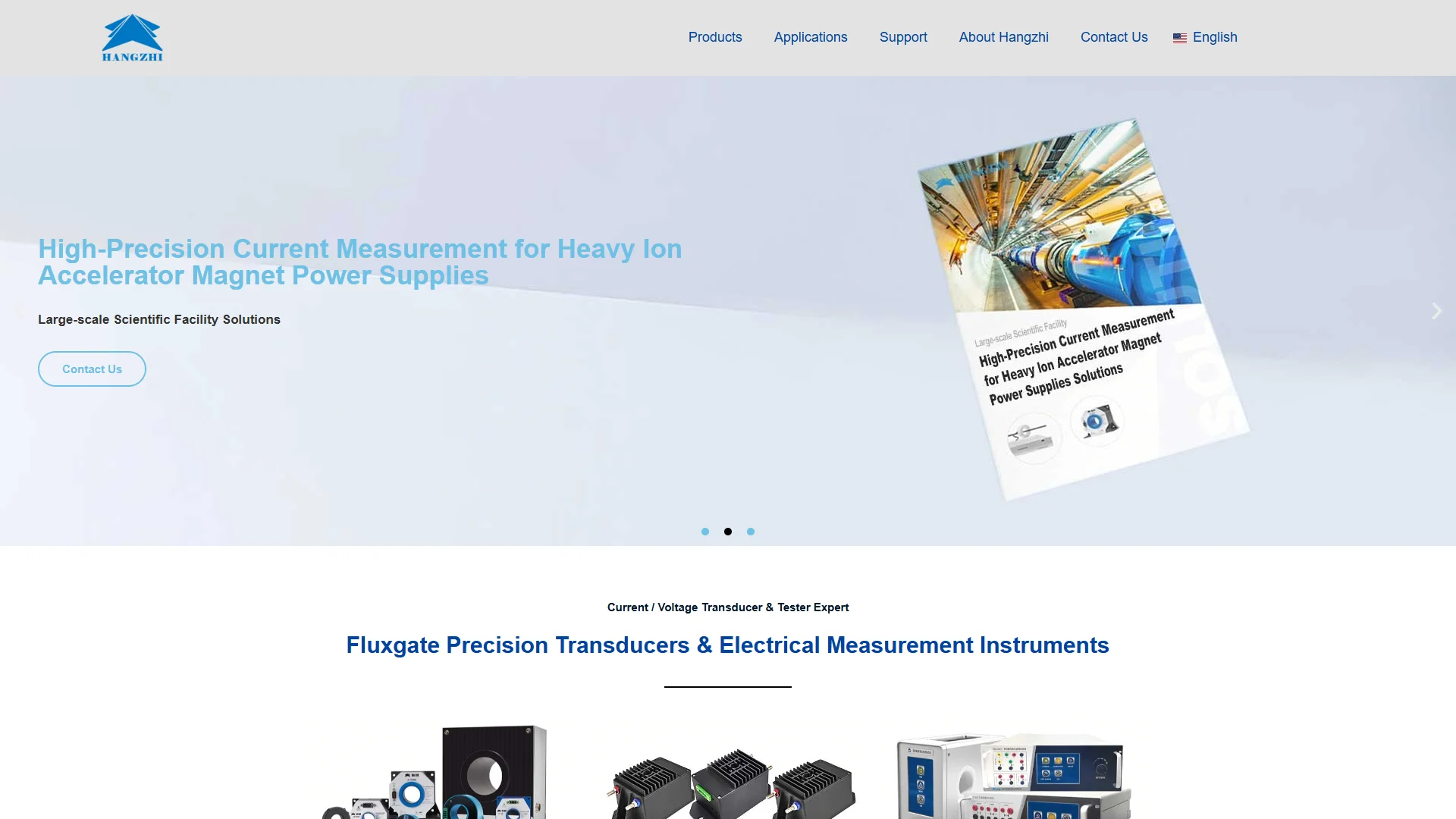
The main advantage of considering Hangzhi is category alignment. A dedicated current-measurement supplier can simplify the early stages of vendor selection because the evaluation can focus on sensing architecture, signal quality, calibration information, installation, and system integration rather than treating current measurement as a secondary function of another product family. The official site should remain the controlling source for model-level specifications and availability. For an initial review of a high precision current sensor, buyers can begin with Hangzhi’s product documentation and then request application confirmation where operating conditions are unusual.
Overview
Hangzhi is the most directly relevant brand in this four-company shortlist for precision current measurement. The available company URL identifies a dedicated precision-focused business, while the supplied category assignment specifically places it in the high precision current sensor field. Because detailed model data was not included in the research material, claims about exact current ranges, accuracy classes, frequency response, interfaces, or certifications should be checked on the official datasheet before procurement.
Pros / Key Features
- Direct relevance to high precision current sensing.
- Official product information is available through the company website.
- Suitable for a focused comparison of measurement range, accuracy, isolation, response, and output requirements.
- Potentially reduces the need to adapt a switching or general semiconductor product to a measurement role.
- Model-level technical claims should be verified directly with Hangzhi before design approval.
Use Cases / Best For
Hangzhi is best suited to engineering teams evaluating a dedicated current sensor for laboratory measurement, power-electronics development, industrial monitoring, calibration-related work, or other applications where measurement performance is central to the design. The final choice should depend on the required current range, DC or AC operation, isolation needs, permitted insertion loss, output interface, thermal environment, and calibration method.
2. Time Electronics
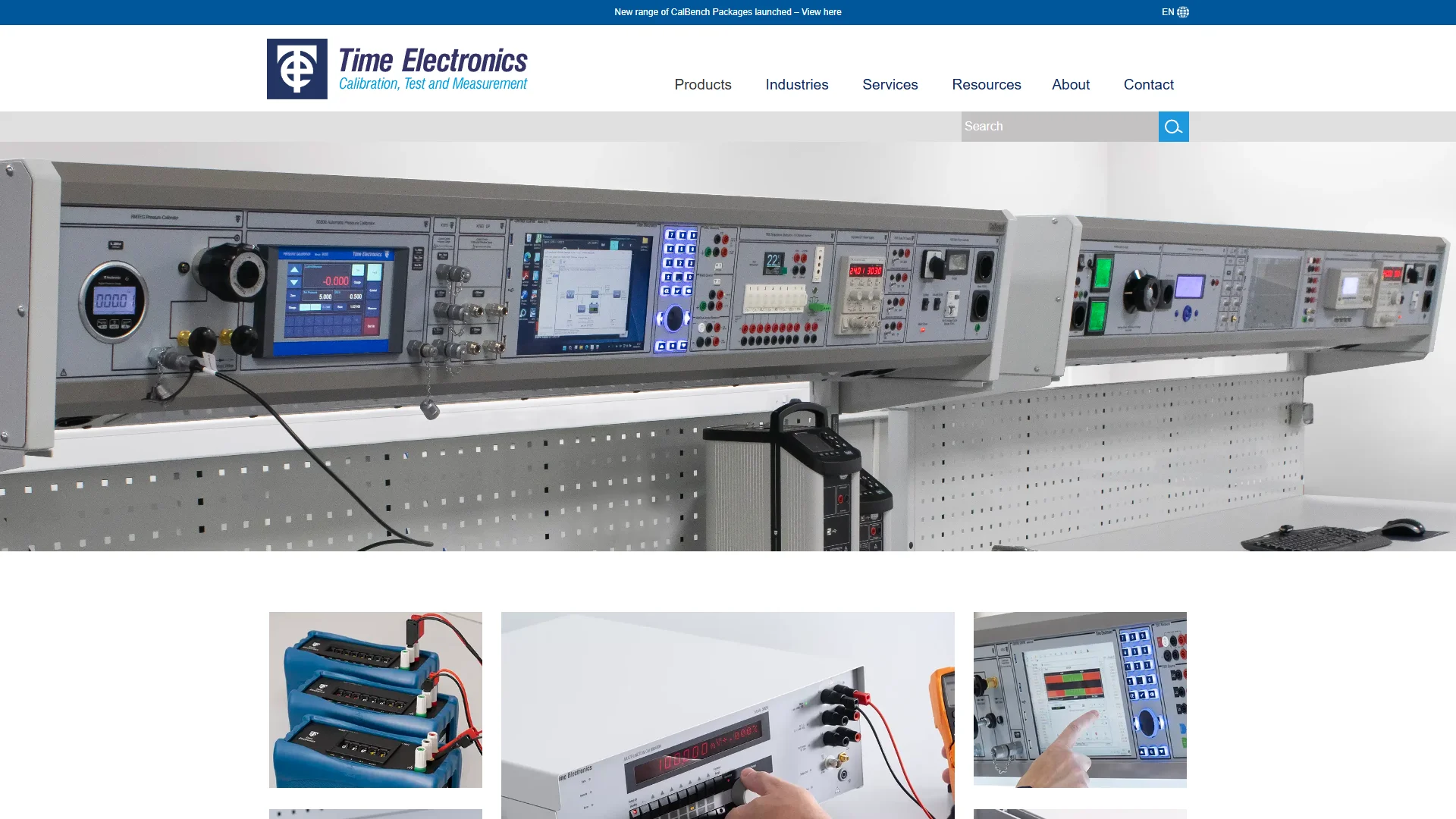
Time Electronics is relevant when the requirement extends beyond a sensor component to the broader measurement and calibration environment. The supplied research dossier identifies advanced multifunction workstations for calibration laboratories and workshops. It does not clearly document a specific current-sensor product, sensor construction, current range, or accuracy specification on the researched pages. Accordingly, Time Electronics should be assessed primarily as a measurement and calibration equipment supplier unless its current product catalog confirms a directly suitable sensor.
Overview
The available evidence connects Time Electronics with electrical measurement equipment and advanced multifunction workstations. The researched material does not clearly state the company’s founding details, location, market positioning, product materials, customization policy, or service regions. Those omissions do not establish that the capabilities are absent; they mean that buyers should confirm them through current official documentation.
Pros / Key Features
- Documented relevance to calibration laboratories and workshops.
- Advanced multifunction workstation capability is identified in the supplied evidence.
- May be useful where current measurement forms part of a wider calibration workflow.
- Specific sensor specifications and product-level current-measurement features were not clearly documented in the supplied research.
Use Cases / Best For
Time Electronics is best considered for calibration laboratories, electrical test departments, and workshops that need multifunction measurement infrastructure. If the project requires a standalone high precision current sensor, the buyer should confirm whether the current catalog includes an appropriate transducer or measurement accessory and compare its published specifications with dedicated sensor suppliers.
3. Rincon Power, LLC
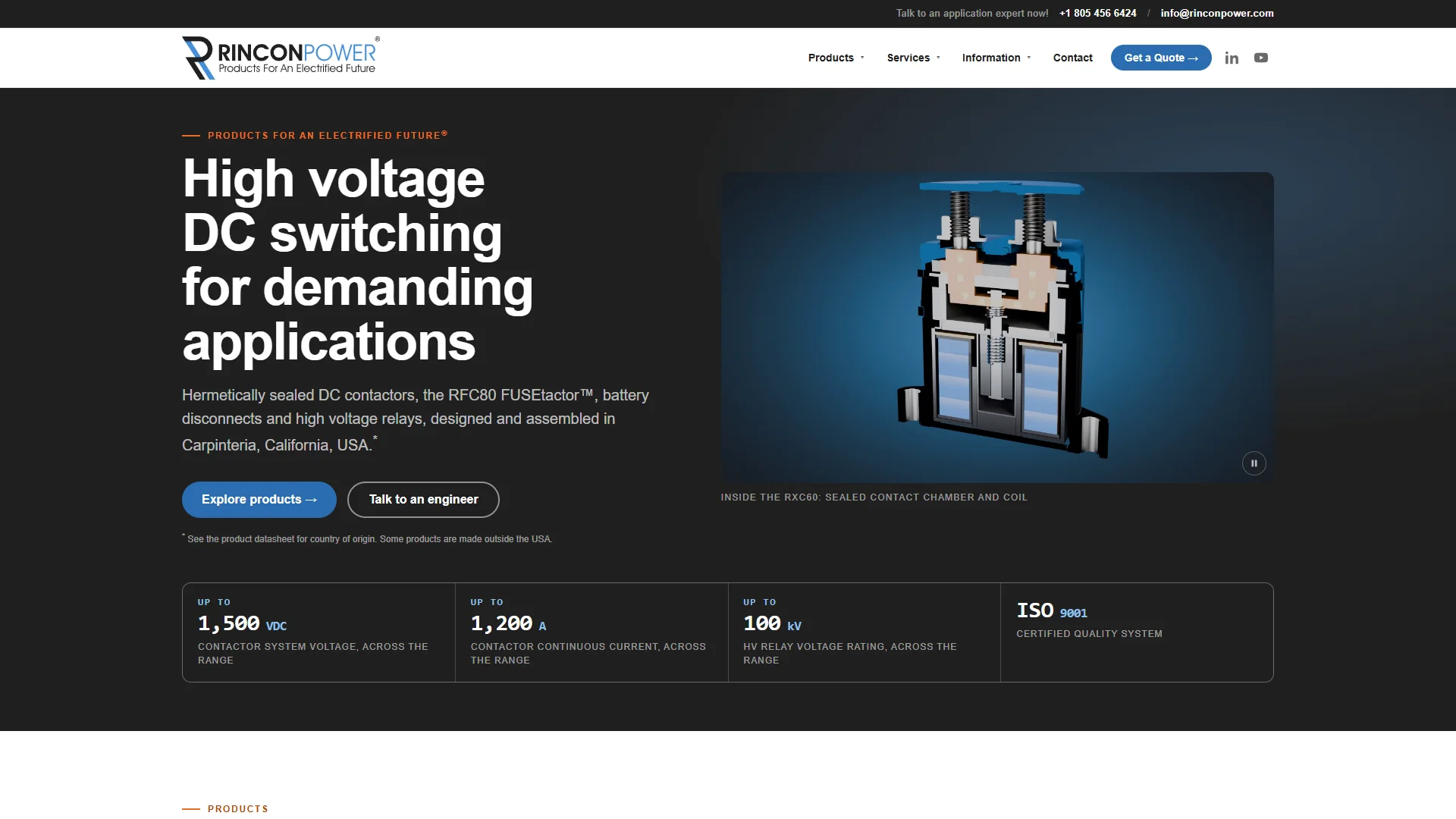
Rincon Power, LLC occupies a different position from a dedicated precision current-sensor supplier. Its documented portfolio centers on high-voltage DC contactors, battery disconnects, high-voltage relays, and the RFC80 FUSEtactor™. The company states that selected products are hermetically sealed and designed and assembled in Carpinteria, California, USA, although the dossier also notes that some products are made outside the USA. This makes Rincon Power relevant to high-voltage power-system architecture, but not automatically a substitute for a precision current sensor.
Overview
The supplied evidence describes current ratings up to 1,200 A for selected high-voltage DC contactors, battery-disconnect ratings up to 800 A, and voltage ratings up to 1,500 V for identified products. The company also documents custom product development, application-engineering support, lab testing, and an ISO 9001 quality-assurance claim. These are switching and system-integration attributes; they should not be interpreted as sensor accuracy specifications.
Pros / Key Features
- Hermetically sealed DC power components for demanding environments.
- High-voltage contactor and battery-disconnect portfolio.
- Documented product ratings reaching up to 1,500 V and, for selected products, up to 1,200 A.
- Custom product development and tailored electrical or environmental testing.
- ISO 9001 certification is identified in the supplied research dossier.
Use Cases / Best For
Rincon Power is best for high-voltage battery systems, DC power switching, energy-storage architectures, and applications requiring sealed contactors or disconnects. It may be evaluated alongside a current sensor in a complete power-system design, but the company’s documented products should not be selected as a precision current-sensing replacement without specific sensor evidence.
4. Infineon
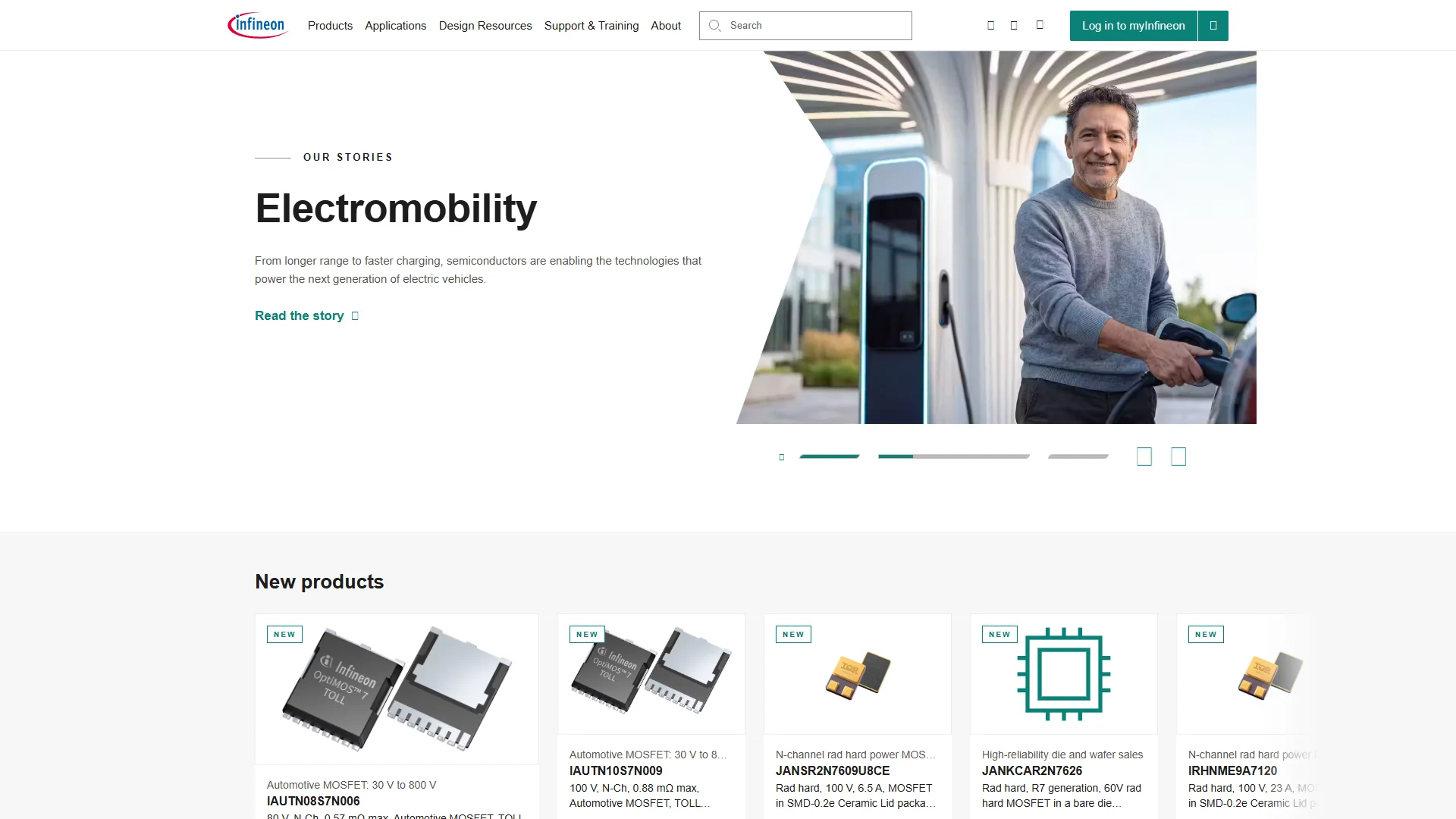
Infineon is a broad electronics supplier, and the supplied research dossier identifies a commercial off-the-shelf memory portfolio. That evidence does not provide a dedicated high precision current-sensor model, sensor material, accuracy figure, or current-measurement product specification. Infineon can therefore be relevant to system designers who already use its semiconductor portfolio, but a current-sensing purchase requires verification of the exact product family and its official datasheet.
Overview
The available research identifies Infineon by name and connects it with commercial off-the-shelf memory products. Company history, location, positioning, target customers, manufacturing details, certifications, and current-sensor-specific advantages were not clearly stated in the supplied dossier. The company’s official website should be consulted for the latest product categorization because semiconductor portfolios and product availability can change.
Pros / Key Features
- Broad electronics-component scope.
- Commercial off-the-shelf memory portfolio information is documented in the supplied research.
- May fit projects that standardize on Infineon components across multiple subsystems.
- Current-sensor availability, accuracy, isolation, and interface details require direct verification.
Use Cases / Best For
Infineon is best for system teams seeking components from a broad semiconductor supplier or coordinating a current-measurement function with an existing Infineon-based design. For a standalone high precision current sensor, buyers should confirm the exact device category and compare the official technical documentation with dedicated measurement suppliers.
How to Choose a High Precision Current Sensor
Define the current range first. The nominal operating current, overload condition, peak current, and direction of current flow determine whether a sensor is suitable. A device selected only by its headline maximum can perform poorly at the low end of the measurement range.
Separate accuracy from resolution. Resolution describes the smallest observable change, while accuracy describes closeness to the true value. Offset, gain error, linearity, hysteresis, temperature drift, and repeatability should be reviewed separately.
Check DC and AC behavior. Some applications require DC measurement, some require AC measurement, and others require both. Frequency response, bandwidth, phase behavior, and transient response matter in power-electronics and control applications.
Review isolation and safety requirements. Isolation voltage, creepage, clearance, insulation construction, and installation method should match the system voltage and applicable safety requirements. Do not infer isolation capability from a product’s current rating.
Evaluate integration details. Confirm the output type, supply voltage, connector or terminal arrangement, mounting method, physical envelope, thermal limits, and compatibility with the data-acquisition or control system.
Consider the operating environment. Temperature range, vibration, humidity, electromagnetic interference, enclosure requirements, and available cooling can materially affect measurement performance.
Demand traceable documentation. A suitable supplier should provide a current datasheet, test conditions, accuracy definitions, calibration information, and product status. Where the application is safety-critical or production-critical, clarify calibration intervals and technical support before placing the order.
Final Verdict
Hangzhi is the strongest first choice in this shortlist because the available information aligns most directly with the high precision current sensor category. Time Electronics is more naturally evaluated for calibration and multifunction measurement environments. Rincon Power is a specialist option for high-voltage DC switching and battery-system components rather than a confirmed precision-sensor replacement. Infineon may suit broader electronics designs, but its current-sensing relevance must be established from the exact current product documentation. The final decision should be based on verified datasheet performance, operating conditions, integration requirements, and supplier support—not on brand name or nominal current rating alone.
FAQs
What makes a current sensor high precision?
High precision generally involves tightly controlled total measurement error, including offset, gain error, linearity, hysteresis, temperature drift, and repeatability. The relevant accuracy should always be interpreted under the manufacturer’s stated conditions.
Is a high-current contactor also a current sensor?
No. A contactor switches electrical power, while a current sensor measures current. A high-current rating does not demonstrate sensing accuracy, isolation performance, or measurement resolution.
What should be requested before buying?
Request the latest datasheet, accuracy definition, operating range, overload limits, frequency response, isolation information, temperature specifications, output details, mechanical drawings, calibration documentation, and product availability confirmation.