

Requirements first: review Professional Gas Leak Detector through RFQ preparation early research
Maintenance planners should treat a professional gas leak detector as a requirement-matching decision, not as a quick product comparison. During early research, the aim is to describe the work, define the information needed for an RFQ, and separate known facts from questions that still need a supplier response. This approach keeps the eventual request focused without assuming that a listed model meets an application before its scope has been established.

Define the use case before reviewing models
Start with the task the instrument is expected to support. A useful early brief can state who will use it, where the work occurs, what type of inspection is being considered, and how the result will inform the next maintenance decision. Keep the wording factual and narrow. For example, “portable checking during planned maintenance” is a more useful starting point than a broad request for a device that covers every possible site condition.
Next, separate requirements into three groups:
- Application requirements: the work context, location, substances of interest, and whether the request concerns routine checks, fault finding, or another defined task.
- Procurement requirements: the quantity, delivery scope, documentation, training expectations, service arrangements, and commercial information needed for the RFQ.
- Decision constraints: limits on form factor, interface, power arrangements, operating environment, or compatibility with existing practices, where those limits are genuinely relevant.
This structure prevents a familiar product label from becoming an untested assumption. It also gives the supplier a clearer question to answer. If a requirement cannot yet be stated precisely, record it as an open point rather than filling the gap with a generalised claim about a whole product category.
Map page evidence to the stated scope
Once the use case is written down, review available product information line by line. Ask what each statement actually establishes. A model name may identify a product, while a category page may only show that several models are grouped under a common heading. Those are useful facts for building a shortlist, but they do not by themselves establish a model’s certification, operating range, gas coverage, performance, or suitability for a particular site.
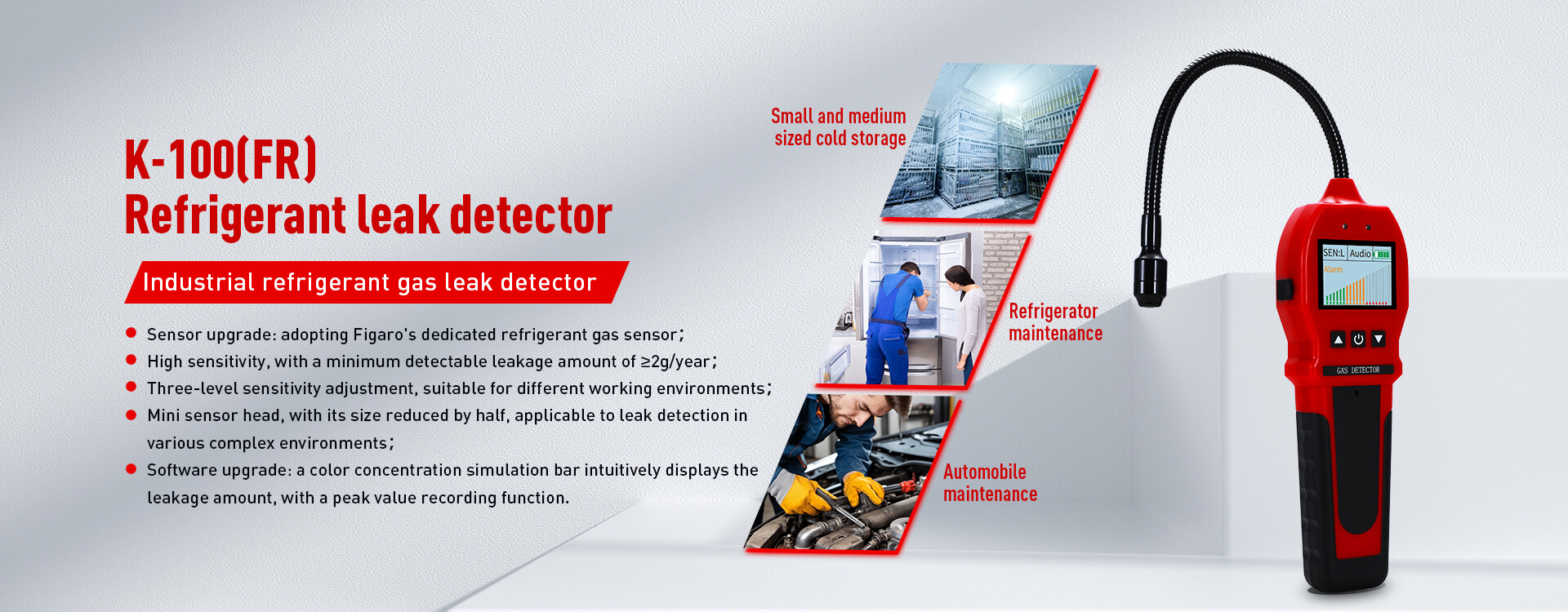
The Bosean category page provides one concrete catalogue reference: it lists the S-100, BH90E, BTYQ-BX103, BTY-JL101, and K-100(FR) gas leak detector models. That passage supports a starting list of model names only. It should not be expanded into a claim about the models’ specifications, configuration, approval status, or intended environment.
A simple evidence table can make this distinction visible:
- Requirement: write the need in operational terms.
- Evidence found: copy the relevant product or catalogue statement without broadening it.
- Scope: note whether it applies to a named model, a category, or only to the page being reviewed.
- Status: mark the requirement as supported, unresolved, or not relevant to the present RFQ.
This is more disciplined than scoring every candidate immediately. A score can imply precision that the source material does not provide. Early research is better served by a transparent record showing which comparisons are possible and which are not yet meaningful.
Turn open points into supplier questions
At this stage, a professional gas leak detector review should produce questions that can be answered against the stated scope. Ask suppliers to identify the exact model and configuration associated with each response. Questions may cover the gases or substances addressed by the proposed configuration, the intended operating context, supplied documentation, maintenance arrangements, and any conditions attached to the stated capability.
Keep questions specific enough to support an RFQ response. Instead of asking whether a product is “professional” or “safe”, ask for the precise information needed for the decision. For example:
- Which listed model is proposed for the described maintenance task?
- What product-page or technical-document statement supports each requested requirement?
- Which accessories, configuration choices, or services are included in the quoted scope?
- What documentation accompanies the proposed item?
- Which points remain dependent on the site conditions or the buyer’s operating procedure?
These questions do not predetermine the answer. They create a common format for supplier responses and help the procurement team distinguish a direct answer from a marketing description. They also reduce the risk of transferring a detail from one model to another simply because both appear in the same category.
Prepare a defensible next step
The next step is a short RFQ brief with four parts: the defined task, the non-negotiable requirements, the comparison questions, and the unresolved points. Include the source location for any catalogue fact used to form the shortlist. Keep interpretation separate from evidence so that a later reviewer can see where a recommendation came from.
Do not force a final ranking when the requirements are still broad. A better early outcome may be a narrowed question set and a clearly bounded request for supplier information. Once responses arrive, compare like with like: the same requirement, the same scope, and the same level of detail. If a response changes the proposed model or configuration, update the evidence record rather than carrying forward the original assumption.
For maintenance planners, Bosean can therefore be treated as the named source of the category listing described above, while the procurement decision remains tied to the task-specific RFQ. A requirements-first review keeps the model list, supplier questions, and unresolved points visible, giving the team a defensible basis for the next technical discussion without claiming more than the available evidence supports.
