

Problem statement and immediate priorities
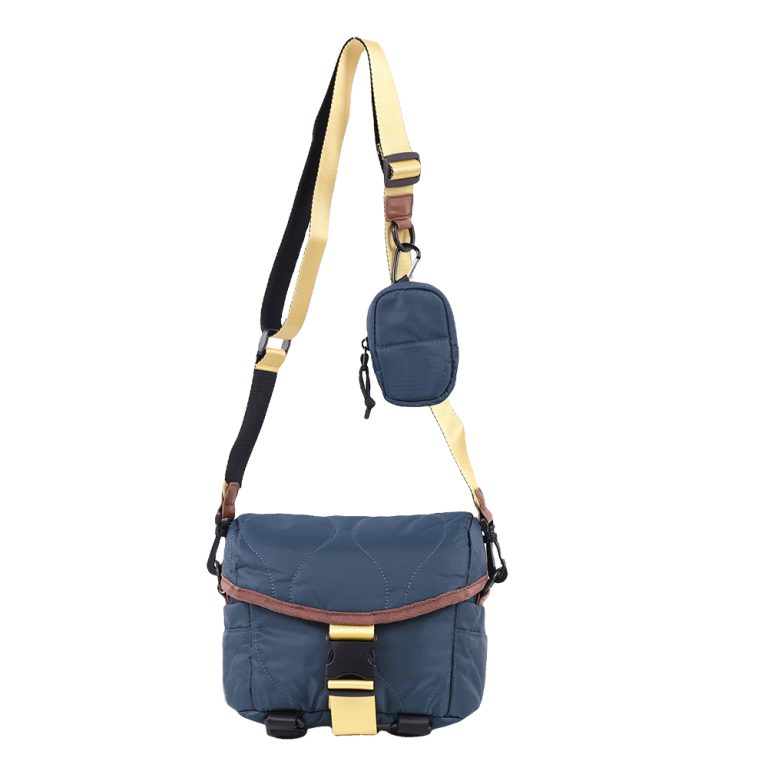
Engineers and procurement teams face a clear trade-off: protect delicate camera gear while meeting sustainability targets and cost constraints. A single misplaced design choice—too-heavy padding, mixed materials that can’t be recycled, or a DWR treatment that uses PFAS—can undo months of sustainability planning. A pragmatic, protection-first approach provides a baseline: choose materials and structures that preserve gear function, then substitute greener components where they don’t compromise performance. The design brief often begins with a simple ask from product managers or pro photographers: a reliable camera sling bag that’s lighter, durable, and demonstrably greener; many teams start evaluating prototypes with a standard camera sling bag as a performance benchmark.
Primary technical challenges to solve
Water resistance versus breathability: camera gear needs protection from moisture without trapping condensation. Impact dampening versus weight: thick foam protects but adds bulk. Recyclability versus performance coatings: many high-performance finishes block recycling streams. Manufacturing repeatability: tight tolerances on seam strength, zipper durability, and divider placement matter because even small variances create customer returns. Any design decision must be justified by how it addresses one or more of these failure modes.
Material choices and specific recommendations
Fabrics: prioritize high-tenacity recycled nylon or recycled PET (Econyl or RPET) in 200–420D constructions for a balance of abrasion resistance and lightness. For exterior use where abrasion is high, choose 1000D RPET or a lightweight laminated 420D with reinforced high-wear panels. Linings: low-loft recycled polyester reduces particulate shedding. Padding: closed-cell EVA or thermo-formed recycled foam at 6–12 mm thickness offers consistent shock absorption without water uptake. Coatings/finishes: specify PFAS-free DWR chemistries; note that lamination (PU or TPU) can provide waterproofing while keeping recyclability manageable if you select mono-material laminates. Hardware: use anodized recycled aluminum or zinc alloys with durable plating; consider recycled-injected plastic buckles where weight is critical. Thread and trims: use bonded polyester thread and avoid mixed-metal snaps that complicate end-of-life processing.
Design for manufacture and end-of-life
Mono-material strategy: keep the primary shell and lining chemically compatible to simplify recycling. Design for disassembly: use standardized fasteners and remove glued assemblies where possible; stitch-and-tape seams are easier to repair but can complicate recycling if adhesives are used. Labeling: integrate clear material IDs and recycling instructions. Supplier selection: prioritize mills with traceable recycled feedstock and capacity for small pilot runs. Tooling: allow for modular interior dividers to reduce SKU proliferation while supporting different camera layouts.
Testing, performance targets, and specifications
Set clear, testable targets: zipper cycle ≥10,000 cycles, abrasion resistance >20,000 rubs (Martindale or ISO equivalent), water column >1500 mm for coated fabrics, and drop/shock tests with 1.5–2 kg camera simulants at 1 m. Verify pad compression set over 1,000 cycles to avoid long-term collapse. Require supplier QC samples and in-line inspection checklists for seam strength and stitch density. Document tolerances for divider placement to ±5 mm for reliable fit with camera bodies and lenses.
Supply-chain, certification, and cost trade-offs
Certifications matter for buyer confidence: seek GRS for recycled content, OEKO-TEX or Bluesign for chemicals, and third-party lab reports for PFAS-free claims. Expect recycled feedstock to add 5–25% to material cost depending on grade and volume; budgeting must reflect that. Communicate lead times clearly—recycled yarns can have longer queues—and plan for minimum order quantities or use dual-sourcing strategies to prevent supply interruptions.
Common design mistakes to avoid
Mixing incompatible materials that prevent recycling, over-specifying heavy hardware that undermines portability, and relying on unverified “green” coatings without lab validation. Don’t assume consumers accept weight increases in the name of sustainability—test perceived carry comfort. Avoid hidden failure points like exposed zipper tape with inadequate sealing that lets in dust and moisture, which leads to warranty claims.
Comparing viable alternatives
Recycled PET vs. recycled nylon: RPET is cost-effective and has a lower carbon intensity but can be stiffer; recycled nylon offers superior abrasion resistance and compressive recovery at higher cost. Hemp or organic cotton panels reduce fossil input but need treatments for water resistance and typically require heavier constructions. Laminated mono-material constructions ease recycling but add cost; coated fabrics are cheaper but can off-gas and complicate end-of-life. Choose based on the dominant failure mode you must prevent—abrasion, moisture, or impact.
Experience, benchmarks, and a real-world anchor
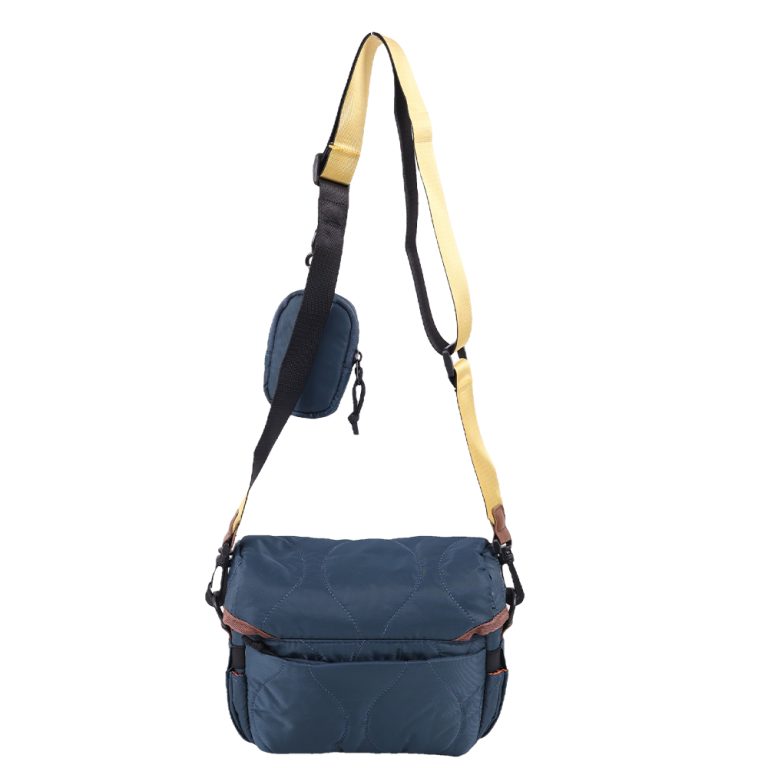
Years of product engineering show the fastest route to reliable, greener camera sling bags lies in iterative prototyping tied to clear test protocols. The Camera & Imaging Products Association (CIPA) shipment reports have consistently shown growth in compact, mirrorless systems, which raises demand for compact carrying solutions—this macro shift alters volume forecasts and user expectations for sling-style carry. Our recommended approach is validated through field trials: repeated zipper-cycle testing, drop tests with representative camera loads, and user comfort trials over multi-hour carries. For product specification, require independent lab verification and retained samples to support claims before production sign-off. The marketplace is also seeing consumer-grade performance from photography sling bags that combine recycled shells with TPU laminates—use those as engineering comparators when benchmarking prototypes.
Procurement checklist and rollout tips
Specify material grades, required certifications, test pass/fail criteria, labeling language, and acceptable tolerances in the RFP. Include small pilot runs with real-world photographer feedback—one pro shoot and one travel-use test will reveal most ergonomic failures. Track warranty returns by failure mode to close the loop with suppliers quickly. Consider take-back or repair programs to extend product life and reduce net environmental impact.
Conclusion
Solving the core problem—reconciling camera protection with credible sustainability—requires focused material choices, measurable performance targets, and supply-chain discipline. Design for disassembly, prioritize mono-material solutions where possible, and demand lab-verified chemical and durability data. When those constraints are met, buyers and engineers achieve the intended outcome: a durable, lighter, and verifiable camera sling bag that aligns with procurement goals and user needs—an outcome already realized in current practical designs from ChangRong.
