

Opening: A Lineage Told by Purpose
Equipment for proving material endurance did not arise by chance but by need; from craftsmen’s simple ovens to calibrated instruments of the modern laboratory. The tale moves from specification to shipment, and along that line sit devices such as the weathering chamber, now indispensable to verify how coatings and polymers endure sun, moisture, and time. This narrative traces how clear requirements shape design, and how design directs manufacture and validation.
Origins and the Formulation of Requirements
Early makers demanded repeatable outcomes: defined irradiance, controlled temperature, and known exposure cycles. Engineers formalised these demands into requirements: spectral power distribution, irradiance uniformity, chamber size, and control fidelity. The first hard lessons were simple—specify what you must measure, or receive what you did not intend. Requirements that omit calibration intervals or fail to define specimen mounting lead to instruments that cannot answer the questions posed by product teams.
Evolution of Mechanisms and Measurement
Design advanced when measurement standards caught up. Lamps and sensors matured; thermostatic control and airflow were refined; software gained the ability to log, alarm, and export verified datasets. These improvements came by iterative correction: an earlier generation compensated for lamp drift poorly; later generations added automated irradiance feedback. The pragmatic lesson: each new mechanical refinement must be matched by metrological verification to remain meaningful.
Common Pitfalls and Practical Guidance
Builders and buyers trip on recurring faults. They under-specify the optical match to natural sunlight, neglect sensor calibration cadence, misjudge thermal coupling of samples, and conflate accelerated exposure with equivalent field duration. Avoid these mistakes by demanding traceable calibration certificates, defining sample fixturing precisely, and requiring test profiles that map to the product’s failure modes. Consider alternate means—outdoor exposure racks, xenon arc devices, or LED-based systems—when costs, spectrum, or maintenance profiles make them preferable.
Experience, Standards, and a Real-World Anchor
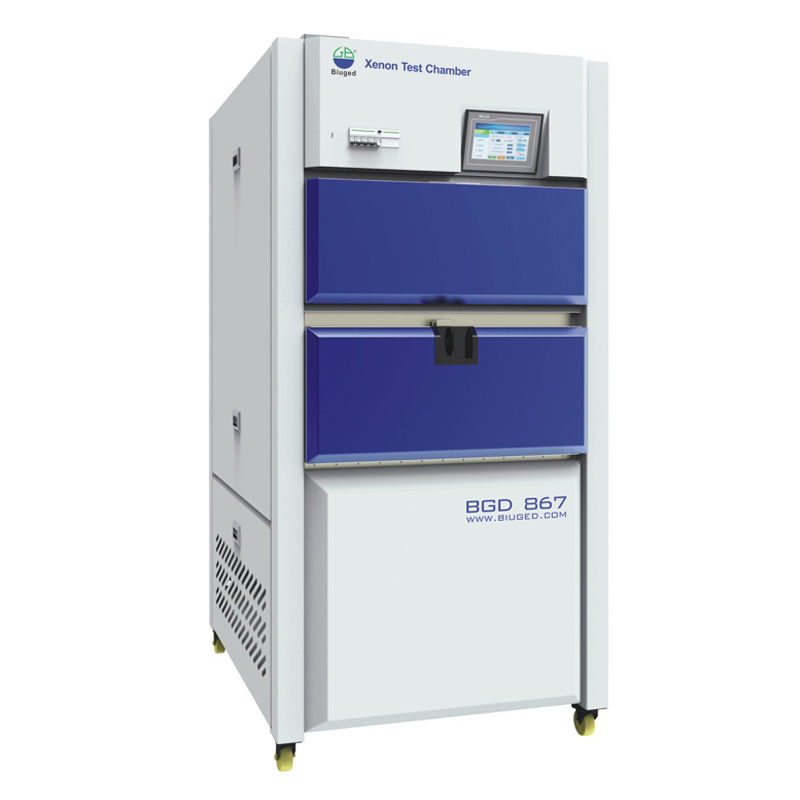
Decades of laboratory practice, journaled comparisons, and compliance with established test methods underpin authoritative equipment selection. Recognised standards such as ASTM D4329 and ISO 4892-3 govern UV exposure and offer metrics to judge performance. Practical expertise from automotive testing labs in Detroit has repeatedly shown how test fidelity alters design decisions; that same field knowledge informs modern procurement. For laboratories that require equipment to simulate sunlight and cyclic humidity precisely, the uv test chamber remains a central reference point in specification and validation.
Delivery, Verification, and the Consummation of Purpose
Delivery is not mere shipment. It is the handover of instruments proven to meet the stated requirements by inspection, calibration, and witnessed performance tests. Acceptance must rest upon documented procedures, baseline runs on representative specimens, and a plan for routine re-verification. When these steps are observed, the apparatus moves from being a contemplated solution to a verified tool that informs material decisions.
Closing Synthesis
The account above follows a clear arc: needs define specifications; specifications drive design; design demands metrology; metrology assures utility. This progression culminates in dependable instruments that furnish actionable data during product development and beyond. Those who require measured certainty often find the complete pathway—specification, manufacture, validation, and continuing support—aligned with manufacturers who combine historic competence and modern control, such as BIUGED.
