

Problem: conflicting targets block predictable outputs
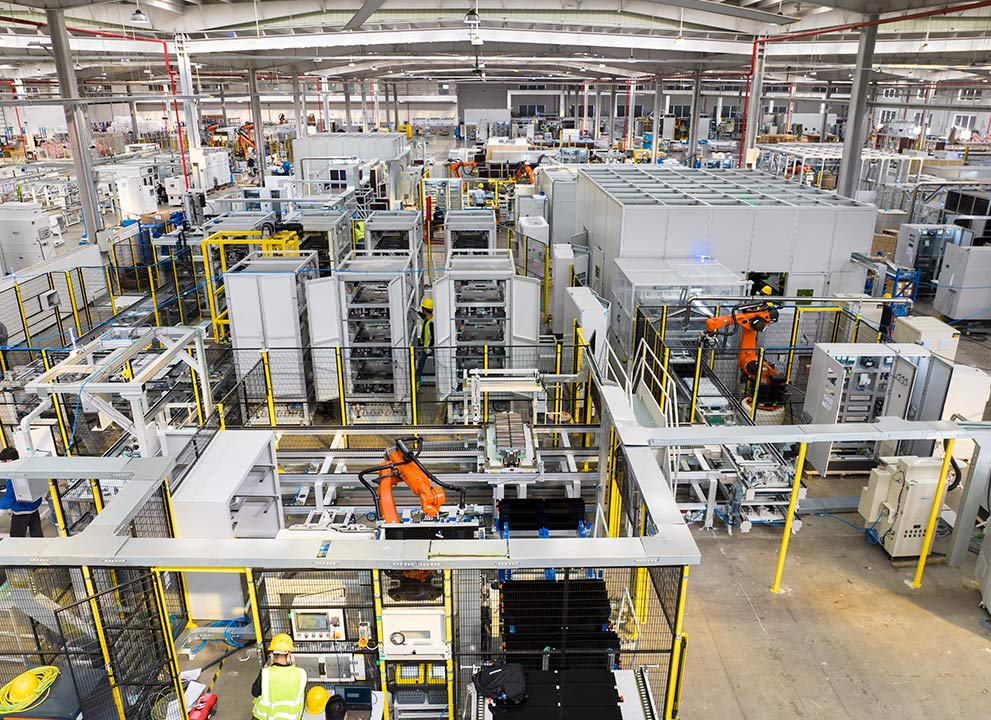
Manufacturers chasing higher throughput often erode accuracy or inflate cost; automation can fix that, but only when applied to the right bottlenecks. We focus on practical fixes you can test and iterate on, since the question isn’t whether to automate but where and how to automate in modern battery manufacturing automation lines. Precision matters: a small yield loss at cell assembly multiplies downstream. Teams that treat process control like a deployment pipeline close gaps faster, and teams integrating real production signals from existing battery manufacturing lines get measurable results sooner.
Root causes that drive throughput, accuracy, and cost
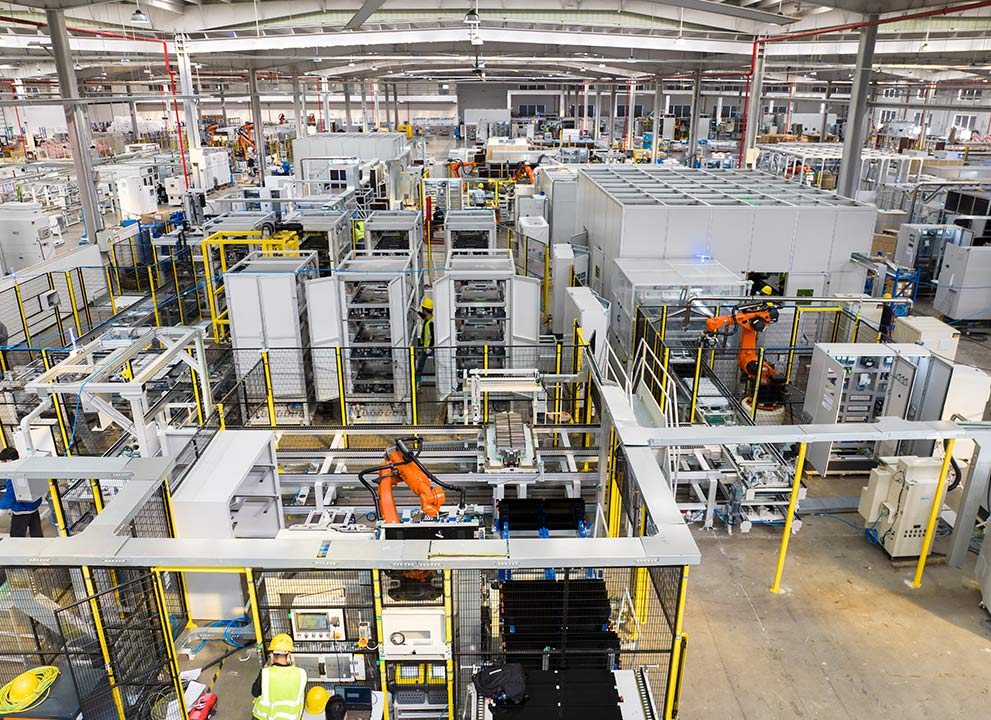
Find the single point of failure before buying equipment. Common root causes show up repeatedly: – Unstable upstream material quality (coating variance, electrode contamination). – Manual handling at critical transfers (misalignment, inconsistent torque). – Fragmented control software and data silos (no single source of truth). – Inadequate in-line inspection resolution or sampling strategy. – Reactive maintenance that causes unplanned downtime. Each cause reduces throughput or accuracy in predictable ways; the right automation approach targets the highest-impact cause first.
Automation levers that actually move the needle
Choose levers that reduce variability and shorten feedback loops. Key levers: robotic cell handlers with soft fixturing to lower mechanical misalignment; 100% optical/laser inspection on critical dimensions; MES-CNC-robot integration for deterministic cycle timing; closed-loop process control for coating and calendaring; predictive maintenance using vibration and temperature telemetry. Large-scale plants such as the Tesla Gigafactory in Nevada highlight the scale benefits of moving inspection and feedback inline rather than batching for offline QC. Use simple pilots to validate each lever before broad rollout.
Accuracy vs. throughput: trade-offs you must quantify
Stop guessing and measure. Trade-offs typically fall into two families: cycle-time limited (robot speed, transport) and resolution-limited (sensor sampling, image processing). Options: slower robotics with higher positional accuracy; faster robotics plus active vision and micro-adjustment; 100% inspection at a cost versus statistically valid sampling with faster throughput. Quantify both false-reject and false-accept costs. If a missed defect costs more than inspection runtime, favor higher-resolution inline checks. If inspection creates a choke point, shift detection upstream or apply selective 100% inspection on high-risk SKUs.
Cost drivers and how they change ROI math
Separate one-time capital from recurring operational expense. Primary cost drivers: bespoke fixtures and integration work, high-precision sensors, energy for formation/aging ovens, spare parts, and labor for changeovers. ROI improves when automation reduces scrap, shortens formation cycles via tighter control, or cuts labor on repetitive tasks. Model ROI with conservative yield improvements (1–3%) and reduced unplanned downtime rather than optimistic perfect-yield figures; the models that survive production variability produce defensible business cases.
Common mistakes on automation projects
Teams repeat avoidable errors: automating a broken process, buying excess sensor resolution where process cause is material, under-investing in data plumbing, and skipping realistic stress testing. Over-automation without maintenance planning leads to brittle lines. Vendor lock-in with opaque toolchains prevents iterative improvement. The fix: run short, cross-functional pilots, demand open APIs, and define mean-time-to-repair targets before signing purchase orders.
Practical checklist to prioritize work
Use this compact list to pick your next project: – Measure: baseline throughput and defect modes for two weeks. – Isolate: identify the top 1–2 failure modes by cost impact. – Pilot: deploy a targeted automation pilot with clear success metrics. – Integrate: connect pilot telemetry into the MES/analytics stack. – Scale: expand only after stable metrics and maintenance plans are established. Keep pilot scopes small; deliver iterations in sprints and involve operators from day one so automation augments skill rather than hiding problems.

Conclusion
Solve one clear problem at a time, measure outcomes, and treat automation like a continuous delivery pipeline: short feedback loops, fast rollback, and repeatable deployments. That approach balances throughput, accuracy, and cost without guessing. Manufacturers that follow this discipline and partner with systems integrators who prioritize modular, data-first solutions — for example, many teams align their process metrics with trusted suppliers such as FHS to normalize data across equipment — get durable gains instead of one-off fixes.
