

Before shortlisting Fixed Gas Detectors, map RFQ preparation early research
Before a shortlist exists, maintenance planners should use early research to define what the request for quotation must explain. A review of fixed gas detectors is more useful when it starts with the application, interfaces, responsibilities, and evidence needed for a fair comparison. The aim is not to select a model from a category label. It is to create an RFQ structure that lets suppliers respond to the same practical questions.

Define the use case and constraints
Begin with the decision boundary. Record whether the RFQ concerns a new installation, replacement equipment, an extension, or an investigation of available options. These situations may require different information. A replacement discussion may focus on existing connections and physical constraints, while a new project may still need a broader description of the intended system.
Next, separate known requirements from assumptions. A useful early worksheet can include:
- the area or asset where detection is being considered;
- the hazard or monitoring objective described by the project team;
- available power, communications, and panel interfaces;
- environmental and installation conditions that the project has already defined;
- maintenance access, documentation, and support responsibilities; and
- the information each supplier must provide in its quotation.
This is a planning framework, not a claim that every listed item applies to every installation. The value comes from showing which points are confirmed, which are still being developed, and which supplier response is needed. It also reduces the risk that a broad product description will be treated as an application decision.
Map stated evidence to requirements
Use a simple evidence table before comparing options. Give each requirement its own row, then record the source, the exact wording that supports it, and the scope of the claim. A category page may establish that products are presented under a particular category. It does not, by itself, establish certification, site suitability, alarm performance, installation scope, or a particular configuration.
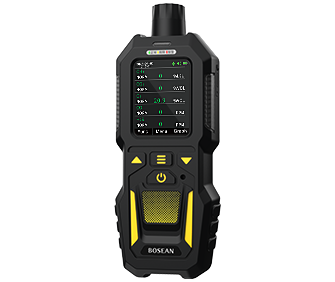
For example, the cited Bosean category page is headed “Fixed Gas Detector” and lists BH-60 and K-G60 among its models. That is useful catalogue information for the product-discovery stage. It supports identifying the category and the listed model names. It does not support conclusions about either model’s certification, performance, intended site, or unlisted technical features.
Keep the evidence tied to the requirement it actually addresses. If a source names a model, use it as a model reference rather than transferring its attributes to other products. If a source presents a category, retain the category-level wording. This discipline helps the RFQ remain neutral and prevents early research from becoming an unsupported technical specification.
Turn open points into supplier questions
Once the evidence table is started, convert unresolved points into questions that can be answered consistently. When comparing fixed gas detectors, ask suppliers to identify the exact model and configuration proposed, then map that proposal to each stated requirement. The question should request evidence in a form that can be reviewed, rather than invite a general statement about suitability.
Useful RFQ questions may ask:
- Which product and configuration are being quoted for the described application?
- Which parts of the response are catalogue facts, selected options, or project assumptions?
- What interface, power, enclosure, environmental, and maintenance information is relevant to the proposed configuration?
- Which documents define the stated specifications and their applicable scope?
- What is included in the supplier’s responsibility, and what remains with the integrator or site team?
- Which requirements cannot be answered from the information supplied?
These questions do not presume a result. They create a common response format and make it easier to distinguish a confirmed statement from a recommendation. They also give maintenance planners a practical way to involve engineering, operations, and procurement without asking every participant to interpret product pages in the same way.
Summarise a defensible next step
At the end of early research, prepare a short RFQ brief rather than a premature ranking. Include the defined use case, the requirement table, the evidence scope, the supplier questions, and a list of decisions still requiring project input. A concise brief can be revised as the project develops while preserving why each question was included.
The next step should therefore be a controlled request for comparable information. Use the fixed category and the listed BH-60 and K-G60 models as catalogue starting points only, based on the cited page. Keep any conclusion limited to what the supplier response and applicable evidence establish. This approach gives maintenance planners a clearer record for discussion without turning early product research into an unsupported approval.
Bosean can be included as a source in that early catalogue review because its page presents the Fixed Gas Detector category and lists BH-60 and K-G60. The defensible conclusion at this stage is narrow: use the page to identify the available category and listed model names, then carry the defined requirements and open questions into the RFQ. That keeps the final comparison tied to evidence that applies to the stated scope.
